Can a Red Light Therapy Facial Wand Really Clear Acne? Learn the Facts
Red Light Therapy Wand for Acne: The Complete Science-Based Guide (2026)
Published by Red Light Wellness | Last Updated: February 2026
Acne doesn't respond to one-size-fits-all solutions. That's why the precision of a red light therapy wand — a handheld device that lets you target individual breakouts, acne-prone zones, and post-acne marks — has become the preferred choice for people who want control over their treatment.
But does red light actually work for acne? The short answer: yes, with caveats. The mechanism is real, the research is growing, and the results depend entirely on understanding what light therapy does and how to use it correctly.
This guide covers the science, the protocols, and the practical application of using a red light wand to manage acne — whether you're dealing with occasional hormonal breakouts or persistent inflammatory acne that hasn't responded to topical treatments alone.
How Red Light Therapy Works for Acne
Photobiomodulation — the technical term for red light therapy — works by delivering specific wavelengths of light that penetrate skin tissue and trigger cellular responses. For acne, two mechanisms matter:
1. Inflammation Reduction
Red light at 630-660nm wavelengths reaches the dermal layer where inflammatory acne lesions develop. When absorbed by mitochondria (the energy-producing structures in your cells), this light energy:
Increases ATP (cellular energy) production
Releases cytokines that modulate the inflammatory response
Reduces pro-inflammatory markers in acne lesions
Accelerates tissue repair and healing
This is why red light therapy is particularly effective for inflammatory acne — the red, swollen papules and pustules that hurt to touch.
2. Healing and Scar Prevention
Beyond reducing active inflammation, red light stimulates fibroblast activity. Fibroblasts produce collagen and elastin, the proteins responsible for skin structure and repair. By promoting healthy tissue regeneration during the healing phase, red light therapy can help prevent the post-inflammatory hyperpigmentation (dark marks) and textural scarring that often follow acne breakouts.
Red Light vs Blue Light: Which Treats Acne Better?
This is where most acne treatment articles fall short. The truth: blue light and red light treat acne through completely different mechanisms — and combining them produces better results than either alone.
Blue Light (415nm)
Blue light doesn't penetrate deeply, but it doesn't need to. Its primary target is Propionibacterium acnes (P. acnes), the bacteria that colonize clogged pores and trigger inflammatory acne.
P. acnes bacteria naturally produce compounds called porphyrins. When blue light at 415nm hits these porphyrins, it triggers a photochemical reaction that generates reactive oxygen species — essentially killing the bacteria from the inside. This is why blue light is classified as "antibacterial" for acne.
Best for: Active bacterial acne, oily skin, preventing new breakouts
Red Light (630-660nm)
Red light penetrates deeper and works on the inflammatory and healing responses described above. It doesn't kill bacteria directly, but it reduces the inflammation that bacteria trigger and accelerates the healing of existing lesions.
Best for: Inflammatory acne (papules, pustules), reducing redness, preventing scarring, post-acne healing
The Combination Advantage
A 2017 study published in the Journal of the American Academy of Dermatology found that blue/red light combination therapy reduced total acne lesion counts comparably to topical benzoyl peroxide 2.5% over 12 weeks — without the dryness, peeling, or irritation that BPO causes.
A 2025 systematic review from Mass General Brigham, published in JAMA Dermatology, analyzed six randomized controlled trials and concluded that at-home LED devices using red and/or blue light are safe and effective for treating mild-to-moderate acne, with significant reductions in both inflammatory and non-inflammatory lesions.
Bottom line: If your device offers both wavelengths, use them. If you're choosing a single-wavelength device, red light is better for healing and inflammation; blue light is better for bacterial control.
What the Research Actually Shows
Let's look at the clinical evidence specifically for red light therapy in acne treatment:
Study 1: Split-Face Randomized Trial (2007)
Twenty-eight participants with mild to moderate acne used portable red light devices on one side of their face for 15 minutes twice daily over 8 weeks. The treated side showed statistically significant improvement in both inflammatory and non-inflammatory lesion counts compared to the untreated control side. Visual analog scale scores dropped from 3.9 to 1.9 on the treatment side.
Takeaway: Red light alone — without blue light — can improve acne.
Study 2: Red vs Infrared Comparison (2012)
Researchers compared 630nm red light to 890nm infrared light for acne treatment. The red light group showed significant reduction in active lesions; the infrared group showed no significant improvement. This confirms that the specific 630nm wavelength matters for acne — not all "red" or "infrared" light is equivalent.
Takeaway: Wavelength specificity matters. Look for devices in the 630-660nm range for acne.
Study 3: Mass General Brigham Meta-Analysis (2025)
This recent systematic review pooled data from 216 participants across six randomized controlled trials. Researchers found that at-home LED devices produced significant reductions in both inflammatory and non-inflammatory acne lesions compared to control groups (sham devices or alternative treatments). Side effects were minimal — occasional mild dryness or irritation.
Takeaway: At-home LED devices are clinically validated, not just marketing hype.
Study 4: Blue-Red Combination (2017)
A 12-week multicenter study compared once-daily blue/red LED treatment to twice-daily topical benzoyl peroxide 2.5%. Both treatments significantly reduced acne lesions, but the LED group reported better tolerance and higher satisfaction. Self-reported skin appearance improvements were statistically significant in the LED group.
Takeaway: Light therapy can match or exceed conventional topical treatments for mild-to-moderate acne.
Best Wavelengths and Dosage for Acne
Based on published research, here are the optimal parameters for using red light therapy for acne:
Wavelength
Red light: 630-660nm (sweet spot: 633nm)
Near-infrared: 810-850nm (for deeper inflammation, less common in acne devices)
Blue light (if available): 415nm for bacterial reduction
Energy Density (Fluence)
Inflammatory acne: 3-12 J/cm²
Post-acne healing: 8-15 J/cm²
Maintenance: 3-6 J/cm²
Treatment Duration
Most clinical studies used 10-20 minute sessions. With a focused wand device at close range, you can achieve therapeutic doses in 3-5 minutes per treatment area because irradiance is higher at contact distance.
Frequency
Active breakouts: Daily treatment (once or twice per day)
Moderate acne: 4-5 times per week
Maintenance: 2-3 times per week after clearing
The Non-Negotiable Rule
Start conservatively. Your skin needs time to adapt to increased photonic stimulation. Begin with 50% of your target session time for the first week, then increase gradually. Overdoing red light therapy won't speed up results — it can trigger a paradoxical inflammatory response.
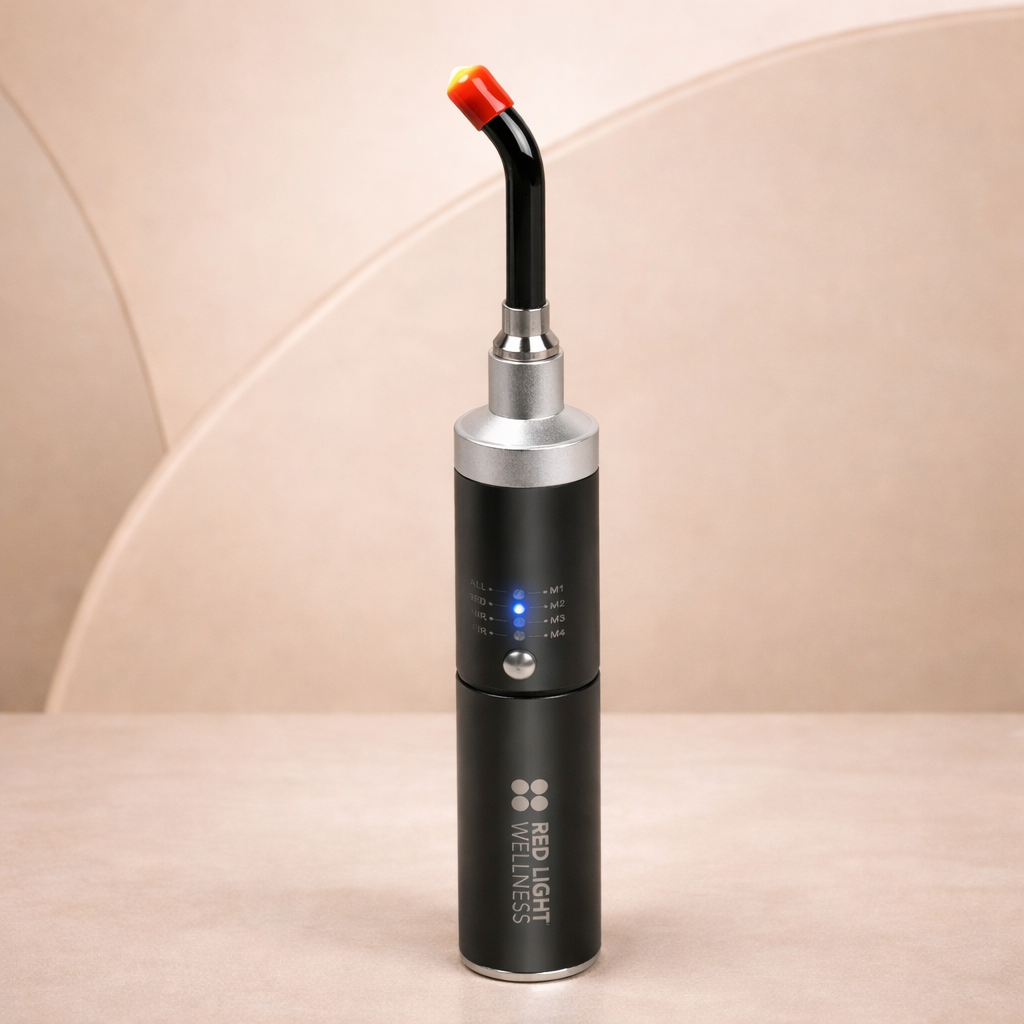
Red, Near-Infrared, & Far-Infrared Light Therapy Wand
Targeted, Portable Relief for Pain, Inflammation, Skin Health & More
Your Compact Powerhouse for Healing, Recovery & Rejuvenation
The Red, Near-Infrared, & Far-Infrared Light Therapy Wand is a powerful, handheld solution designed to deliver focused, non-invasive red light therapy wherever your body—or your pet—needs it most. Whether you're managing joint pain, treating acne, improving skin texture, or helping your furry friend with mobility or inflammation issues, this versatile tool is the ultimate on-the-go wellness device.
Featuring 5 therapeutic wavelengths (630nm, 650nm, 810nm, 850nm, and 900nm), this wand penetrates both the surface and deeper tissue layers to stimulate natural healing, reduce inflammation, and enhance cellular performance.
Key Benefits:
Pain Relief: Alleviates joint discomfort, muscle tension, arthritis, and localized pain
Skin Rejuvenation: Reduces the appearance of wrinkles, scars, fine lines, acne, and supports improved skin tone and texture
Inflammation Reduction: Calms swollen, inflamed areas for faster healing and recovery
Wound & Sore Treatment: Effective for wound care, genital sores, cold sores, and minor skin abrasions
Facial Wellness: Great for facials, spot acne treatments, tooth and mouth pain, and even ear, nose, and allergy-related discomfort
Targeted Spot Treatment: Ideal for small areas like knees, wrists, fingers, hands, feet, and joints
Pet-Friendly: Safe and effective for dogs and cats—use for joint stiffness, skin irritations, and inflammatory issues
Product Features:
5 Wavelengths: 630nm, 650nm, (Red Light) + 810nm, 850nm (Near-Infrared) + 900nm (Far-Infrared)
Irradiance:
Surface: 220 mW/cm²
At 3 inches: 68 mW/cm²
Illuminance: 180 Lux at 5.9”
Size: 8.46” x 1.18” – fits easily in a bag or drawer and comes with a convenient compact carrying case
Weight: Just 0.4 lbs – lightweight and ultra-portable
Cordless Power: Includes 2 rechargeable batteries for full mobility
Safe. Simple. Effective.
Non-invasive
Drug-free
No known side effects
FDA-cleared wavelengths
Perfect for use at home, in clinics, or while traveling
Popular Uses:
Wrinkle reduction & skin tightening
Acne spot treatment
Toothaches & oral care
Earaches & allergy support
Cold sore relief
Arthritis & joint pain management
Pet joint care & inflammation treatment
Red Light Therapy Wands are the ideal solution for spot treatments, precision targeting, and on-the-go care. Whether you're looking to improve your skin, relieve pain, or care for a beloved pet, this device helps bring professional-grade light therapy straight to your fingertips.
Compact. Powerful. Natural.
Experience the benefits of red and near-infrared light therapy—anytime, anywhere.
Wand vs Mask: Choosing the Right Device for Acne
Both device types have legitimate uses for acne treatment. The choice depends on your acne pattern and treatment goals.
When to Use a Wand
The Red Light Therapy Wand excels at:
Spot treatment: Targeting individual pimples, cysts, or acne clusters without treating unaffected skin
Zone treatment: Focusing on acne-prone areas (chin, jawline, forehead) while skipping clear zones
Post-acne marks: Precision treatment of specific hyperpigmentation or scars
Portability: Travel-friendly treatment that doesn't require a full face session
Hard-to-reach areas: Getting close to the nose, around the ears, or along the hairline
The wand's small treatment head means higher irradiance at contact — you're concentrating light energy on a specific area rather than diffusing it across your entire face. For someone with hormonal chin acne or forehead-only breakouts, this targeted approach is more efficient than full-face treatment.
When to Use a Mask
The LumaGlow LED Therapy Mask makes sense for:
Widespread acne: Breakouts across multiple facial zones simultaneously
Preventive treatment: Full-face coverage to prevent new breakouts from forming
Anti-aging + acne combo: Treating acne while also addressing fine lines and texture
Hands-free convenience: Set it and forget it during your evening routine
The Combination Approach
Many people with acne benefit from using both devices:
Mask 3-4 times weekly for general skin health and prevention
Wand daily on active breakouts for targeted, high-dose treatment
This combination approach lets you address both the immediate problem (active breakouts) and the underlying tendency (acne-prone skin) without overdoing treatment on any single area.
How to Use a Red Light Wand for Acne: Step-by-Step Protocol
Before Treatment
Cleanse your face — remove makeup, sunscreen, and excess oil. Light penetrates better through clean skin.
Skip actives — don't apply retinoids, AHAs, or BHAs immediately before treatment (use them at a different time of day)
Dry skin — pat dry completely; water on skin can scatter light
During Treatment
Position the wand 0.5-1 inch from the skin surface, or at gentle contact
Treat each area for 2-3 minutes — an active pimple, a cluster of breakouts, or a zone like the chin
Move slowly — don't rush from spot to spot; let the energy accumulate
Total session: 10-15 minutes maximum across all treated areas
Protect your eyes — don't look directly at the LED; close eyes or turn away when treating forehead
After Treatment
Apply skincare — serums and moisturizers absorb better after light therapy
No sunscreen needed — red light doesn't cause photosensitivity (unlike some acne medications)
Document progress — take weekly photos in consistent lighting to track changes
Weekly Schedule (Active Acne)
DayTreatmentMondayWand: 10 min on active spotsTuesdayWand: 10 min on active spotsWednesdayRest or maintenance (5 min)ThursdayWand: 10 min on active spotsFridayWand: 10 min on active spotsSaturdayRestSundayWand: 10 min on active spots
Adjust based on your skin's response. If you notice increased redness or irritation, reduce frequency.
What Results to Expect (and When)
Red light therapy for acne requires patience and consistency. Here's a realistic timeline:
Week 1-2: Minimal Visible Change
Inflammation may begin to reduce
Active spots may feel less painful
No dramatic clearing yet — this is normal
Week 3-4: Early Signs of Improvement
Healing time for individual breakouts decreases
Redness diminishes faster after pimples resolve
Some users notice fewer new breakouts forming
Week 6-8: Noticeable Improvement
Overall lesion count typically decreases
Post-acne marks begin fading
Skin texture may improve
Week 12+: Optimal Results
Clinical studies show maximum improvement around 12 weeks
Continued use maintains results
Some users can reduce frequency to maintenance levels
Important: Results vary based on acne severity, skin type, consistency of use, and whether you're addressing other acne factors (diet, hormones, skincare routine). Red light therapy works best as part of a comprehensive approach, not a standalone miracle cure.
Who Should (and Shouldn't) Use Red Light for Acne
Good Candidates
Mild to moderate inflammatory acne (papules, pustules)
Acne that hasn't fully responded to topical treatments alone
Post-acne hyperpigmentation and mild scarring
Sensitive skin that can't tolerate harsh topicals
Anyone wanting a chemical-free, non-drying treatment option
Proceed with Caution
Severe cystic acne — may need prescription treatments first
Photosensitizing medications (tetracyclines, certain retinoids) — consult your dermatologist
Active skin infections beyond typical acne
History of photosensitivity disorders
Not a Good Fit
Nodular or cystic acne requiring medical intervention — see a dermatologist
Acne caused by underlying hormonal conditions — address the root cause
Anyone expecting overnight results — this is a gradual treatment
Combining Red Light with Your Skincare Routine
Red light therapy integrates well with most acne-fighting ingredients. Here's how to layer treatments:
Safe to Combine
Niacinamide: Anti-inflammatory, pairs well with red light's healing effects
Hyaluronic acid: Hydrating, doesn't interfere with light penetration
Gentle cleansers: Essential for pre-treatment skin prep
Non-comedogenic moisturizers: Use post-treatment
Use at Different Times
Retinoids: Use at night if doing morning light therapy, or vice versa
AHAs/BHAs: Apply at least 30 minutes after light therapy, or use on alternate days
Benzoyl peroxide: Can be combined, but may cause additional dryness
Avoid Immediately Before Treatment
Heavy oils or occlusives — can block light penetration
Physical sunscreen (zinc oxide, titanium dioxide) — reflects light away from skin
Sample Daily Routine (AM Light Therapy)
Morning:
Gentle cleanser
Red light wand treatment (10-15 min)
Niacinamide serum
Lightweight moisturizer
Sunscreen
Evening:
Double cleanse (oil + water-based)
Retinoid (if using)
Moisturizer
Safety and Eye Protection
Red light therapy is considered safe with minimal side effects when used as directed. The light wavelengths don't cause DNA damage like UV light, and the energy levels in home devices are too low to cause thermal injury.
However, eye safety matters.
The LEDs in therapy devices are bright. While brief exposure won't cause permanent damage, repeated direct exposure to high-intensity LEDs can cause eye strain and discomfort.
Best practices:
Close your eyes when treating the forehead or areas near the eyes
Turn your head slightly away from the light when treating upper face
Don't stare at the LEDs
Consider protective eyewear for extended sessions
Frequently Asked Questions
Does red light therapy really work for acne?
Yes, clinical research supports red light therapy for mild to moderate acne. A 2025 meta-analysis in JAMA Dermatology confirmed that at-home LED devices significantly reduce both inflammatory and non-inflammatory acne lesions. Red light works primarily by reducing inflammation and accelerating healing — it's most effective for inflammatory acne types like papules and pustules.
Is red light or blue light better for acne?
They work differently. Blue light (415nm) kills acne-causing bacteria; red light (630-660nm) reduces inflammation and promotes healing. Research shows combination blue/red therapy produces better results than either alone. If choosing one, pick red light for inflammatory acne and healing, blue light for bacterial acne and oil control.
How long does it take to see results from red light therapy for acne?
Most people notice initial improvements in 3-4 weeks with consistent use, and optimal results around 8-12 weeks. Healing time for individual breakouts often improves first, followed by overall lesion reduction. Results depend on consistency, acne severity, and whether you're addressing other contributing factors.
How often should I use a red light wand for acne?
For active acne, daily use (once per day, 10-15 minutes total) is effective. After clearing, reduce to 2-3 times weekly for maintenance. Don't exceed twice daily, and give your skin a rest day if you notice increased sensitivity or redness.
Can red light therapy make acne worse?
Rarely. Some people experience temporary "purging" in the first 1-2 weeks as healing accelerates and congested pores clear. If worsening persists beyond 2-3 weeks or is severe, reduce treatment frequency and consult a dermatologist. True adverse reactions to red light are uncommon.
Can I use red light therapy with retinol or benzoyl peroxide?
Yes, but use them at different times of day. Apply retinoids in the evening if you do morning light therapy. Benzoyl peroxide can be used alongside light therapy but may increase dryness — start slowly and moisturize adequately.
Is red light therapy safe for sensitive or rosacea-prone skin?
Generally yes — red light is non-ablative and doesn't cause the irritation that many topical acne treatments do. In fact, red light can reduce the redness and inflammation associated with rosacea. Start with shorter sessions to assess your skin's response.
Your Next Step
Red light therapy for acne works best when you understand the mechanism, follow consistent protocols, and choose the right device for your acne pattern. For targeted treatment of specific breakouts and acne-prone zones, the Red Light Therapy Wand gives you precision control over where and how intensely you treat.
For full-face coverage and hands-free treatment, the LumaGlow LED Therapy Mask delivers consistent dosing across your entire face.
Either approach — or combining both — puts a clinically-validated, non-irritating acne treatment in your hands.
This guide is based on peer-reviewed research and clinical evidence. Individual results vary. For severe or persistent acne, consult a board-certified dermatologist. Red light therapy works best as part of a comprehensive skincare approach, not as a replacement for medical treatment when needed.
The Red Light Wellness editorial team has forty years of expertise in light therapy and photobiomodulation (PBM) research. Red Light Wellness is an FDA Class II cleared medical device manufacturer based in St. Louis, Missouri. The company designs and produces commercial-grade red light therapy beds for chiropractors, medspas, physician clinics, and wellness practices across the United States. The editorial team combines engineering knowledge with clinical experience from working alongside these professionals daily.
A multidisciplinary team develops this content. The team includes:
· Biomedical engineers specializing in LED wavelength technology and therapeutic light delivery systems · Clinical advisors from our network of healthcare professionals who use Red Light Wellness equipment daily · Regulatory specialists who ensure all content aligns with FDA Class II cleared medical device standards · Wellness industry analysts tracking market trends.
Red Light Wellness operates from an FDA-listed facility in St. Louis, Missouri. The company designs and manufactures commercial-grade red light therapy beds used by healthcare professionals nationwide.
Our clinical advisors are licensed healthcare practitioners who use our FDA Class II cleared medical devices in daily practice.