Red light therapy has moved from niche clinical tool to mainstream wellness treatment — and with that popularity comes misinformation. Some myths overstate what red light can do. Others understate decades of published research. A few confuse red light therapy with completely different technologies.
This page addresses the most common misconceptions about red light therapy, explains what the research actually shows, and helps practitioners and consumers make informed decisions based on evidence rather than hype.
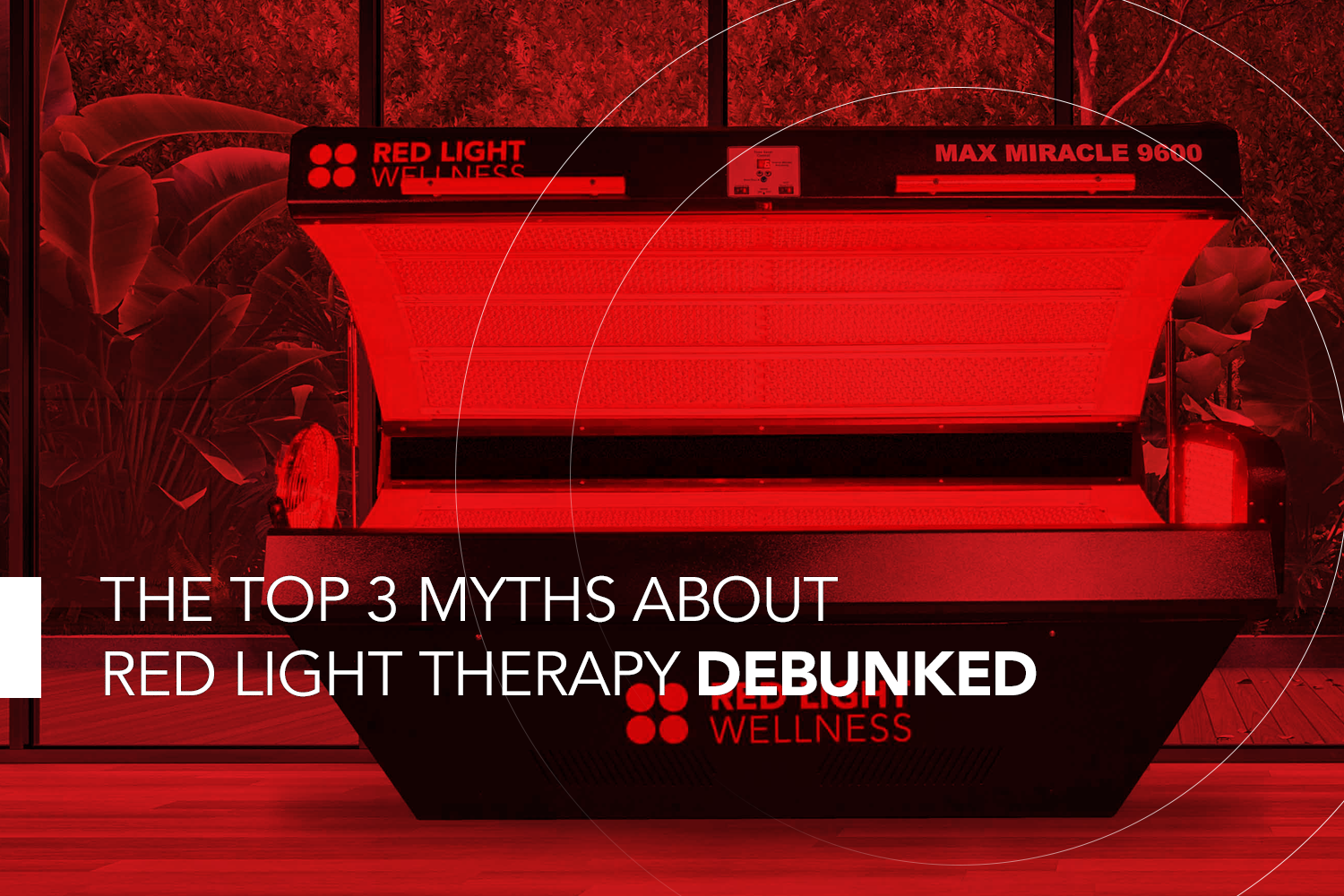
Myth #1: Red Light Therapy Is a Gimmick
The reality: Red light therapy — technically called photobiomodulation (PBM) — is one of the most studied non-invasive therapeutic modalities in medicine. Over 7,000 peer-reviewed studies have investigated its effects on tissue repair, inflammation, pain, skin health, and cellular function.
The science traces back to NASA research in the 1990s, when red LEDs were used to accelerate wound healing in astronauts. Those early findings led to decades of clinical investigation, and today photobiomodulation is used in dermatology, sports medicine, pain management, and rehabilitation settings worldwide.
This isn't a trend that appeared on social media. It's a therapy with a 30+ year evidence base that's now becoming accessible to a wider audience.
Myth #2: Red Light Therapy Works Instantly
The reality: Red light therapy is cumulative, not instantaneous. A single session produces measurable cellular activity — increased ATP production, nitric oxide release, reduced oxidative stress — but visible and lasting benefits develop through consistent use over weeks.
Typical timelines based on clinical observations:
Sleep and energy improvements: 1–2 weeks of consistent sessions
Skin texture and tone: 2–4 weeks
Pain and inflammation reduction: 2–4 weeks
Visible anti-aging effects (collagen remodeling): 2–3 months
Hair regrowth indicators: 3–6 months
Most practitioners recommend 3–5 sessions per week during the initial phase (4–6 weeks), then 2–3 sessions per week for maintenance. Setting realistic expectations upfront builds client trust and long-term retention.
Myth #3: Red Light Therapy Is Dangerous
The reality: Red light therapy is non-invasive, non-thermal, drug-free, and has no known serious side effects at therapeutic doses. It does not use ultraviolet (UV) light and carries zero risk of UV-related skin damage or increased cancer risk.
Red light wavelengths (600–700nm) and near-infrared wavelengths (700–900nm) are non-ionizing — meaning they do not damage DNA or cause cellular mutations. This is fundamentally different from UV exposure from tanning beds or unprotected sun exposure.
The most common precaution is eye protection during sessions, which is standard practice. Practitioners should also screen clients taking photosensitizing medications and note that pregnancy is listed as a general precaution, though no adverse effects have been documented.
All Red Light Wellness beds are FDA Class II cleared medical devices, meaning they've met federal safety and efficacy standards for therapeutic use.
Myth #4: Red Light Therapy Can Treat Everything
The reality: Red light therapy has strong evidence for specific applications — and weaker or emerging evidence for others. Responsible use means knowing the difference.
Strong clinical evidence supports:
Pain relief and inflammation reduction (arthritis, chronic pain, fibromyalgia)
Skin rejuvenation and collagen production
Wound healing and tissue repair
Muscle recovery and reduced exercise-induced soreness
Hair regrowth (hereditary hair loss)
Emerging evidence suggests potential benefits for:
Sleep quality and circadian rhythm support
Mood improvement and mild depression
Neuroprotection and cognitive function
Post-surgical recovery
Not supported by current evidence:
Curing cancer or replacing medical treatment for serious conditions
Instant weight loss
Reversing advanced osteoarthritis or repairing torn ligaments
The best practitioners are transparent about what red light therapy can and cannot do. Overpromising erodes trust. Evidence-based positioning builds long-term credibility with clients and referral partners.
Myth #5: All Red Light Therapy Devices Are the Same
The reality: There are enormous differences between devices in wavelength accuracy, power output, build quality, and clinical effectiveness.
Wavelength matters. Therapeutic benefits are wavelength-specific. Red light at 660nm targets skin tissue. Near-infrared at 850nm reaches muscle, joint, and bone tissue. Devices that don't specify exact wavelengths or use vague terms like "red spectrum" may not deliver therapeutic doses at all.
Power output matters. Irradiance (measured in mW/cm²) determines how much energy reaches your tissue per unit of time. Higher irradiance means shorter, more effective sessions. Low-powered consumer devices may require 30+ minute sessions to deliver what a commercial-grade bed achieves in 10–15 minutes.
FDA classification matters. FDA Class II medical devices have undergone regulatory review for safety and efficacy. Class I devices have not. Many consumer devices carry no FDA classification at all.
Build quality matters. Commercial-grade beds with steel frames, medical-grade LEDs, and active cooling systems are engineered for years of daily use. Consumer-grade devices with plastic housings degrade under constant light exposure — UV photooxidative breakdown weakens polymers over time, leading to structural failure.
Myth #6: Red Light Therapy Is the Same as a Tanning Bed
The reality: They are completely different technologies with opposite effects on the body.
Tanning beds emit ultraviolet (UV) radiation, which damages DNA, accelerates skin aging, and significantly increases skin cancer risk. Red light therapy beds emit visible red and near-infrared wavelengths that carry no UV component whatsoever.
Where UV light destroys collagen and damages skin cells, red light therapy stimulates collagen production and promotes cellular repair. They are not variations of the same treatment — they are opposite biological processes.
The confusion exists because the form factor looks similar (a bed you lie in). The technology inside is fundamentally different.
Myth #7: Red Light Therapy Is the Same as an Infrared Sauna
The reality: Infrared saunas use far-infrared wavelengths to generate heat. The therapeutic mechanism is thermal — the heat raises body temperature, induces sweating, and increases heart rate similar to moderate exercise.
Red light therapy uses near-infrared and visible red wavelengths that work through photobiomodulation — a non-thermal process that stimulates mitochondrial function at the cellular level. The light itself, not heat, drives the therapeutic response.
Red light therapy produces minimal warmth — comparable to early morning sunlight. It does not cause dehydration, does not require heat tolerance, and is safe for people who cannot tolerate the extreme temperatures of sauna use.
Both modalities have evidence-based benefits, but they work through entirely different mechanisms and should not be confused or substituted for each other.
Myth #8: All Wavelengths of Red Light Do the Same Thing
The reality: Different wavelengths penetrate to different depths and trigger different biological responses.
630nm (red): Penetrates the epidermis. Primarily targets skin rejuvenation, wound healing, and collagen production.
660nm (red): Reaches the dermal layer (1–2mm). Optimal for fibroblast stimulation, anti-aging, and inflammatory skin conditions.
810nm (near-infrared): Penetrates 3–4cm. Targets muscle tissue, supports recovery, and shows neuroprotective potential.
850nm (near-infrared): Penetrates deep muscle and joint tissue. Primary wavelength for pain management and inflammation reduction.
940nm (near-infrared): Deepest penetration. Reaches bone tissue and supports deep-tissue healing.
Devices that offer only a single wavelength provide limited therapeutic range. Multi-wavelength systems address a broader spectrum of conditions in every session.
Red Light Wellness beds deliver all five therapeutic wavelengths (630/660/810/850/940nm) in every treatment — covering surface skin through deep bone tissue simultaneously.
Myth #9: Red Light Therapy Is Only for Skin
The reality: Skin health was one of the earliest studied applications, but the research has expanded dramatically. Near-infrared wavelengths penetrate well beyond the skin surface.
Documented benefits extend to joint pain and arthritis, muscle recovery and athletic performance, wound healing and post-surgical recovery, chronic pain conditions including fibromyalgia and neuropathy, circulation and cardiovascular support, sleep quality and mood, and hair regrowth.
The underlying mechanism — mitochondrial stimulation and increased ATP production — operates in virtually every cell type in the body. This is why full-body red light therapy beds produce such a broad range of benefits. The cellular process is universal; the applications are specific to which tissues receive adequate light exposure.
Myth #10: More Time Under Red Light Is Always Better
The reality: Red light therapy follows a biphasic dose-response curve. There is an optimal therapeutic dose — too little light produces no measurable effect, but too much can actually diminish benefits.
The effective dose depends on irradiance (mW/cm²) × time (seconds) = fluence (J/cm²). This means a high-powered commercial bed delivering 10–15 minutes of exposure may achieve a higher therapeutic dose than a low-powered panel used for 30+ minutes.
This is precisely why device specifications matter. Knowing the irradiance of your device allows you to calculate the correct session duration for optimal results — rather than guessing based on how long it "feels right."
Professional-grade beds are engineered to deliver the correct therapeutic fluence in the standard session window, eliminating the dosing guesswork that comes with consumer devices.
Myth #11: Home Devices Are Just as Good as Professional Beds
The reality: Home devices and professional beds use the same underlying technology — LEDs emitting red and near-infrared wavelengths — but the comparison ends there.
Coverage: A full-body bed treats every surface simultaneously. Home panels, masks, and wands treat one area at a time and require repositioning for full-body coverage.
Power: Commercial beds deliver significantly higher irradiance than consumer devices, meaning therapeutic doses are achieved in shorter sessions.
Consistency: Beds maintain a fixed, optimized distance between the LEDs and the body throughout the session. Handheld devices rely on the user to maintain correct positioning.
Durability: Commercial beds are built for 20+ sessions per day, every day, for years. Consumer devices are designed for personal use and cannot sustain commercial-volume operation.
Home devices have a place — they're good for targeted, supplementary treatment between professional sessions. But they cannot replicate the systemic, full-body benefits that a commercial-grade bed delivers.
The Bottom Line
Red light therapy is not magic, and it's not a scam. It's a well-researched, clinically documented therapeutic modality that works through specific, measurable biological mechanisms. The key to getting real results is using the right device, at the right dose, with the right expectations.
At Red Light Wellness, we manufacture FDA Class II medical-grade red light therapy beds in our own facility in St. Louis, Missouri. Every bed delivers 5 therapeutic wavelengths, is built with all-steel construction, and is backed by a lifetime LED warranty and 10-year frame warranty.
Have questions about red light therapy that we haven't addressed here? Contact our team — we're happy to share the science.
Want to see our beds in action? Explore the Wellness Collection or request a demo.
Frequently Asked Questions
-
Red light therapy devices can be FDA cleared (not "approved" — that term applies to drugs). FDA Class II clearance means the device has met regulatory standards for safety and efficacy. All Red Light Wellness beds carry FDA Class II clearance. Many consumer devices do not.
-
No. Red light therapy uses non-ionizing wavelengths (600–940nm) that do not damage DNA or cause cellular mutations. It is fundamentally different from UV radiation. No link to cancer has been found in any published research.
-
Yes. Most practitioners recommend 3–5 sessions per week during the initial phase and 2–3 per week for maintenance. Daily sessions at appropriate doses have shown no adverse effects in clinical literature.
-
Most users notice improved sleep and energy within 1–2 weeks. Skin improvements typically appear at 2–4 weeks. Pain relief develops over 2–4 weeks of consistent use. Anti-aging collagen effects become visible at 2–3 months.
-
No. Infrared saunas use heat as the therapeutic mechanism. Red light therapy works through photobiomodulation — a non-thermal process that stimulates cellular function. Different technologies, different mechanisms, different benefits.
-
Different wavelengths reach different tissue depths. Our 630/660/810/850/940nm combination covers skin surface through deep bone tissue, ensuring every session addresses the full spectrum of therapeutic applications rather than being limited to a single depth.
The Red Light Wellness editorial team has forty years of expertise in light therapy and photobiomodulation (PBM) research. Red Light Wellness is an FDA Class II cleared medical device manufacturer based in St. Louis, Missouri. The company designs and produces commercial-grade red light therapy beds for chiropractors, medspas, physician clinics, and wellness practices across the United States. The editorial team combines engineering knowledge with clinical experience from working alongside these professionals daily.
A multidisciplinary team develops this content. The team includes:
· Biomedical engineers specializing in LED wavelength technology and therapeutic light delivery systems · Clinical advisors from our network of healthcare professionals who use Red Light Wellness equipment daily · Regulatory specialists who ensure all content aligns with FDA Class II cleared medical device standards · Wellness industry analysts tracking market trends.
Red Light Wellness operates from an FDA-listed facility in St. Louis, Missouri. The company designs and manufactures commercial-grade red light therapy beds used by healthcare professionals nationwide.
Our clinical advisors are licensed healthcare practitioners who use our FDA Class II cleared medical devices in daily practice.