By Red Light Wellness | Updated March 2026 | 40+ years manufacturing light therapy equipment
Commercial red light therapy beds range from $34,995 to $85,000+ for FDA-listed medical-grade equipment. Most clinics, medspas, and wellness centers invest between $35,000 and $70,000 depending on power output, session capacity, and automation features. Entry-level systems price out closer to $35,000; high-volume flagship models approach $70,000–$85,000.
This guide covers actual pricing across the market, the six factors that drive cost, how major manufacturers compare, and what total cost of ownership really looks like — including electrical, installation, and ongoing maintenance.
How Much Does a Commercial Red Light Therapy Bed Cost? (2026 Pricing Guide)
Commercial Red Light Therapy Bed Price Ranges (2026)
| Tier | Price Range | Best For |
|---|---|---|
| Entry-Level Commercial | $34,995–$40,000 | Solo practitioners, startup clinics |
| Mid-Tier Commercial | $40,000–$60,000 | Growing practices, boutique medspas |
| Premium Commercial | $60,000–$85,000 | High-volume clinics, established wellness centers |
| Ultra-Premium | $85,000–$150,000 | Multi-location operations, luxury facilities |
What about home-use beds? Home-use red light therapy beds typically run $3,000–$25,000 and are engineered for personal wellness — not 20–30 daily sessions. Commercial beds use industrial-grade components, higher-output LEDs, and build tolerances designed for continuous operation. Using a home bed in a clinical setting voids warranties and accelerates failure.
Red Light Wellness:
Product Pricing
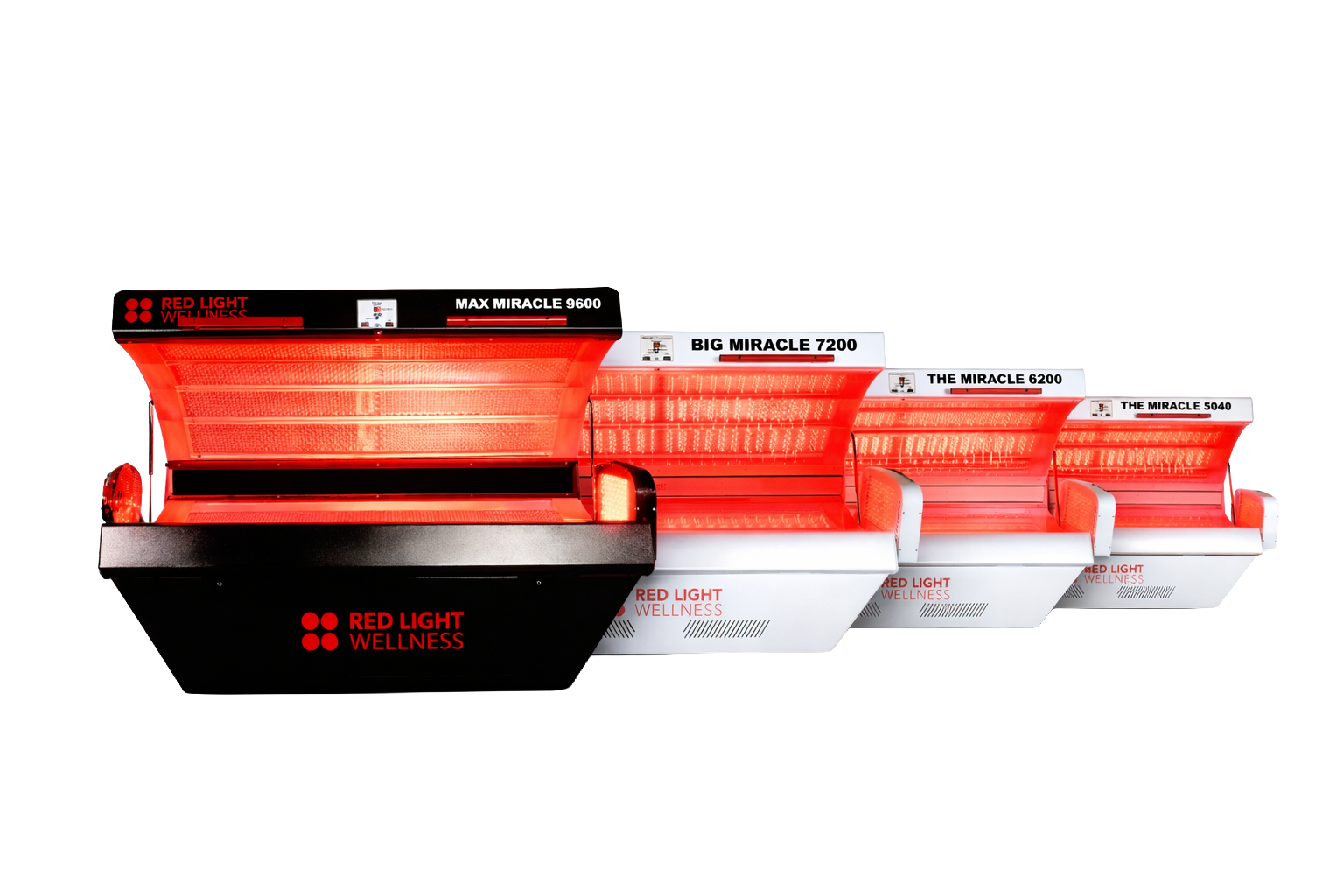
As a manufacturer, we publish transparent pricing. All four of our models carry FDA Class II medical device status and are manufactured in our FDA-listed facility in St. Louis, Missouri.
Miracle 5040 — $34,995
The most affordable FDA Class II commercial bed on the market. Designed for clinics entering the red light space or practices adding photobiomodulation (PBM) as a complementary service.
- Irradiance: 504 mW/cm²
- Electrical: 220V / 30A
- Dual-handle canopy for head and foot treatments
- Patented Goldilocks System for optimal LED-to-body distance
- 10-year frame warranty
Miracle 6200 — $38,995
Our most popular model for small clinics and chiropractic offices. Higher power output than the 5040 with the same compact footprint — making it the go-to choice for practices that need clinical results without a large equipment footprint.
- Irradiance: 600 mW/cm²
- Electrical: 220V / 30A
- Full-body coverage with enhanced therapeutic output
- FDA Class II medical device
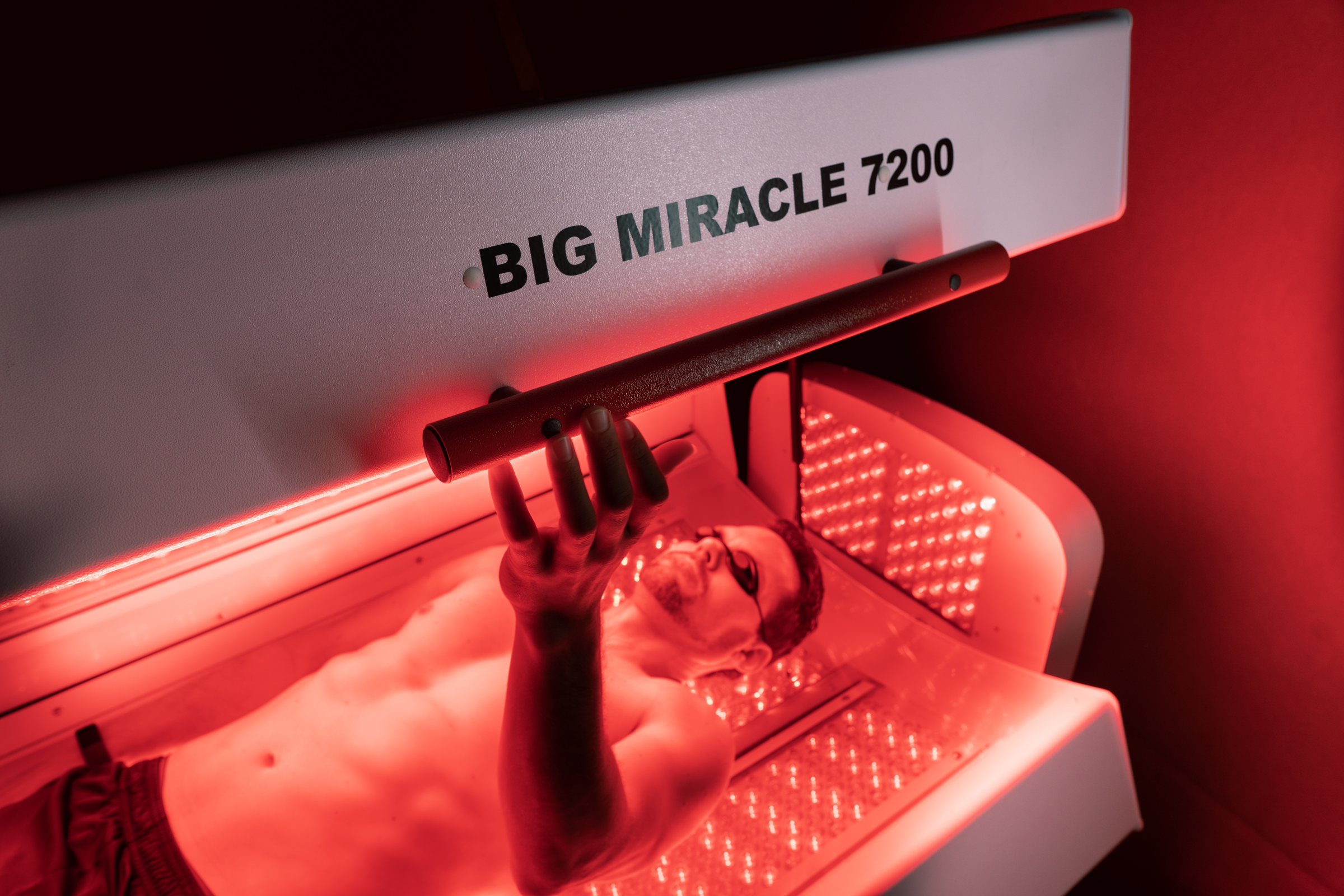
Big Miracle 7200 — $48,995
Built for practices ready to scale. The 7200 handles high-volume scheduling — delivering full-body sessions in 10–15 minutes to keep appointment flow moving during peak hours.
- Irradiance: 720 mW/cm²
- Electrical: 220V / 40A
- Powder-coated steel construction
- Engineered for 20–30 daily sessions
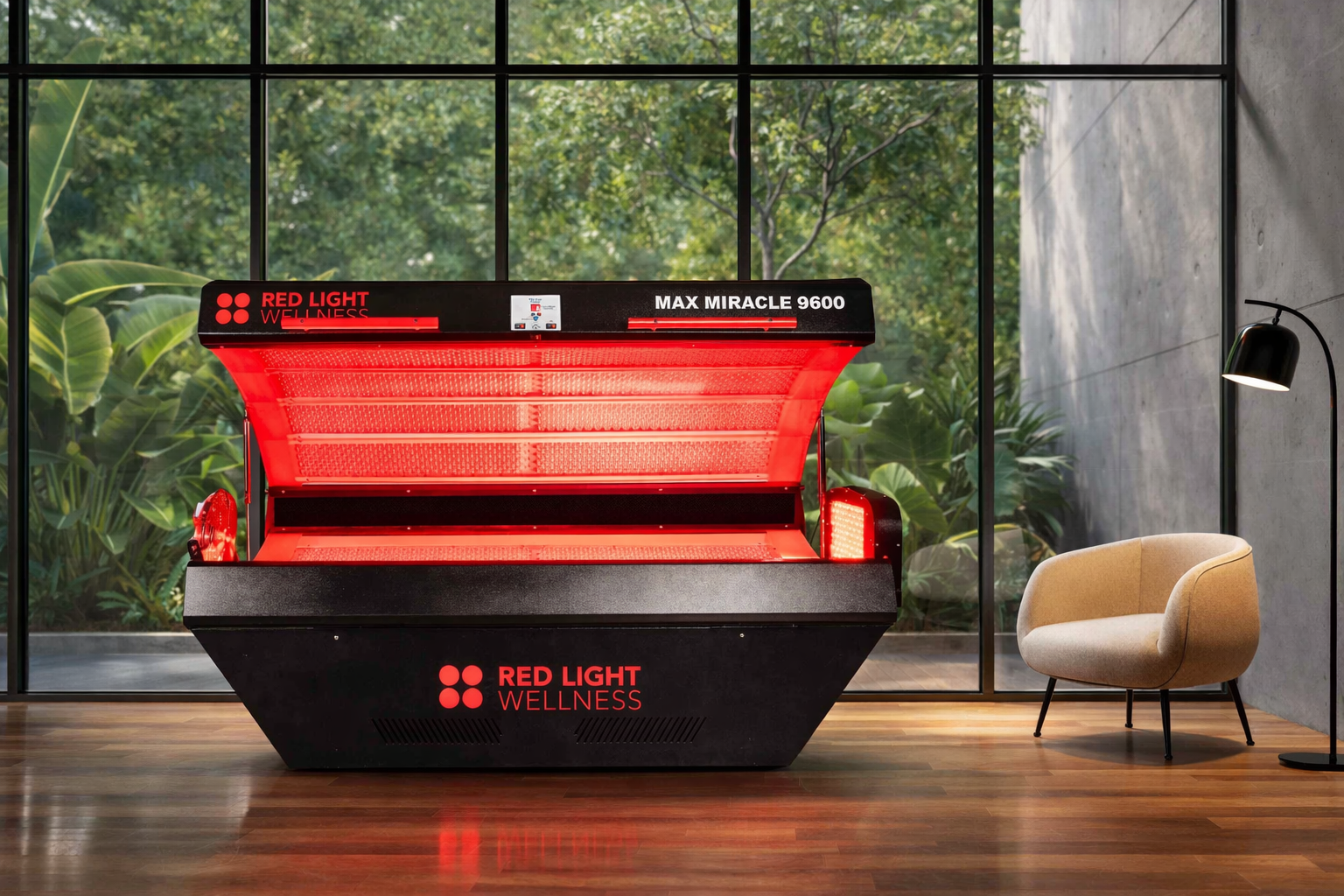
Max Miracle 9600 — $69,995
Our flagship model. Maximum power output, 450 lb patient capacity, auto-lift technology, and a patented head and foot system for neuropathy protocols. The 9600 is the right investment for high-volume medspas and multi-provider clinics that need maximum daily throughput.
- Irradiance: 960 mW/cm²
- Electrical: 220V / 50A
- Auto-lift technology
- Up to 8 sessions per hour at peak capacity
- Patented head and foot positioning system
What Drives the Cost of a Commercial Red Light Therapy Bed?
Understanding what you're paying for helps you evaluate any commercial bed purchase — not just ours.
1. Power Output and Irradiance
Irradiance — measured in milliwatts per square centimeter (mW/cm²) — determines how much therapeutic energy reaches tissue per session. Higher irradiance means shorter session times and greater daily patient throughput. A bed delivering 960 mW/cm² runs clinically effective sessions in 10–15 minutes. A lower-powered system at 100–200 mW/cm² may require 30–45 minutes for equivalent dosing — cutting your daily capacity by 50–60%.
Higher-powered beds cost more to manufacture, require more robust electrical infrastructure, and generate more revenue per operating hour. The price premium pays for itself quickly in a busy practice.
2. FDA Classification and Certification
FDA Class II medical devices must meet stricter safety and efficacy standards than Class I general wellness products. This means more extensive testing, stricter manufacturing controls, and ongoing compliance costs — all of which are reflected in the price.
For clinics, Class II status matters: it supports medical claims, opens the door to insurance billing for some protocols, and builds patient trust in ways that unregistered or Class I devices cannot.
3. Build Quality and Commercial Durability
Commercial beds face 20–30 sessions daily. Powder-coated steel frames, medical-grade acrylics, industrial-spec LED drivers, and commercial-grade hinges cost more than the components used in consumer-grade equipment — but they prevent costly downtime and extend useful life. A bed that fails after two years in a busy clinic creates both direct repair costs and the indirect cost of lost revenue during downtime.
4. LED Count, Quality, and Positioning
Raw LED count is less important than LED quality, wavelength accuracy, and positioning. A bed with 48,000 poorly positioned LEDs delivers less therapeutic dose than a well-engineered system with fewer, higher-quality LEDs at optimized distances. What matters is the dose delivered to tissue — measured by irradiance at the surface — not the marketing spec sheet.
5. Wavelength Configuration
Dual-wavelength beds (660nm red + 850nm near-infrared) cover the core photobiomodulation protocols. Premium models add additional wavelengths — 633nm, 810nm, 940nm — with independent control of each, enabling targeted protocol customization for different clinical indications. More wavelengths increase manufacturing complexity and cost.
6. Automation and Patient Experience Features
Auto-lift systems, touchscreen controls, programmable session timers, and integrated sound reduce staff labor per session and improve patient experience — both of which directly affect your revenue per hour and patient retention. These features carry a price premium that typically delivers a positive ROI in practices running more than 12–15 sessions per day.
How Commercial Red Light Therapy Beds Compare: Market Pricing
| Manufacturer | Model | Approx. Price | FDA Status | Origin |
|---|---|---|---|---|
| Red Light Wellness | Miracle 5040 | $34,995 | Class II | USA (St. Louis) |
| Red Light Wellness | Miracle 6200 | $38,995 | Class II | USA (St. Louis) |
| Red Light Wellness | Big Miracle 7200 | $48,995 | Class II | USA (St. Louis) |
| Red Light Wellness | Max Miracle 9600 | $69,995 | Class II | USA (St. Louis) |
| TheraLight | FIT | ~$50,000–$60,000 | Class I & II | USA |
| TheraLight | 360 | $85,000+ | Class I & II | USA |
| Spectra | S10 Pro | $79,990 | Registered | USA |
Note on pricing transparency: Many manufacturers do not publish list prices and require direct contact for quotes. Published prices above reflect publicly available pricing as of early 2026 and may not include shipping, installation, or extended service agreements.
For a full specification comparison — including irradiance measurements, LED counts, session times, and warranty terms — download our free 2026 Buyer's Comparison Guide →
Total Cost of Ownership: Beyond the Sticker Price
The purchase price is only part of what you'll invest. Plan for these additional costs:
Electrical Installation
Commercial red light therapy beds require dedicated 220V circuits. Depending on your facility's current panel capacity:
Panel upgrade: $800–$3,000 if your panel needs expansion
Dedicated circuit and outlet installation: $300–$800
Total electrical budget: $500–$4,000 depending on existing infrastructure
RLW beds specify their electrical requirements clearly: the Miracle 5040 and 6200 require 220V/30A; the Big Miracle 7200 requires 220V/40A; the Max Miracle 9600 requires 220V/50A. Confirm with a licensed electrician before purchase.
Delivery and Installation
Delivery: Most commercial beds ship freight. Allow $500–$1,500 for standard freight; some manufacturers include white-glove delivery.
Weight: Commercial beds range from 400–650+ lbs. Confirm your facility's access path — doorways, hallways, elevator capacity.
Installation: Most commercial beds require two-person setup. Some manufacturers offer included installation; others charge $500–$2,000.
Ongoing Maintenance
Commercial LED beds have minimal ongoing maintenance compared to laser or UV equipment. Plan for:
LED lifespan: High-quality commercial LEDs typically last 50,000–100,000 hours — well beyond the useful life of most business equipment
Acrylic cleaning and replacement: Budget $200–$500 every 2–3 years for surface panels depending on use volume
Annual service check: $150–$400 depending on manufacturer and service contract
Operating Costs
Red light therapy beds are low-cost to operate. Electricity cost per session runs approximately $0.10–$0.25 per 10-minute session at average US commercial kWh rates — negligible relative to session revenue.
Does the Investment Make Financial Sense?
Most commercial buyers reach payback in 6–18 months at typical session volumes and pricing. A practice charging $35–$65 per session and running 10 sessions per day generates $350–$650 in daily session revenue — against a capital investment that amortizes quickly.
The Max Miracle 9600, at up to 8 sessions per hour, can generate $210–$390 per hour at those pricing points during peak hours.
For the full revenue model — including payback calculations at different price points and utilization rates — see our Red Light Therapy Bed ROI Guide →
If capital outlay is a concern, commercial financing is available. Many practices finance equipment over 24–60 months, with monthly payments that are easily covered by modest session revenue. Explore financing options →
What to Evaluate Before You Buy
Use these criteria when comparing any commercial bed:
FDA classification — Class II or Class I? Class II requires demonstrating clinical safety and efficacy. Ask for the FDA listing number.
Verified irradiance — Request third-party lab-verified irradiance data at the surface. Marketing irradiance numbers are often measured at zero distance from LEDs, not at clinical treatment distance.
Wavelengths and dosing protocols — What clinical indications does the bed support? Does the manufacturer provide evidence-based protocol guidelines?
Warranty terms — Compare frame warranty, LED warranty, and what's excluded. A 10-year frame warranty is the industry benchmark for serious commercial equipment.
Manufacturer support — Is the manufacturer reachable post-sale? Do they provide training, marketing support, and clinical protocols? As the manufacturer, RLW provides all of the above.
Total cost of ownership — Get quotes for electrical, delivery, installation, and a service agreement before finalizing your budget.
Frequently asked questions
-
Red light therapy beds are generally not covered by patient insurance unless prescribed as part of a specific medical treatment plan. For business purchases, the equipment is typically eligible for Section 179 deduction or bonus depreciation under current US tax law. Consult your accountant for your specific situation.
-
Power output, automation features, and brand positioning are the primary differences. Higher-priced beds may or may not offer higher irradiance, additional wavelengths with independent control, automation (auto-lift, digital controls), and enhanced session capacity. Whether those features justify the price premium depends on your session volume and reimbursement model.
-
Technically yes, but it's not advisable. Home-use beds are not rated for commercial session volumes, typically carry 1–3 year warranties (if any), and are not FDA Class II devices — limiting the clinical claims you can make. Commercial beds are engineered for the daily use cycles a clinic generates.
-
With proper maintenance, a well-built commercial bed should last 10–15+ years. LED lifespans of 50,000–100,000 hours represent decades of commercial use. Frame and mechanical components are the more likely maintenance items over time.
Ready to Compare Models?
All four Red Light Wellness beds are FDA Class II medical devices, manufactured in our St. Louis facility, and backed by a 10-year frame warranty.
Red Light Wellness manufactures FDA Class II red light therapy beds for clinics, medspas, chiropractic offices, and wellness centers across the United States. Our team has 40+ years of experience in light therapy technology and photobiomodulation research.