

Will a commercial red light therapy bed pay for itself?
Whether a commercial red light therapy bed pays for itself comes down to a few numbers you control: what you charge per session, how many sessions you run each day, and what it costs to operate. Work those through for your own practice to estimate the return. The figures below are illustrative examples, not a forecast or a guarantee of earnings.

ROI snapshot: What the numbers often look like
Red light therapy bed ROI is driven by operational math, not wishful thinking.
Typical commercial scenarios:
Session price: $35 to $75
Session length: 8 to 15 minutes
Daily capacity: 20 to 30 sessions
Monthly revenue potential: $10,000 to $30,000+
Estimated payback period: 4 to 12 months (utilization dependent)
Short sessions increase throughput.
Higher throughput accelerates payback.
Low operating costs protect margins.
What drives red light therapy bed ROI
Red light therapy bed ROI is controlled by five measurable variables.
-
A red light therapy bed generates revenue per session rather than per provider hour. Automation reduces labor cost per dollar earned. Sessions are largely self-administered, requiring only brief staff time for setup and client guidance. This allows a single treatment room to produce revenue independently of provider schedules.
-
A red light therapy bed delivers whole-body treatment in minutes. Short sessions increase the number of appointments that fit into operating hours. At 10 to 15 minutes per session, a single bed supports 3 to 4 clients per hour during peak times. That throughput is structurally higher than most provider-dependent services.
-
Utilization determines payback speed.
Low utilization slows ROI. Moderate utilization stabilizes cashflow. High utilization compresses time-to-profit.
The equipment scales without adding payroll.
-
A commercial red light therapy bed draws approximately 1,500 to 3,000 watts during a session depending on model. At average U.S. electricity rates, running 20 sessions per day costs roughly $2 to $5 per day in electricity, or $0.10 to $0.25 per session.
There are no consumables. No replacement cartridges. No recurring supply costs. Routine cleaning between sessions is the only regular maintenance requirement.
Red Light Wellness LEDs are rated at 100,000 hours. At 20 sessions per day, 15 minutes each, that is over 30 years of commercial use before replacement. Every RLW bed includes a lifetime LED warranty and a 10-year frame warranty, eliminating the two largest potential replacement costs.
Compare that to competitors who do not publicly disclose frame materials, LED lifespan ratings, or warranty terms.
-
A red light therapy bed counts as capital equipment. Section 179 allows you to deduct the full purchase price in the year you place the equipment in service. Bonus depreciation and ADA tax credits may further reduce effective cost. Tax treatment varies by entity and jurisdiction; a CPA should confirm specifics. Full tax strategy detail is covered below.
Scenario modeling: What ROI looks like by utilization
Red light therapy bed ROI is easiest to evaluate with clear utilization bands. Utilization strategy changes the timeline. Session length and coverage shape the ceiling.
-
8–10 sessions per day
Longer payback window
Positive cashflow when pricing stays consistent
-
15–20 sessions per day
Reliable monthly revenue
Strong foundation for memberships and packages
-
25–30 sessions per day
Faster cash recovery
Earlier transition into profit
Beds vs panels: Why ROI often favors whole-body systems
Red light therapy bed ROI is structurally different from panel ROI.
Panels
Panels treat limited surface area at one time.
Longer sessions reduce daily throughput.
Setup time often adds friction.
Panels typically cost $1,000 to $10,000 and can offer a lower-risk entry point for smaller practices, but with limited revenue capacity per hour.
Whole-body beds
Whole-body beds treat the full body simultaneously.
Short sessions raise appointment volume.
Low-touch delivery reduces staffing pressure.
Beds command premium session pricing ($50 to $150) and support membership models that panels rarely sustain.
When ROI matters, coverage and time matter more than sticker price.
Revenue without staffing expansion
Red light therapy bed ROI is attractive because the system creates non-labor income.
The bed earns while staff supports higher-value services.
The schedule stays efficient.
Payroll stays controlled.
Service stacking: How clinics multiply revenue per visit
Red light therapy does not require its own appointment slot. Clinics that integrate sessions into existing treatment protocols increase per-visit revenue without adding provider time.
Common service stacking combinations:
Chiropractic: Pre-adjustment session to warm tissue and reduce inflammation, or post-adjustment to support recovery. Clinics commonly add $35 to $50 to the visit price.
Physical Therapy: Post-exercise recovery session using CPT 97026. Can be billed separately or bundled into treatment packages.
Massage Therapy and Bodywork: Pre- or post-massage session. Adds perceived value to the visit and supports higher package pricing.
Athletic Recovery: Standalone sessions or bundled with cryotherapy, compression therapy, or sports performance programs. Recovery studios commonly build memberships around red light access.
Aesthetic and Medspa: Skin rejuvenation, collagen stimulation, and post-procedure support. Supports premium session pricing of $100 to $150 in aesthetic settings.
One bed. Multiple revenue pathways. No additional staff required for any of them.

Why Red Light Wellness beds deliver exceptional ROI
Low Operating Costs: $0.10 to $0.25 per session in electricity. Zero consumables. 100,000-hour LED lifespan rated at over 30 years of commercial use.
High Throughput: 10 to 15 minute sessions support 3 to 4 clients per hour.
Wide Appeal: Skin health, pain relief, muscle recovery, athletic performance, aesthetic treatments are just some of the benefits your clients can experience. One bed serves multiple clinical verticals and client types.
Insurance Potential: CPT codes 97026, 97039, and 97140 may apply for reimbursement in clinical settings. FDA Class II clearance supports billing eligibility.
Durability: Powder-coated all-steel frame construction. Lifetime LED warranty. 10-year frame warranty. Manufactured in our own factory and metal shop in St. Louis, Missouri.
Financing and payback reality
Red light therapy bed ROI is often easier to achieve when financing aligns with utilization.
In many real-world cases:
Monthly payment matches predictable weekly session revenue.
Small daily volume covers fixed costs.
Growth in utilization creates surplus cash.
Financing buys time. Utilization buys profit.
Success tips to maximize ROI
Offer first-session trials or bundled packages. Use before-and-after visuals to show real client results. Educate clients with signage, email, and in-room materials. Cross-promote with your existing services (chiropractic, aesthetics, recovery). Build membership tiers for predictable monthly utilization.
How Section 179 May Affect Your Equipment Investment
Commercial red light therapy equipment purchased for qualifying business use may be eligible for accelerated tax deductions under Section 179 or applicable depreciation provisions.
Your actual deduction depends on eligibility, business income, equipment cost, and when the equipment is placed in service.
Tax deductions can affect your after-tax investment cost, but they don't replace the operating revenue and utilization assumptions used in the ROI calculator.
Explore Section 179 Tax Benefits
Learn how equipment deductions work, review current eligibility considerations, and discuss potential savings with your CPA.
Tax information is educational and does not constitute individualized tax advice.
ROI FAQs
-
Most clinics reach breakeven in 4 to 8 months depending on session volume. Clinics running 10 to 15 sessions per day at $50 to $75 typically recover full equipment cost within 6 to 8 months. At higher utilization, payback compresses further.
-
With 10 to 15 minute sessions, 20 to 30 clients per day is achievable with a single bed. The limiting factor is usually scheduling density, not equipment capacity. Most commercial beds support continuous use throughout operating hours.
-
$35 to $150 per session is the market range. Most clinics price full-body sessions between $50 and $100. Aesthetic settings and medspas often price at the higher end ($100 to $150). Many clinics use memberships for predictable recurring revenue.
-
Some clinics bill under CPT codes 97026 (infrared therapy), 97039 (unlisted therapeutic modality), or 97140 (manual therapy techniques) when red light therapy is part of a documented treatment plan. Billing eligibility depends on provider credentials, state scope-of-practice laws, and payer policies. FDA Class II clearance is typically required. See the full CPT billing section below for detail.
-
Whole-body beds treat the full body simultaneously in 10 to 15 minutes. Panels treat limited surface area and require longer sessions. Beds support higher throughput, premium session pricing ($50 to $150 vs $25 to $50 for panels), and membership models that panels rarely sustain. When ROI matters, coverage and session time matter more than sticker price.
-
Most commercial systems support continuous use, allowing 20 to 30 sessions per day when scheduling stays tight. Red Light Wellness LEDs are rated at 100,000 hours. At 20 sessions per day, 15 minutes each, that exceeds 30 years of daily commercial operation.
-
Memberships stabilize utilization. Per-session pricing often maximizes margin. A blended approach frequently improves predictability. Common membership tiers in the market include $99 to $149/month for 4 sessions, $199 to $299/month for unlimited access, and annual plans at a 10 to 20% discount over monthly pricing. Memberships stabilize utilization at 60 to 80%, which is the band where cashflow becomes most predictable.
-
Some businesses explore reimbursement pathways. Many rely on cash-pay and packages. Low operating cost supports ROI in both models. Do not build insurance reimbursement into your primary revenue projections until you have confirmed coverage with your specific payers. Treat billable sessions as upside, not baseline.
-
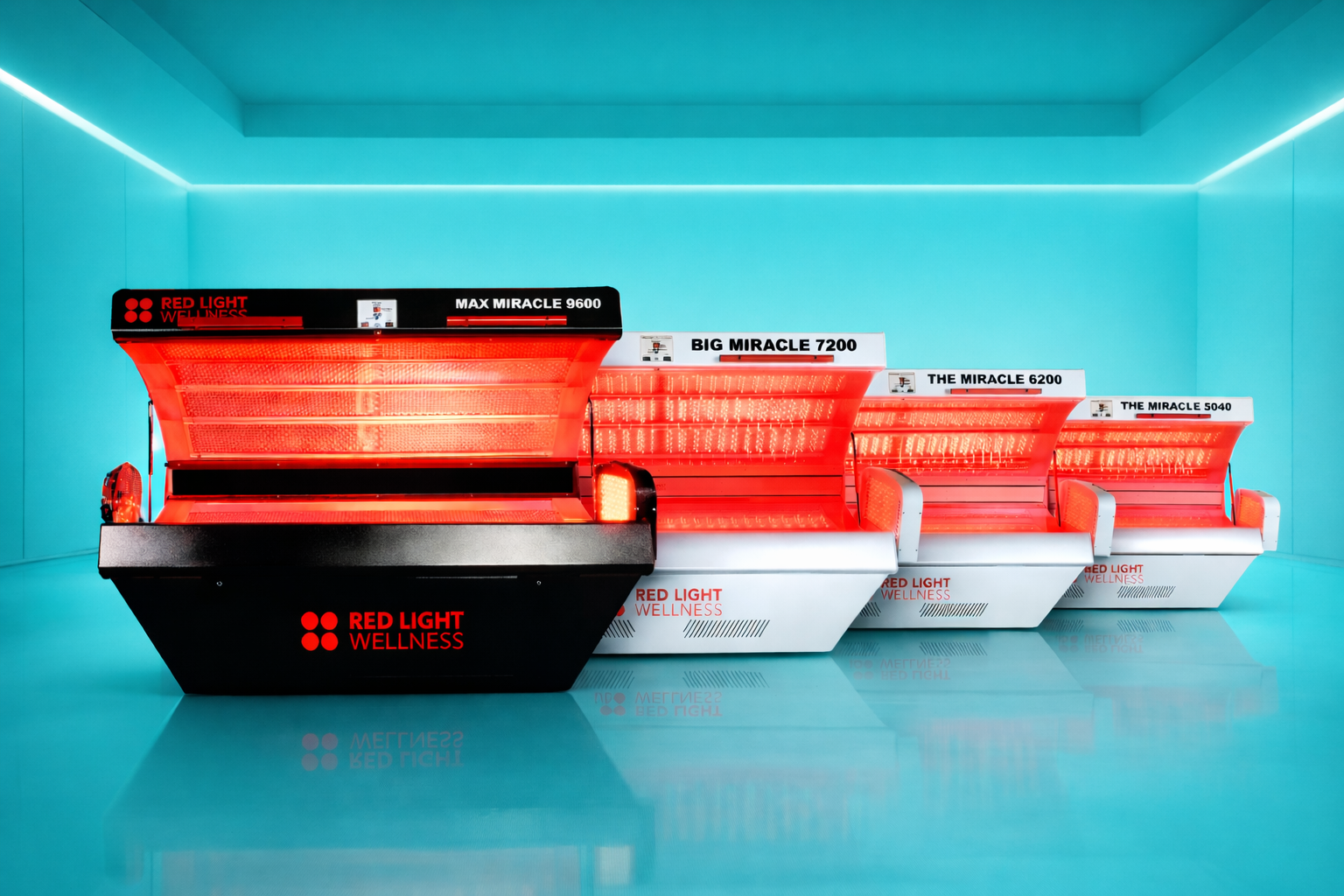
Yes. Commercial red light therapy beds qualify as business equipment under IRS Section 179, which allows you to deduct the full purchase price in the tax year you place the equipment in service. At a 30% tax rate, a $32,999 Miracle 5040 generates approximately $9,900 in tax savings. Additional savings may be available through bonus depreciation and ADA tax credits. Consult your tax professional for current year limits and eligibility.
-
Photobiomodulation treatments may be billable under CPT code 97026 (infrared therapy, supervised), CPT 97039 (unlisted therapeutic modality), or CPT 97140 (manual therapy techniques in combination protocols). Billing eligibility depends on provider credentials, state scope-of-practice laws, and payer policies. FDA Class II clearance is typically required. Not all insurers reimburse for photobiomodulation under these codes.
ROI calculator
Simple math. Real results.
Enter your average session price, number of daily clients, and operating days per month. Instantly see your payback period, breakeven date, and profit projections.
Return On Investment (ROI) Calculator
Red Light Wellness for Professionals offers cutting-edge red light therapy solutions for commercial applications. Calculate your potential return on investment with our products below.
Note: Device sale prices are automatically included in the calculations.
Calculating your ROI...
Results
Year One ROI Multiple and Percentage (Revenue/Cost)
| CPT Code | Description | Common Application |
|---|---|---|
| 97026 | Infrared therapy, supervised | Most commonly used for PBM billing in clinical settings |
| 97039 | Unlisted therapeutic modality | Used when 97026 does not apply to the specific treatment |
| 97140 | Manual therapy techniques | Sometimes used in combination treatment protocols |
Insurance billing and reimbursement
Most red light therapy sessions are paid out of pocket by clients, and the out-of-pocket model supports strong per-session margins when priced between $50 and $150. However, practitioners in certain clinical settings may also be able to bill insurance for photobiomodulation treatments.
Billing Eligibility Requirements
Billing eligibility depends on provider credentials (MD, DO, DC, PT, and others) and state scope-of-practice laws. Pre-authorization and medical necessity documentation may be required. Not all insurers reimburse for photobiomodulation under these codes. Reimbursement rates vary by payer, region, and clinical documentation.
FDA Class II clearance is typically required for insurance billing eligibility. All Red Light Wellness beds carry FDA Class II clearance.
Medicare and most private insurers do not currently cover standalone red light therapy sessions, but some clinics successfully integrate photobiomodulation into reimbursable service bundles as part of documented treatment plans.
Recommendation
Do not build insurance reimbursement into your primary revenue projections until you have confirmed coverage with your specific payers. Treat billable sessions as upside to your cash-pay model, not your baseline. Consult a healthcare billing specialist familiar with photobiomodulation before submitting claims.
Bottom line
Red light therapy bed ROI is operational.
Short sessions increase throughput. Consistent utilization creates predictable cashflow. Low overhead protects profit. Tax strategy reduces effective equipment cost. Lifetime warranties eliminate the two largest replacement expenses.
One bed. Multiple revenue pathways. Predictable math.
Next steps
Take the next step: request a demo, explore financing, or talk to our ROI specialists today.