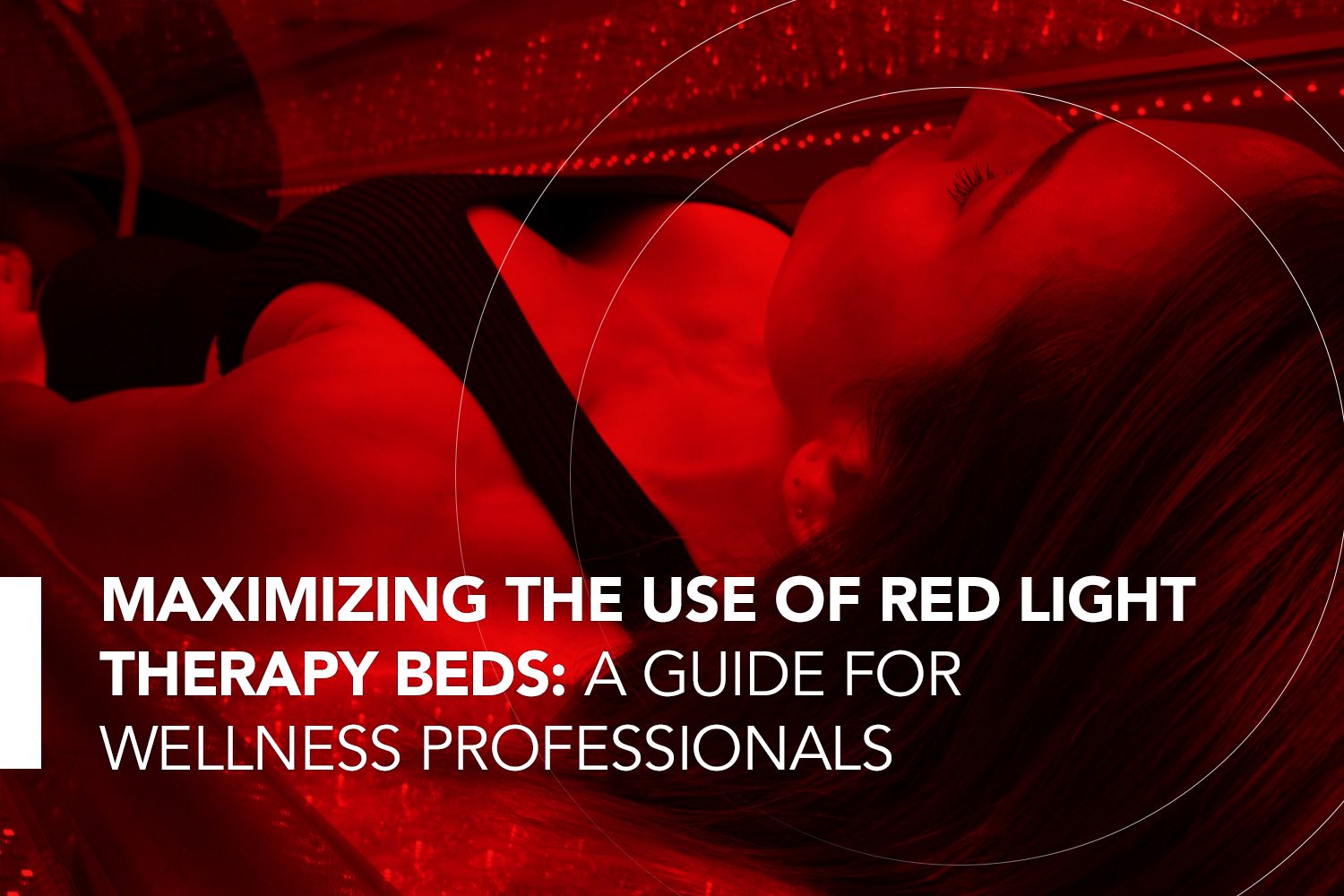
Maximizing the Use of Red Light Therapy Beds: A Guide for Wellness Professionals
Most guides about red light therapy beds focus on what to buy. This one starts where those guides end.
The difference between a red light therapy bed that generates consistent revenue and one that sits underused comes down to operational execution. How you integrate sessions into your daily workflow. How you price and package the service. How quickly your staff gets comfortable running it. How you build client demand before and after launch.
If you are evaluating commercial red light therapy beds or recently installed one, this guide covers the practical side of turning equipment into a functioning, profitable service line. Red Light Wellness provides onboarding support, staff training, and marketing resources with every commercial bed purchase, and this guide reflects the operational patterns we see across practices that launch successfully.
Session Workflow: Check-in to Checkout
A well-run red light therapy session takes roughly 20 minutes from the time a client walks in to the time the room is ready for the next person. Here is how that breaks down in practice.
Pre-session (2 to 3 minutes). The client arrives and checks in at the front desk. First-time clients complete an intake form that screens for contraindications: photosensitivity, active cancer treatment, pregnancy, or recent photosensitizing medications. Return clients simply confirm nothing has changed. Staff hands the client protective eyewear and walks them to the treatment room.
Session start (1 to 2 minutes). The client enters the room, removes any heavy clothing or jewelry that might block light exposure, and gets into the bed. On models with auto-lift systems, like the Max Miracle 9600 and Big Miracle 7200, the canopy raises and lowers at the push of a button, so clients can get in and out without assistance. Staff sets the session timer and exits the room.
During the session (10 to 15 minutes). The client is unattended. This is the key labor efficiency point. Your staff is not standing in the room holding a device or repositioning panels. They are free to check in other clients, answer phones, process payments, or manage other services. The bed maintains consistent irradiance across the full treatment area for the entire session, with no manual adjustment required. Red Light Wellness beds use a patented Goldilocks System that maintains the optimal distance between the LEDs and the body throughout the session, eliminating the need for staff to calibrate positioning or select wavelength settings.
Post-session (3 to 5 minutes). The session ends automatically. The client exits the bed, dresses, and returns to the front desk for rebooking. Staff enters the room, wipes down all contact surfaces with an approved disinfectant, and replaces any protective coverings. Total room turnover takes under five minutes.
What this means for throughput. At 15-minute sessions plus 5-minute turnovers, a single bed supports three clients per hour. Over a 10-hour operating day, that is up to 30 sessions. Even at 50 percent utilization, which is 15 sessions per day, the revenue math works comfortably. Use the Red Light Wellness ROI calculator to run projections based on your specific session pricing and operating hours.
For detailed guidance on treatment room layout, electrical requirements, and physical setup, see the red light therapy room setup guide.
Integrating Red Light Therapy by Practice Type
Red light therapy fits into different practice types in different ways. The mistake most providers make is treating it as a generic add-on rather than integrating it into their existing clinical workflow. Here is how the integration typically works across the most common practice settings.
Chiropractic clinics. The most natural integration point is pre-adjustment or post-adjustment therapy. A 10-minute red light session before a manual adjustment can help reduce muscle guarding and tension, making the adjustment smoother for both practitioner and patient. Post-adjustment, red light supports tissue recovery and extends the perceived value of the visit. The operational advantage is significant: the patient self-administers in a separate treatment room while the chiropractor sees the next patient. Red light becomes a passive revenue layer that does not consume any practitioner time. Many chiropractic practices charge $40 to $75 per session as an add-on, or bundle it into care plans at a discounted rate per visit. For a deeper look at chiropractic-specific use cases, see how chiropractors use red light therapy to improve patient outcomes.
Medical spas and aesthetic practices. In medspa settings, red light therapy works as both a standalone premium service and a treatment enhancer. It pairs naturally with facials, body contouring, and post-procedure recovery protocols. Pricing tends to run higher in these environments, typically $75 to $150 per session, because the clientele expects premium positioning and the perceived value aligns with other high-end aesthetic services. Where you place red light on your service menu matters. List it alongside your highest-margin offerings, not buried in a list of add-ons. Clients who see it positioned next to services they already value are more likely to try it.
Gyms and recovery studios. Recovery-focused gyms and studios typically position red light therapy as a membership tier differentiator. The common model is a premium membership that includes unlimited red light access for $50 to $100 per month above base dues, or per-session pricing at $30 to $75 for non-members. The operational advantage for gym environments is that sessions require zero staff involvement once the member has been onboarded and trained on bed operation. This makes it one of the lowest-labor revenue streams a gym can add.
Functional medicine and wellness centers. Multi-modality practices get the most value from red light therapy when they schedule it alongside complementary services. Stacking red light with IV therapy, cryotherapy, PEMF, or hyperbaric sessions in the same visit window increases per-visit revenue without requiring a separate marketing effort. The key is scheduling: build treatment blocks that pair services naturally so clients experience multiple modalities in a single appointment rather than making separate trips.
Red Light Wellness provides practice-specific onboarding support, including guidance on where red light therapy fits within your existing service structure and client flow.
Pricing, Packages, and Memberships
How you price red light therapy determines whether it becomes a consistent revenue stream or an occasional upsell. The most successful practices use a layered pricing structure that captures different client segments.
Single session pricing. Most practices price full-body red light therapy sessions between $50 and $150, depending on market positioning and practice type. Medspas and aesthetic clinics sit at the higher end. Gyms and general wellness centers price lower. The important thing to remember is that the marginal cost of each session is near zero: no consumables, no practitioner time, minimal electricity. Your pricing should reflect the value of the therapeutic outcome, not the cost to deliver it.
Session packages. Packages create commitment and smooth revenue. A standard structure is a 10-session pack at 10 to 15 percent off the single-session rate, or a 20-session pack at 15 to 20 percent off. Packages reduce your per-client acquisition cost because clients who prepay are already committed to returning. They also create a natural rebooking cadence that keeps your schedule full.
Monthly memberships. Recurring memberships at $99 to $199 per month for unlimited or semi-unlimited access generate the most predictable revenue. Membership clients tend to visit more frequently, see better results, and stay longer. Many practices offer a "founding member" rate during the first 30 to 60 days after launch to build a committed client base quickly. Once the promotional window closes, the standard rate takes over, but early adopters stay locked in at their original price. Membership clients typically carry three to four times the lifetime value of single-session clients.
Service bundles. Pairing red light therapy with an existing service, such as an adjustment plus red light, a facial plus red light, or a recovery suite package, increases per-visit revenue without requiring a separate marketing campaign for each service. Price the bundle at 10 to 20 percent below the a la carte total to create a clear incentive. The client perceives a deal, and your average ticket goes up.
For specific revenue projections based on your pricing model, session volume, and operating days, use the ROI calculator on the Red Light Wellness equipment page.
Staff Training and Operational Requirements
One of the most common questions from practices considering red light therapy is how much training it actually requires. The short answer: not much.
Red Light Wellness beds are designed so that most front-desk or clinical staff can be fully operational after a single training session. The equipment does not require manual wavelength selection, LED distance adjustment, or complex protocol programming. The Goldilocks System handles the positioning. The timer handles the dosing. Staff focuses on the client experience, not the technology.
Here is what your team needs to learn: how to operate the bed controls, including start, stop, and emergency shutoff. How to complete the client intake form and screen for basic contraindications. How to clean and sanitize the bed between sessions using approved disinfectant. How to explain the experience to first-time clients in clear, non-technical language so they know what to expect.
Here is what your team does not need to learn: photobiomodulation science, wavelength specifications, irradiance calculations, or dosimetry protocols. Those considerations are built into the equipment design. This is a meaningful operational advantage because it means you do not need a licensed technician or a specialized hire to run the service. Any trained staff member can manage sessions.
Red Light Wellness provides hands-on training during installation, and ongoing support is available when staff turns over. New hires get up to speed quickly because the equipment itself is designed around simplicity. For clinical dosing details and recommended session frequencies for specific conditions, refer to the red light therapy dosage guide.
Building Client Demand from Day One
Equipment that sits idle does not generate revenue. The practices that see the fastest return are the ones that build demand before the bed is even installed.
Start with a soft launch. Before your public announcement, invite 10 to 20 of your best existing clients for complimentary introductory sessions. Choose clients who are engaged, vocal, and active on social media. After their sessions, capture their feedback. Ask for testimonials. Take before-and-after photos with permission. This creates word-of-mouth momentum and social proof before you spend anything on advertising.
Offer the first session free. Removing the cost barrier for the initial session is the single most effective client acquisition tactic for red light therapy. Most people who experience a full-body session in a commercial-grade bed rebook, because the experience is tangible and immediate. They feel the warmth, they notice the relaxation, and many report improved sleep or reduced soreness within the first few sessions. A free trial converts at a significantly higher rate than traditional wellness marketing because it is experiential, not conceptual.
Bundle at launch. For the first 30 days, add red light therapy as a complimentary upgrade to your most popular existing service. If you run a chiropractic practice, offer a free 10-minute red light session after every adjustment for the first month. If you run a medspa, include it as a bonus with every facial booking. This introduces the therapy to clients who are already walking through your door without requiring a separate marketing campaign. After the promotional period ends, clients who experienced the benefit are primed to purchase it as a standalone service or package.
Focus retention on consistency. The clients who stay are the ones who see results, and results come from consistent use. Encourage new clients to commit to two to three sessions per week during their first month. This is where membership models pay off: clients who have already committed financially are far more likely to maintain the cadence needed to experience real outcomes. Once they feel the difference, retention takes care of itself.
Red Light Wellness provides a marketing launch kit with every commercial bed purchase, including client intake forms, educational handouts, and promotional templates. You are not building a marketing program from scratch.
What Red Light Wellness Provides After Purchase
Most equipment manufacturers sell a bed and move on. Red Light Wellness supports the practice that buys it.
Every commercial bed purchase includes white-glove installation with electrical guidance and room layout consultation. Your staff receives hands-on training during setup, covering bed operation, client intake procedures, cleaning protocols, and first-session client communication. If staff turns over down the road, retraining support is available.
RLW also provides a marketing launch kit that includes intake forms, client-facing educational materials, and promotional templates designed for your practice type. You do not need to design these from scratch.
On the service and maintenance side, Red Light Wellness maintains a nationwide network of trained service technicians covering all 50 states, including Alaska and Hawaii. Replacement parts ship directly from the manufacturer in St. Louis, Missouri, with no distributor delays. When something needs attention, you are working with the people who built the equipment, not a third-party service chain.
Ongoing account support and practice growth consultation are available after launch. Whether you are scaling from one bed to multiple locations or optimizing your session pricing, the RLW team has worked with practices at every stage.
For a detailed look at available models, specifications, and pricing, explore the Wellness Collection or request a quote.
Start Running Your Red Light Therapy Service
The equipment is the foundation. How you operate it determines the return.
If you are evaluating commercial red light therapy beds, preparing to launch a new service, or looking to improve the performance of equipment you already own, the Red Light Wellness team can help. We will walk you through equipment selection, room planning, staff training, and operational setup so your practice is generating revenue from the first week.
Explore our commercial red light therapy beds | Get a personalized quote | Contact us
The Red Light Wellness editorial team has forty years of expertise in light therapy and photobiomodulation (PBM) research. Red Light Wellness is an FDA Class II cleared medical device manufacturer based in St. Louis, Missouri. The company designs and produces commercial-grade red light therapy beds for chiropractors, medspas, physician clinics, and wellness practices across the United States. The editorial team combines engineering knowledge with clinical experience from working alongside these professionals daily.
A multidisciplinary team develops this content. The team includes:
· Biomedical engineers specializing in LED wavelength technology and therapeutic light delivery systems · Clinical advisors from our network of healthcare professionals who use Red Light Wellness equipment daily · Regulatory specialists who ensure all content aligns with FDA Class II cleared medical device standards · Wellness industry analysts tracking market trends.
Red Light Wellness operates from an FDA-listed facility in St. Louis, Missouri. The company designs and manufactures commercial-grade red light therapy beds used by healthcare professionals nationwide.
Our clinical advisors are licensed healthcare practitioners who use our FDA Class II cleared medical devices in daily practice.