

SENIOR CAT CARE · DAILY ROUTINE
Red light therapy for cats with arthritis: a daily, at-home protocol that works.
Your cat is now 12, or 14, or 16, and you are watching the quiet withdrawal happen. Less jumping. Less grooming. Sleeping in one favorite spot most of the day. Greeting you a little less often. The vet calls it normal aging. You know it is more than that.
A 2011 study published in the Journal of Feline Medicine and Surgery documented arthritis in 82 percent of cats over age 14, most of them undiagnosed. Your cat is almost certainly in pain you cannot see.
40
Years of engineering
4 conditions
One mechanism

QUIET WITHDRAWAL
The quiet withdrawal: how senior cat pain actually looks
Senior cats rarely cry, limp, or vocalize pain. They withdraw.
The signs are subtle, and they show up in the spaces between events.
✓ Less jumping (to the bed, the windowsill, the favorite chair)
✓ Sleeping in one chosen spot most of the day instead of rotating
✓ Less greeting at the door, less play, less social contact
✓ Subtle weight gain (less movement) or weight loss (chronic pain reduces appetite)
✓ Reduced grooming, especially of the back end and lower back
✓ Avoiding the litter box (often pain on entry or exit, not litter preference)
✓ Slower or hesitant on stairs
✓ More hiding (under the bed, in closets, in places they used to leave)
Two or more of these in a cat over 10 strongly suggests pain or other senior-onset condition. Most owners notice these signs but assume they are 'just getting old.' Many of them respond well to red light therapy as part of a broader senior care plan.
WHAT CHANGES
Most senior cats face several changes at once. The cumulative result is the cat you used to know moves more slowly, sleeps more deeply, and is harder to read.
What changes in an aging cat's body
Cartilage thins
Joint cartilage breaks down faster than it rebuilds with age. Arthritis is far more prevalent in cats than most owners realize. The 2011 Journal of Feline Medicine and Surgery study is the definitive reference.
Muscle mass declines
Less muscle around the joints means less support and more compensatory strain on remaining structures.
Circulation slows
Slower circulation slows skin healing and minor injury recovery. Healing that was easy at age 4 takes longer at age 14.
Cellular energy drops
Mitochondrial function declines with age. The cellular ATP that powers tissue repair runs lower in older cats.
Conditions stack in senior cats
Senior cats often also develop chronic kidney disease (CKD), hyperthyroidism, dental disease and gingivitis, and cognitive changes alongside the joint and mobility issues. These conditions don't replace the pain. They layer on top of it. A senior cat may be managing arthritis, early CKD, and gingivitis simultaneously, with the joint pain being the most reachable target for at-home support. Recent veterinary research has also explored photobiomodulation as adjunctive support for feline CKD, where mitochondrial dysfunction is a contributing factor.
None of this reverses aging. But each lever, addressed daily, adds quality of life and good days. Red light therapy works on inflammation, circulation, and cellular energy through one mechanism.

WHY FOR CATS
Why red light therapy fits senior cats especially well
There are two reasons red light therapy fits senior cats unusually well. The mechanism fits aging biology, and the safety profile fits a species that tolerates few medications.
The mechanism fits aging cells
Photobiomodulation works at the mitochondrial level. Aging cells with declining mitochondrial function get the most benefit from a stimulus that boosts ATP production. The effect that is modest in a young cat is meaningful in a senior. The same applies to inflammation reduction (older bodies carry more cumulative low-grade inflammation), circulation support, and tissue repair.
The safety profile fits cats
Cats tolerate fewer pain medications safely than dogs do. Most NSAIDs are dangerous for cats long-term. Senior cats often need pain management options that don't add medical burden. Red light therapy is one of the few that genuinely fits. It is a daily use therapy with no systemic exposure and no metabolic load, and it pairs cleanly with the limited medications cats can tolerate.
Clinical credibility: The World Association of Laser Therapy (WALT) has established veterinary protocols for photobiomodulation that veterinary clinicians follow when prescribing the therapy. The mechanism is well-documented in peer-reviewed veterinary research.
DAILY ROUTINE
A multi-condition daily routine for your senior cat
Senior cats benefit most from one daily 10 to 15 minute session in their favorite resting spot. Never force contact, let the cat choose the location, and layer with a familiar blanket. The pad placement strategy from the cat hub applies here.
One routine, four targets. Position the pad against the most affected area each day and the other systemic effects (improved circulation, reduced cumulative inflammation, energy support) follow naturally from consistent daily use.
Target 1
Joints
Hips, shoulders, knees, lower back. The most affected area in most senior cats. Position the pad so the cat's hips and lower back contact the LEDs when they lie down. For cats with diagnosed arthritis, see the cat arthritis protocol for joint-specific placement detail.
Target 2
Skin
Hot spots, slow-healing minor wounds, dermatitis, feline acne. The 660nm red wavelength addresses surface tissue. Position the pad against the affected area during sessions.
Target 3
Recovery support
Post-vet, post-grooming, mild stress events. Senior cats are often slower to recover from any disruption. Sessions after stressful events help them settle.
Target 4
General wellness
Circulation and cellular energy. The systemic benefit is the most subtle but the most pervasive. Most owners notice their senior cat seems brighter and more present after 4 to 6 weeks of consistent use.
Daily Protocol Summary
The pad becomes part of where they already want to be, not somewhere you take them.
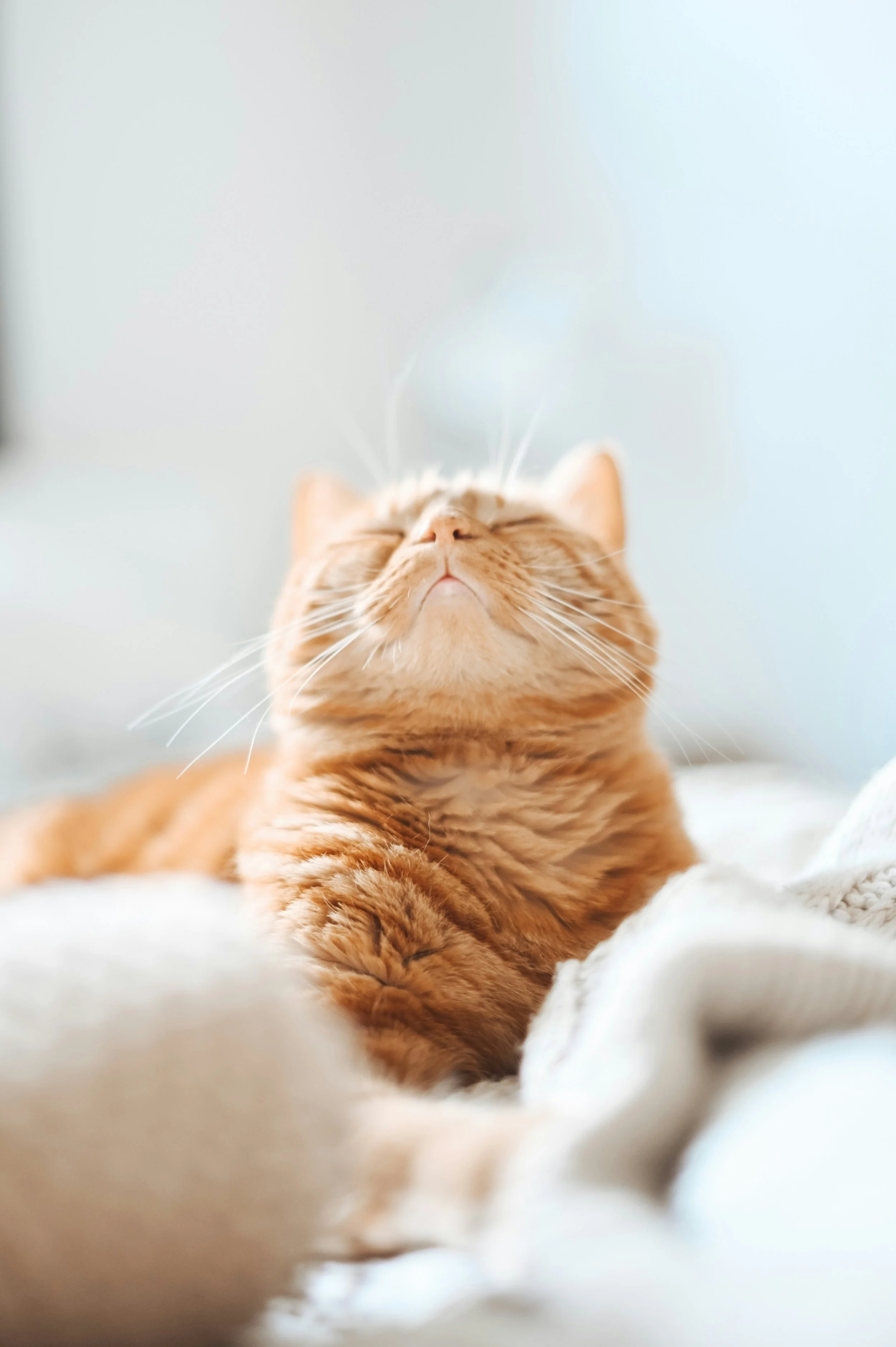
Cat-specific medication tolerance: why drug-free options matter more for cats
CAT-SPECIFIC MEDICATION TOLERANCE
What cats can't safely take long-term
Cats metabolize many medications differently than dogs and humans. Long-term NSAIDs that work well in dogs can be toxic to cats. The list of pain medications safely usable long-term in cats is short.
The list of pain medications safely usable long-term in cats is short: gabapentin, buprenorphine in specific contexts, and a few targeted options under veterinary management. This narrow medication window is one reason senior cat pain often goes undertreated. Owners and vets are reluctant to medicate, the cat hides the pain, and the discomfort accumulates. Red light therapy fills part of this gap because it provides genuine pain reduction and inflammation control without the metabolic load. It does not replace veterinary diagnosis or the medications cats can tolerate. It adds a daily tool that doesn't pressure kidney function and is safe to use indefinitely. For senior cats specifically, that combination is unusually valuable. For multimodal pain management framing, see Red light therapy for cats with arthritis.
QUALITY OF LIFE
Cats hide pain and they hide pain relief. Owners often miss improvement because they expect dramatic change. The signs of senior cat improvement are subtle and they show up in behavior, not vocalization.
How to track quality of life in a stoic species
Watch for these small returns
A return to a previously avoided jumping spot (even one)
More grooming of the back end
More time in active spaces of the house
Easier movement on the stairs
Fewer stiffness episodes after long naps
More social engagement
Normal litter box use
A practical method
Choose 3 to 5 specific behaviors your cat used to do or still does intermittently, and check them off daily. Over 4 to 8 weeks the pattern becomes visible.
With seniors, a stable pattern is itself a win because it means the decline has slowed or paused. An improving pattern is meaningful.
A declining pattern is a signal for a vet conversation about what else might be happening. Red light therapy does not stop disease progression on its own.

WHERE THE PET MAT FITS
Built for the daily routine described above. The pad shape works particularly well for cats. It covers a full feline body in one session, fits in most favorite resting spots, and runs cool enough that a cat will choose to lie on it.
Where the Red Light Pet Mat fits in this routine
Red Light Pet Mat
A 16 × 7 inch flexible pad with 120 LEDs, dual 660nm and 850nm wavelengths, 140 mW/cm² irradiance, and a 20-minute timer with auto-shutoff.
Wavelengths
660nm + 850nm
LED count
120 LEDs
Size
16 × 7 inches
Irradiance
140 mW/cm²
Timer
20-minute auto-off
Certifications
FDA · CE · RoHS
$137 Includes 30-day return window
Place it in their favorite spot. Plug it in. Set the timer to 10 to 15 minutes. Let them come to it. The therapy follows from there. For broader feline applications beyond the senior years, see our Red light therapy for cats guide.
6 questions senior cat owners ask most
-
No. Older cats often respond fastest because their cellular function has the most room to recover. The Open Veterinary Journal documented mobility recovery in a senior cat after 25 laser therapy sessions. With seniors, the goal is not dramatic change. It is more good days, and that is achievable at any age.
-
Yes, and this is actually one of the more useful applications. Red light therapy does not stress kidneys the way NSAIDs do. Recent veterinary research has explored red light therapy specifically for feline CKD, where mitochondrial dysfunction is a contributing factor. Coordinate with your vet on the right protocol given your cat's specific situation. The therapy itself is generally safe alongside primary kidney management.
-
Generally yes. Red light therapy does not interact with thyroid medication directly. Confirm with your vet if your cat is on a thyroid medication that affects skin sensitivity. The therapy supports comfort and mobility but does not treat hyperthyroidism. The underlying condition still needs medical management.
-
Yes. Red light therapy is increasingly used in feline hospice and palliative care for the same reasons it fits senior cats generally. It is drug-free, has no metabolic load, is daily-tolerable, and is genuinely helpful for pain and inflammation. Coordinate with your hospice vet on the right protocol for your cat's specific situation.
-
Subtle changes by week 2 in some cats. Meaningful, consistent improvement by week 4 in most cats, matching the 2016 study finding on cat arthritis. With seniors, watch for the small returns (one jump, one extra grooming session, one more greeting). Those are the wins that matter.
-
Skip direct treatment over known tumors without veterinary approval. Avoid direct exposure to the eyes. Skip if your cat has a photosensitivity disorder, is on a photosensitive medication, or has active malignancy without veterinary supervision. For active infection requiring medical management, treat the infection first.

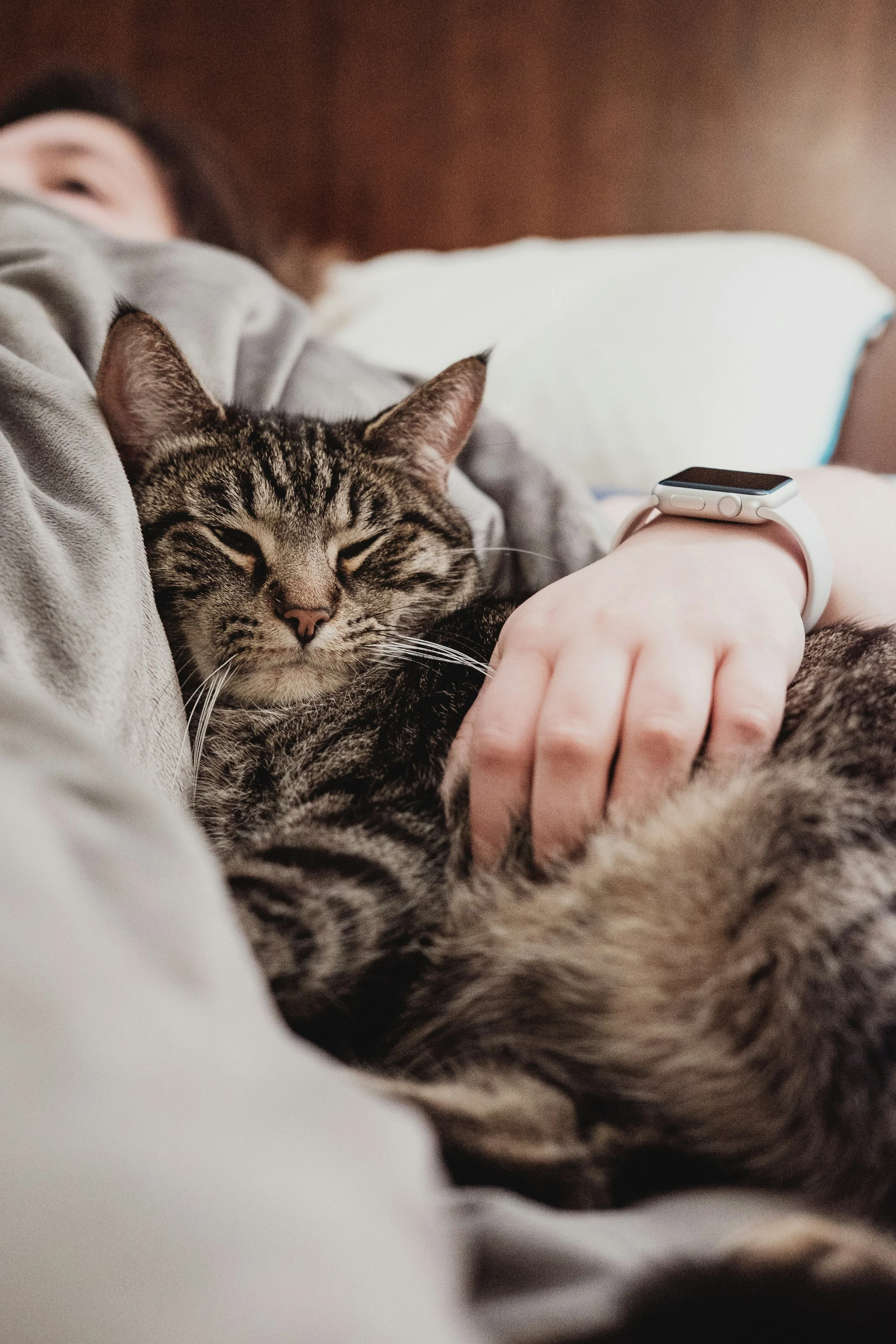
Senior cats deserve the same evidence-based pain support that senior dogs and humans have access to. The 2011 prevalence study documented how widespread feline arthritis is. The 2016 study showed measurable improvement in 4 weeks. Cats tolerate few pain medications safely, which makes drug-free, daily-tolerable options like red light therapy especially valuable for the senior years.
Add good days to your senior cat's life.
This article is for educational purposes and does not replace professional veterinary advice. If your pet has a diagnosed condition or is on medication, consult your veterinarian before adding red light therapy to their care routine.