Red light therapy for hair loss: How it works, what the research shows, and how to het started at home
If you are noticing more hair in the brush, a wider part, or thinning at the crown, you are not alone. Hair loss affects roughly 80 million men and women in the United States. And while treatments like minoxidil and finasteride have been around for decades, many people want something that works without the side effects that come with those options.
That is where red light therapy comes in. It is one of the most studied non-invasive options for hair loss available today, and a growing number of people see it as the best way to address thinning without drugs or invasive procedures. The clinical evidence behind it is strong for both men and women. We have spent years working with this technology, and we can tell you the science is real. Let us walk you through how it works, what the research actually shows, and what you can do right now to start seeing results.
What is red light therapy for hair loss?
Red light therapy uses specific wavelengths of light to stimulate your hair follicles at the cellular level. You may also hear it called low-level laser therapy (LLLT) or photobiomodulation. These are all describing the same thing: delivering therapeutic light energy to the scalp to support natural hair regrowth. The same wavelengths also support skin health and collagen production, which is why red light therapy has such a wide range of applications.
FDA-cleared devices deliver red light in the 630 to 670 nanometer range. At these wavelengths, the light penetrates about 5mm into the scalp, reaching the hair follicles beneath the skin surface. This is not UV light, and it is not heat-based. It is a completely safe, painless option that improves circulation at the scalp level, and your cells actually respond to the energy it delivers.
How red light therapy stimulates hair growth
Here is what happens at the cellular level. If you want the full breakdown of how red light therapy works across all applications, we cover that on our learning hub. For hair specifically, the mechanism starts with your mitochondria. When red light at therapeutic wavelengths reaches your hair follicle cells, it is absorbed by an enzyme in the mitochondria called cytochrome c oxidase. This triggers increased production of adenosine triphosphate (ATP), which is the primary energy molecule your cells use to do their work.
For your hair follicles, this extra cellular energy translates into real, measurable effects. Red light therapy increases blood flow to the scalp, which means more oxygen and nutrients reach your follicles. It reduces inflammation in the scalp tissue that can damage follicles and slow regrowth. It also supports overall scalp health by improving the cellular environment where hair actually grows. The treatment extends the anagen phase, which is the active growth stage of the hair cycle, so your hair grows longer and thicker before entering the resting phase. And it reactivates dormant follicles that have stopped producing visible hair.
To understand why this matters, it helps to know how your hair growth cycle works. Hair follicles cycle through three primary phases: anagen (active growth, lasting two to seven years), catagen (transition, lasting two to three weeks), and telogen (resting, lasting about three months). In androgenetic alopecia, the anagen phase gets progressively shorter while the telogen phase gets longer. The result is thinner strands and eventually visible thinning.
Red light therapy addresses this directly by prolonging the anagen phase and stimulating telogen follicles to re-enter active growth. Peer-reviewed research confirms that LLLT promotes anagen re-entry and extends the duration of the growth phase. This is not theory. This is documented science.
What the Clinical Research Shows
We do not make claims we cannot back up. Multiple randomized controlled trials have evaluated red light therapy for hair loss, and the findings are consistently positive.
A 2014 study published in Lasers in Surgery and Medicine found that participants using a 655nm red light device experienced a 37 percent increase in terminal hair count in women and a 35 percent increase in men compared to placebo groups. This was over 16 weeks of treatment using a double-blind, randomized controlled design with a true sham device.
A 2013 study in the American Journal of Clinical Dermatology showed a 35 percent increase in hair growth using LLLT compared to placebo. A 2017 meta-analysis across eight clinical studies found statistically significant increases in hair count. And a 2018 review of 11 studies concluded that both laser and LED devices produced significant improvements in hair density and thickness.
A 2020 systematic review confirmed that LLLT is effective and safe for both male and female pattern baldness when used consistently over several months. Across these studies, red light therapy increased hair count by 35 to 51 percent compared to placebo treatments over a standard 16-week period.
These results held across different device types, including laser caps, LED helmets, and clinical-grade systems. That tells us the therapeutic effect comes from the wavelength and dose, not any specific device format. We go deeper into the evidence and common misconceptions in our companion article, Does Red Light Therapy Work for Hair Loss?
Who Benefits Most from Red Light Therapy for Hair Loss
Red light therapy works best for people with early to moderate hair thinning where the hair follicles are still viable. Here is who we see the strongest results with.
Androgenetic alopecia responds most consistently. This includes male pattern baldness classified as Norwood-Hamilton IIa through V and female pattern hair loss classified as Ludwig-Savin I through II. The clinical evidence is strongest here, and this is the most common type of hair loss.
Telogen effluvium is another good candidate. This is the temporary hair shedding triggered by stress, illness, hormonal changes, or postpartum recovery. Red light therapy supports follicle recovery by boosting cellular energy and reducing scalp inflammation during the healing process.
Alopecia areata, the autoimmune condition that causes patchy hair loss, shows more limited evidence as a standalone treatment. Some studies suggest it helps reduce localized inflammation, but we want to be straightforward with you. If your follicles have been completely inactive for a long time, red light therapy is unlikely to produce visible results. The treatment stimulates existing follicles rather than creating new ones, which is why starting early gives you the best outcomes.
Get it on Amazon
Getting Started at Home: The Red Light Therapy Hat
You have two main options for red light therapy: visiting a dermatologist for in-office procedures, or treating at home with an FDA-cleared device. Professional treatments use medical-grade equipment with higher power output, but those procedures typically cost between 50 and 300 dollars per session and require regular office visits.
For most people dealing with hair thinning, a non-invasive at-home device offers the best combination of convenience, consistency, and long-term value. And consistency is what matters most with this treatment.
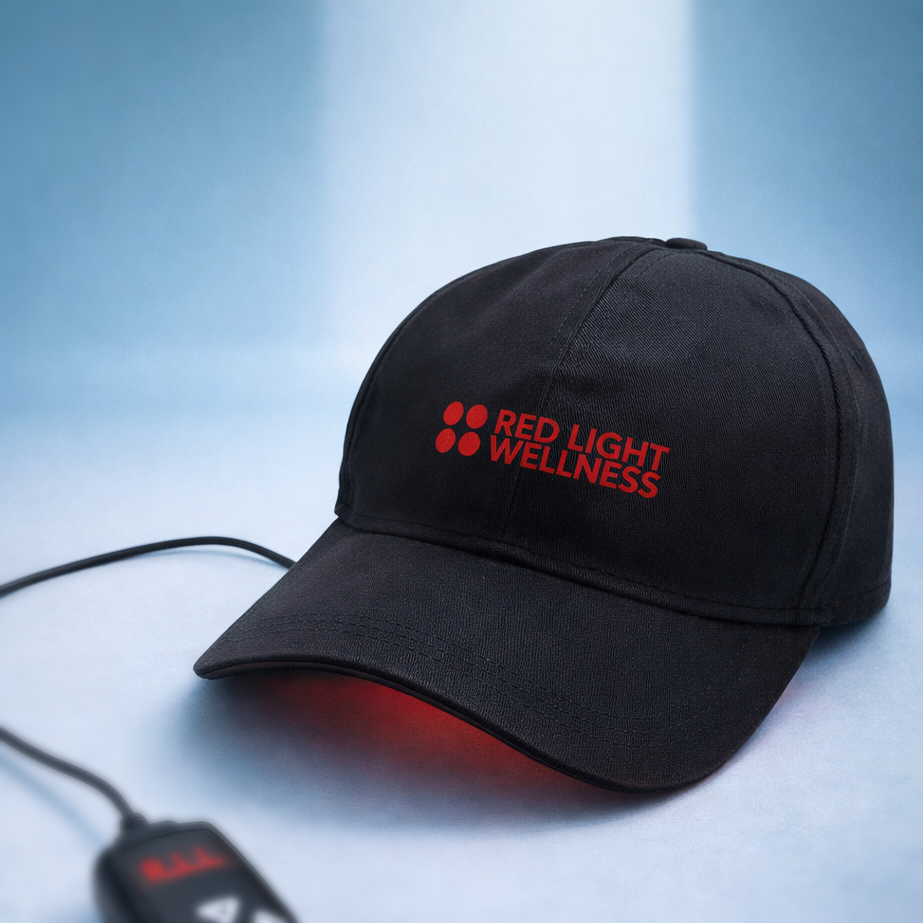
We designed the Red Light Therapy Hat specifically for this purpose. It delivers dual-wavelength therapy using 660nm red light and 850nm near-infrared light. The 660nm wavelength targets the hair follicles directly, stimulating cellular energy production and increasing blood flow. The 850nm near-infrared penetrates deeper to reduce inflammation in the scalp tissue and support the cellular environment around the follicles.
The hat features a flexible, soft design that fits comfortably and stays in place during your session. A built-in 30-minute auto timer takes the guesswork out of treatment. You put it on, press the button, and go about your day. No complicated protocols, no handheld devices you need to move around. It is hands-free, which means you can actually stick with it.
This is an FDA Class II device built with the same therapeutic wavelengths used in the clinical studies we referenced above. We did not cut corners on the technology. If you are serious about using red light therapy for hair loss at home, the wavelengths are what matter most, and ours are backed by peer-reviewed research. The design makes it easy to use consistently, which is the single biggest factor in getting results.
What to Expect: Treatment Timeline and Results
Red light therapy is not an overnight fix. We want to be upfront about that. But if you are consistent, the results follow a predictable timeline. Most clinical protocols call for sessions three to four times per week, and that is what we recommend for the best results. Each session runs about 30 minutes, making it easy to fit into your routine. For a deeper look at session timing and dosing across different conditions, see our Complete Red Light Therapy Dosage Guide.
During the first four to six weeks, cellular stimulation begins but visible changes are minimal. Some people experience temporary increased shedding during this phase. That is actually a positive sign. It means the growth cycle is resetting and dormant follicles are waking up.
At two to three months, you will start to notice reduced hair fall. Your existing hair may feel stronger and look healthier. Between three and six months, new hair growth becomes visible and thinning areas begin to fill in. After six months of consistent treatment, most people see measurable improvement in hair density and thickness.
Maximum results typically show up after six to twelve months. And here is something important to know: ongoing maintenance sessions help you keep those results long-term. Red light therapy for hair loss is not a one-and-done treatment. Hair loss can return if you stop treatment entirely, so we recommend continuing use at a reduced frequency once you reach your goals.
Combining Red Light Therapy with Other Hair Loss Treatments
Red light therapy can absolutely work on its own. But combining it with other evidence-based treatments often gives you even better results, because you are addressing hair loss from multiple biological pathways at the same time. Because red light therapy for hair loss is non-invasive and drug-free, it pairs safely with most other treatments without adding side effects or drug interactions.
Minoxidil applied topically prolongs the growth phase and improves blood flow to the scalp. Studies show that combining minoxidil with red light therapy enhances results by 25 to 35 percent compared to using either one alone.
Finasteride blocks DHT production and prevents follicle miniaturization in men with androgenetic alopecia.
Platelet-rich plasma (PRP) therapy uses growth factors from your own blood to stimulate follicle activity and pairs well with red light therapy.
Nutritional support plays a role too. Deficiencies in iron, zinc, biotin, and vitamin D can all contribute to hair thinning. Correcting those alongside red light therapy improves your overall treatment response.
We always recommend checking with a dermatologist before combining treatments. They can help you identify the right approach for your specific type and stage of hair loss.
Safety and Side Effects
One of the biggest advantages of red light therapy for hair loss is its safety profile. This is a completely non-invasive treatment that does not interfere with your body's hormonal balance. Unlike finasteride, it does not cause hormonal disruptions. Unlike topical minoxidil, it does not cause scalp irritation. There are no drugs involved and no systemic side effects.
The most common thing people report is mild scalp warmth or slight redness right after treatment, and that goes away within minutes. Temporary increased shedding in the first few weeks is normal and actually indicates the growth cycle is resetting.
Red light therapy is not recommended if you are taking photosensitizing medications, have active severe scalp conditions, or have a history of skin cancer in the treatment area. Use eye protection if you are treating with a panel-style device, though the hat design keeps light directed at the scalp where it belongs.
And one concern we hear a lot: no, red light therapy will not cause unwanted hair growth on your face or body. It does not create new follicles. It stimulates the ones that are already there. We address this and other misconceptions in our red light therapy myths debunked article.
Is Red Light Therapy Right for You?
If you are in the early to moderate stages of hair thinning and you want a non-invasive treatment that is safe, clinically supported, and something you can do at home, red light therapy for hair loss is worth trying. It is a proven way to support your hair health without the side effects that come with pharmaceutical options. The research is solid, the risk is low, and the technology has been FDA-cleared for this exact use.
The strongest results come from consistent use over several months. Starting early, while your follicles are still responsive, gives you the most significant improvements in hair density and thickness. And if you combine it with complementary treatments, you can build a comprehensive approach tailored to your specific situation.
The Red light therapy hat makes it easy to get started. Dual-wavelength therapy, a 30-minute auto timer, and a comfortable design you can wear while you work, relax, or handle your morning routine. We built this to help you actually stick with the treatment, because that is what gets results. If you want to explore beyond the hat, browse our full range of red light therapy devices to find the right fit for your needs.
If you are ready to take the next step, we are here to help. And if you want to talk to a dermatologist first, we encourage that too. The American Academy of Dermatology is a good starting point for finding a specialist. A professional evaluation helps identify the underlying cause of your hair loss and confirms whether red light therapy is the right fit for your situation.
The Red Light Wellness editorial team has forty years of expertise in light therapy and photobiomodulation (PBM) research. Red Light Wellness is an FDA Class II cleared medical device manufacturer based in St. Louis, Missouri. The company designs and produces commercial-grade red light therapy beds for chiropractors, medspas, physician clinics, and wellness practices across the United States. The editorial team combines engineering knowledge with clinical experience from working alongside these professionals daily. A multidisciplinary team develops this content. The team includes: · Biomedical engineers specializing in LED wavelength technology and therapeutic light delivery systems · Clinical advisors from our network of healthcare professionals who use Red Light Wellness equipment daily · Regulatory specialists who ensure all content aligns with FDA Class II cleared medical device standards · Wellness industry analysts tracking market trends Red Light Wellness operates from an FDA-listed facility in St. Louis, Missouri. The company designs and manufactures commercial-grade red light therapy beds used by healthcare professionals nationwide. Our clinical advisors are licensed healthcare practitioners who use our FDA Class II cleared medical devices in daily practice.