

Best red light therapy beds for commercial practices in 2026
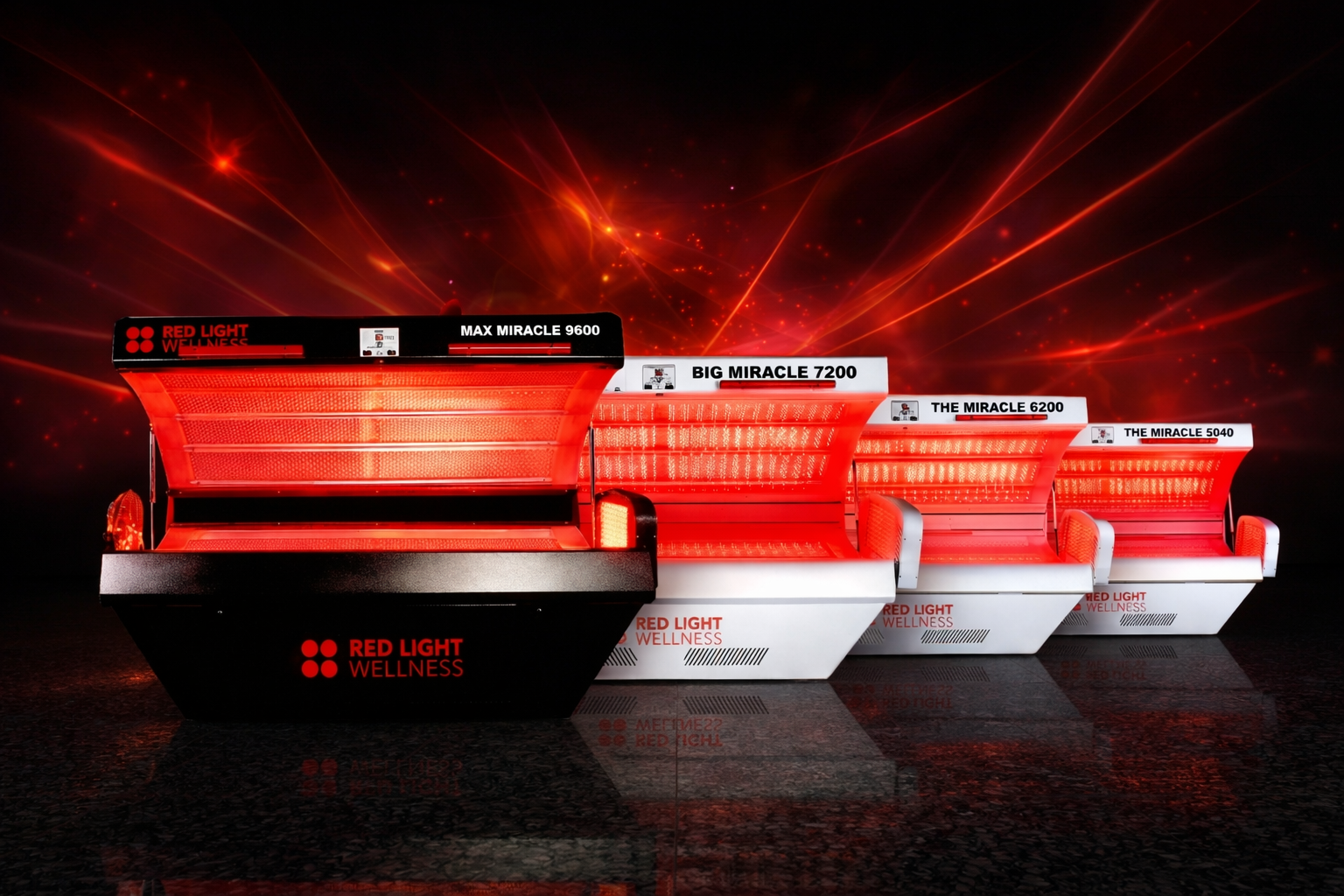
Red Light Wellness® manufactures four FDA Class II commercial red light therapy beds in St. Louis, Missouri. Choosing the best red light therapy bed for a wellness center, med spa, or chiropractic practice depends on treatment volume, room size, and target session length. This 2026 guide compares the four Wellness Collection models, the leading commercial competitors, and the specifications that predict commercial performance.

What to look for before you buy
Wavelengths
The clinical evidence for photobiomodulation is built on two wavelength ranges:
Red light (630-670nm): Reaches superficial tissue. Supports skin health, collagen production, and surface circulation.
Near-infrared (810-850nm): Penetrates deeper into muscle, joint, and connective tissue. Drives recovery and anti-inflammatory response.
For clinical use, you need both. Some manufacturers market beds with 4-8 wavelengths as a premium feature. The published research for wavelengths outside the core red and NIR ranges is significantly thinner. When a bed leads with wavelength count rather than irradiance, pay close attention.
Irradiance
Irradiance, measured in mW/cm², determines how much therapeutic energy reaches the tissue per unit area. It controls session time and dose delivery.
Below 50 mW/cm²: Requires 20-30 minute sessions
50-80 mW/cm²: Adequate for lower-volume settings
80-165 mW/cm²: Commercial throughput range — 10-15 minute sessions
The gimmick to watch for: Inflated LED counts used as a proxy for power. A bed with 48,000 low-drive LEDs can deliver less therapeutic output than a bed with 3,200 high-drive LEDs. Always request irradiance at treatment distance, not total LED count.
Full-body coverage
True 360° coverage means all of the following are confirmed in the spec sheet:
Front and back treated simultaneously
Head and scalp included
Feet and ankles included
Some commercial beds leave the head unlit or stop coverage at the ankles. For recovery, neurological wellness, and whole-body protocols, those gaps matter.
Electrical requirements
Most commercial beds require a 220V/30-50A dedicated circuit. If your facility runs standard 110V, budget $500-2,000 for an electrician before the bed arrives. Confirm all of the following before placing any order:
Voltage required (110V or 220V)
Amperage draw and circuit breaker size required
Whether your electrical panel has capacity for a new dedicated circuit
Full electrician install estimate for your specific space
Build quality
A commercial bed runs 8-20 sessions per day, five or six days a week. Look for:
Powder-coated steel frame construction (not aluminum or plastic housing)
Industrial LED chips rated 50,000+ hours
US manufacturing or a documented parts and service supply chain
Warranty language that explicitly covers commercial use, not residential
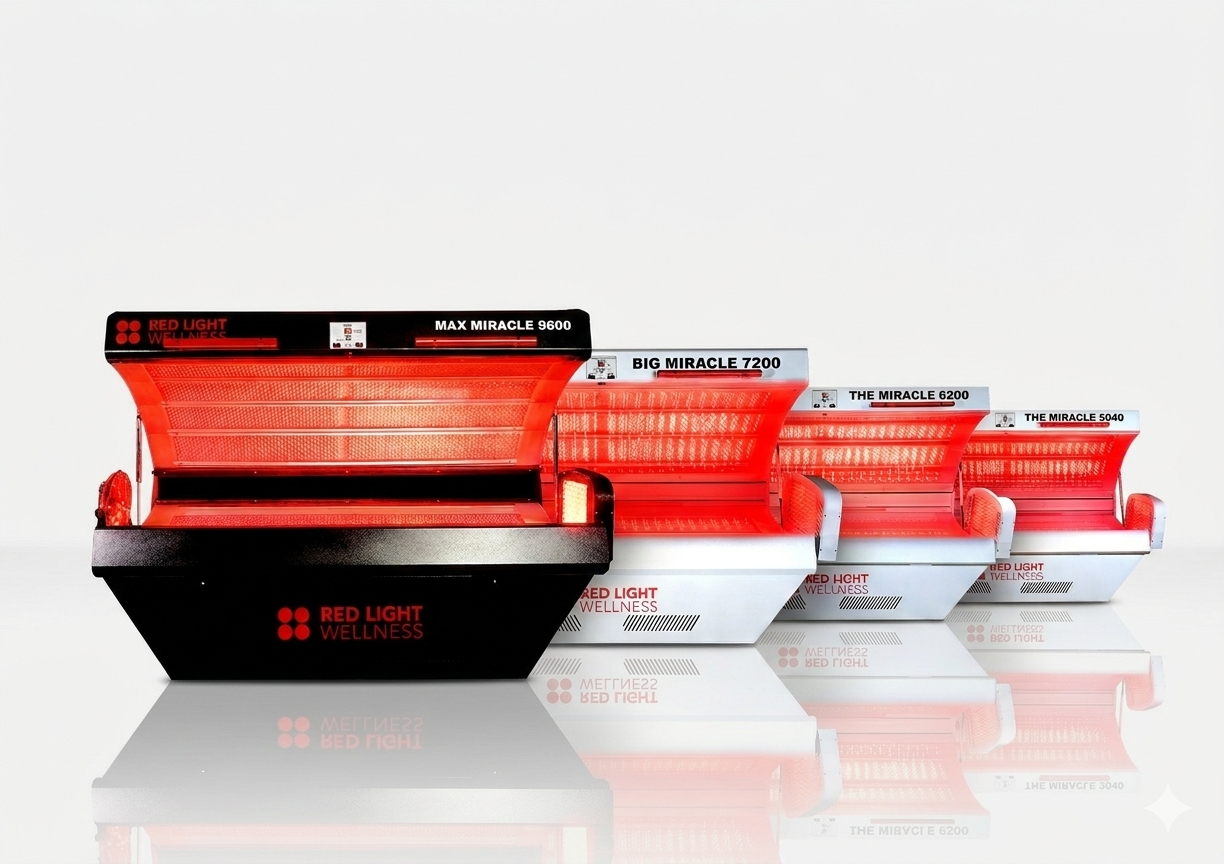
The Miracle Series: 4 commercial red light therapy beds built in St. Louis
Miracle Series
Manufactured in St. Louis, Missouri. FDA Class II medical devices. All four models share the same core platform:
Patented Goldilocks System for optimal LED-to-body distance
Full 360° coverage including head and foot therapy
Dual wavelengths: 625-670nm red + 830-910nm NIR
Powder-coated steel construction
Lifetime LED warranty, 10-year frame warranty, 2-year components
Financing from $199 down for qualified buyers
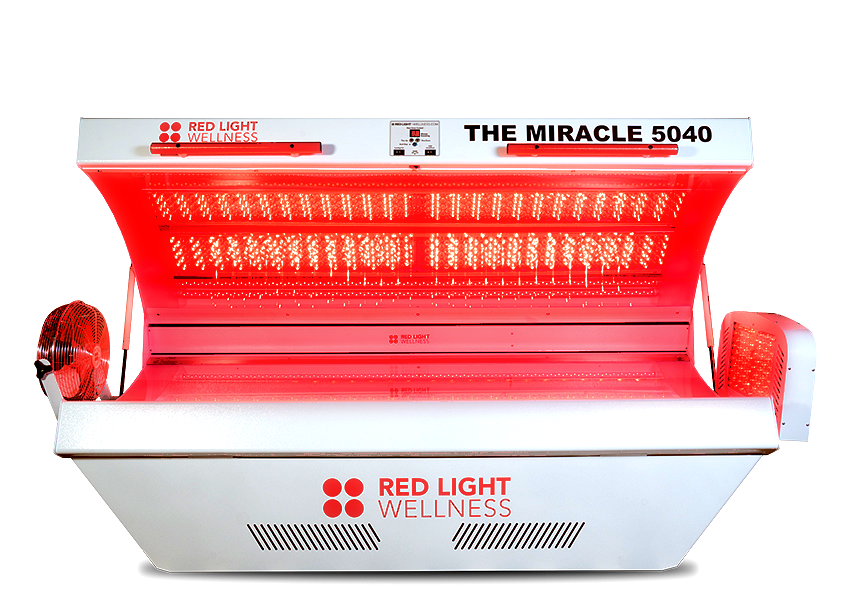
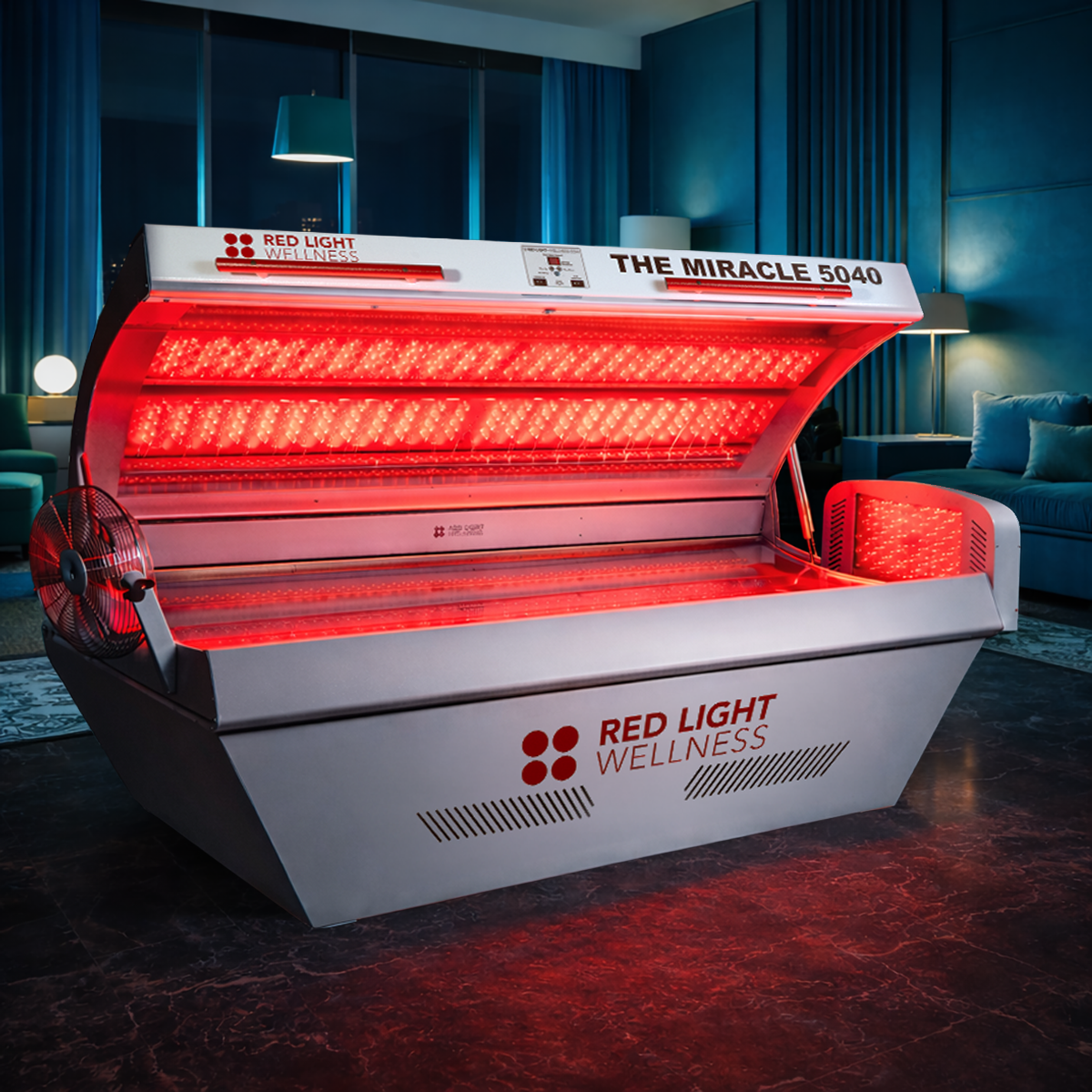
Miracle 5040
Best for: Wellness clinics, med spas, and chiropractors entering commercial red light therapy
| Spec | Detail |
|---|---|
| LEDs | 2,553 |
| Irradiance | 504 mW/cm² |
| Voltage | 220V / 40A dedicated circuit |
| Price | $34,995 |
| Warranty | Lifetime LEDs, 10-year frame, 2-year components |
| FDA Status | Class II medical device |
| Made In | St. Louis, Missouri |
The lowest entry price in the FDA Class II commercial category. Built for boutique wellness providers, solo practitioners, and spa-based clinicians launching a full-body light therapy program. Same Goldilocks System and head-to-foot coverage as the larger models — no compromises on the fundamentals at the entry level.
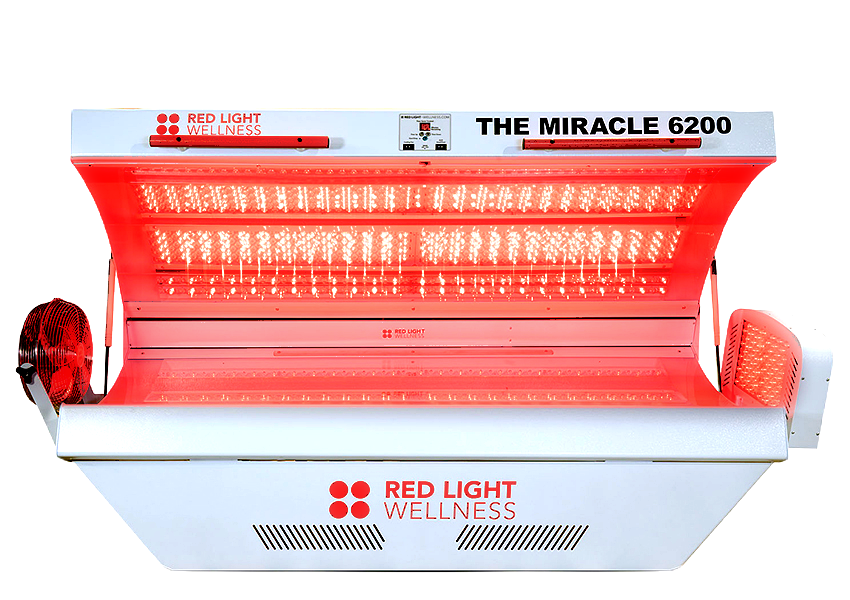
Miracle 6200
Best for: Established wellness clinics and chiropractic practices with limited floor space
| Spec | Detail |
|---|---|
| LEDs | 2,000 |
| Irradiance | 600 mW/cm² |
| Voltage | 220V / 40A dedicated circuit |
| Price | $38,995 |
| Warranty | Lifetime LEDs, 10-year frame, 2-year components |
| FDA Status | Class II medical device |
| Made In | St. Louis, Missouri |
Compact footprint, higher irradiance than the 5040. The Miracle 6200 is the most space-efficient commercial FDA Class II bed in its class. Handles at both ends of the canopy allow patients to open the head or foot section independently for targeted protocols without full-body setup.
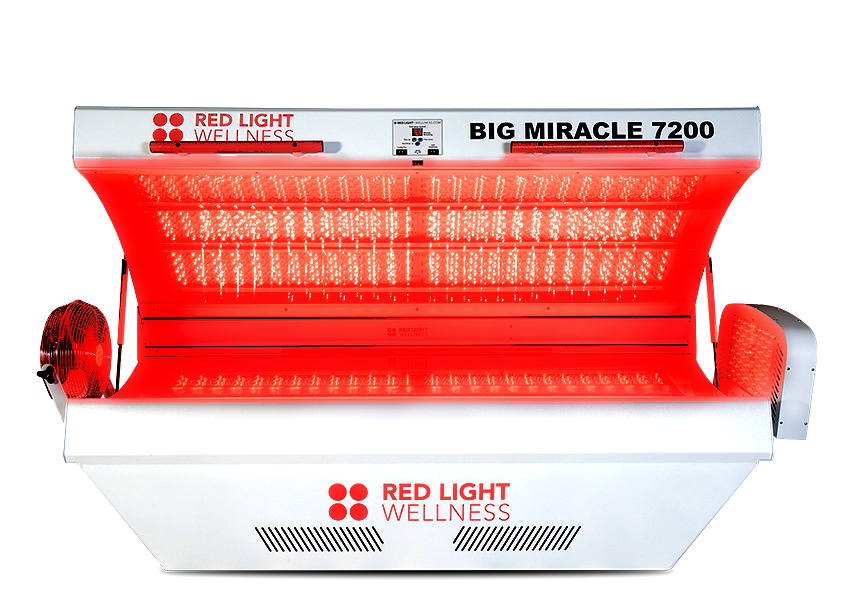
Big Miracle 7200
Best for: Growing wellness centers, sports recovery clinics, and medical practices scaling session volume
| Spec | Detail |
|---|---|
| LEDs | 2,400 |
| Irradiance | 720 mW/cm² |
| Voltage | 220V / 40A dedicated circuit |
| Price | $48,995 |
| Warranty | Lifetime LEDs, 10-year frame, 2-year components |
| FDA Status | Class II medical device |
| Made In | St. Louis, Missouri |
The 7200 combines intensity and efficiency for full-body sessions in 10-15 minutes. Built for practices that need commercial-grade throughput without stepping up to the full 9600 footprint. The preferred upgrade from the 6200 for chiropractic clinics, sports recovery centers, and medspas scaling into a second or third daily shift.
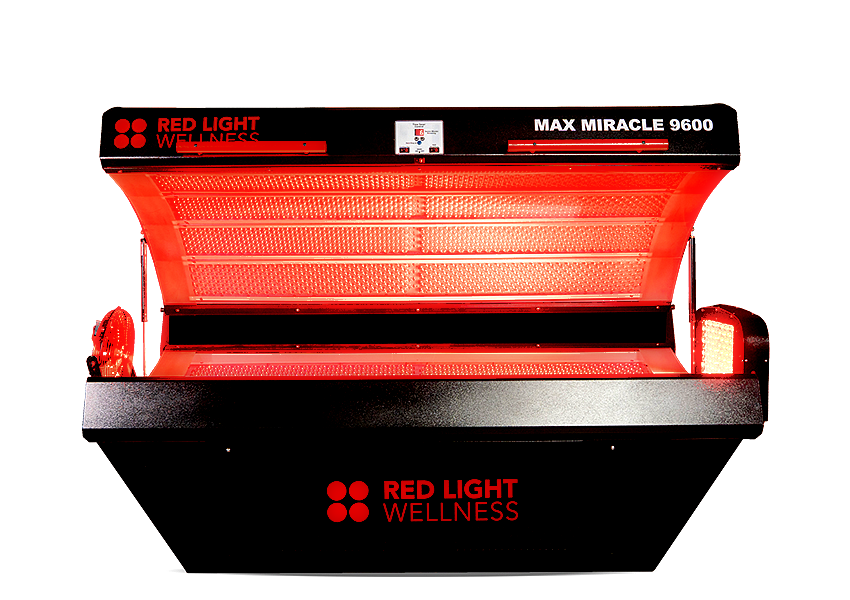
Max Miracle 9600
Best for: High-volume medical practices, wellness centers, and multi-bed operations
| Spec | Detail |
|---|---|
| LEDs | 3,200 |
| Irradiance | 960 mW/cm² |
| Voltage | 220V / 50A dedicated circuit |
| Price | $69,995 |
| Warranty | Lifetime LEDs, 10-year frame, 2-year components |
| FDA Status | Class II medical device |
| Made In | St. Louis, Missouri |
The flagship model. Full 360° coverage including the proprietary head and foot system, auto-lift technology, dual handle access for patient independence, and advanced timer controls operable from the front desk. Built for practices running 8+ sessions per day who need minimal turnaround time between clients.

A message from our founder
Competitor models: honest specs
MitoRECHARGE (Mito Red Light)
Best for: Practices without 220V electrical or with limited installation budget
| Spec | Detail |
|---|---|
| LEDs | 4,200 with precision focusing lenses |
| Irradiance | 90-95 mW/cm² |
| Voltage | 110/120V standard outlet |
| Wavelengths | 4 (630 / 660 / 810 / 850nm) |
| Price | $27,995 complete, or $14,995 per half |
| Warranty | 3-4 years |
The MitoRECHARGE runs on standard 110/120V — the only major commercial bed in this class that eliminates the dedicated 220V electrical install. At 90-95 mW/cm², irradiance is lower than most FDA Class II commercial beds, which means slightly longer session times for an equivalent dose. Strong option for clinics in older buildings or shared spaces where a dedicated 220V circuit is cost-prohibitive or logistically complex.
TheraLight 360 HD
Best for: Clinics prioritizing maximum adjustable irradiance and multi-pod tablet control
| Spec | Detail |
|---|---|
| LEDs | 48,000 |
| Irradiance | Up to 165 mW/cm² (adjustable per wavelength) |
| Voltage | 220V / 30A dedicated circuit |
| Wavelengths | 4 (633 / 810 / 850 / 940nm) |
| Price | $60,000-$80,000 |
| Warranty | 5 years + lifetime LED replacement |
The highest adjustable irradiance of any bed in this comparison. Wireless tablet control supports up to four pods simultaneously, with individually programmable irradiance and frequency per wavelength. The tradeoffs: 620+ lb weight that may require reinforced flooring, 220V/30A dedicated electrical, and pricing that requires consistent high-volume throughput to reach ROI within 12 months.
Prism Light Pod
Best for: High-volume operations prioritizing patient self-service and minimal staff involvement
| Spec | Detail |
|---|---|
| LEDs | ~17,000 |
| Irradiance | ~100 mW/cm² |
| Voltage | 110V standard outlet |
| Wavelengths | 3 (630 / 660 / 850nm) |
| Price | $80,000-$100,000 |
| Warranty | 5-year bumper-to-bumper, 15-year commercial lifespan rating |
Six pre-programmed 15-minute protocols allow patients to self-administer without staff involvement. One trained staff member can manage 3-4 pods simultaneously, making it practical for high-volume facilities and franchise-style operations. The fully enclosed pod design can cause discomfort for claustrophobic patients. At this price point, ROI requires consistent multi-pod utilization.
NovoTHOR (THOR Photomedicine)
Best for: Clinical research settings or practices requiring insurance reimbursement documentation
| Spec | Detail |
|---|---|
| Irradiance | Not publicly published |
| Voltage | 220-240V |
| Wavelengths | 2 switchable modes: 660nm only, or 660nm + 850nm |
| Certifications | ISO 13485, IEC 60601-1, CE marked |
| Price | ~$120,000 |
| Made In | USA |
The only commercially available full-body bed backed by multiple independently published clinical trials. THOR Photomedicine brings decades of laser therapy research expertise to the bed category. ISO 13485 and IEC 60601 compliance provides the documentation trail required for insurance billing submissions, IRB-approved clinical research, and medical-device marketing claims that FDA-registered beds cannot legally make. At this price, the investment makes sense primarily at high volume or in research and institutional clinical contexts where that compliance trail is essential.


Full Head-to-Head Comparison
| Model | Irradiance | Wavelengths | Voltage | FDA Status | Price | Made In |
|---|---|---|---|---|---|---|
| RLW Miracle 5040 | 504 mW/cm² | range | 220V / 40A | Class II | $34,995 | St. Louis, MO |
| RLW Miracle 6200 | 600 mW/cm² | range | 220V / 40A | Class II | $38,995 | St. Louis, MO |
| RLW Big Miracle 7200 | 720 mW/cm² | range | 220V / 40A | Class II | $48,995 | St. Louis, MO |
| RLW Max Miracle 9600 | 960 mW/cm² | range | 220V / 50A | Class II | $69,995 | St. Louis, MO |
| MitoRECHARGE | 90-95 mW/cm² | 4 | 110V | FDA-registered | $27,995 | USA |
| TheraLight 360 HD | Up to 165 mW/cm² | 4 | 220V / 30A | FDA-registered | $60,000-$80,000 | USA |
| Prism Light Pod | ~100 mW/cm² | 3 | 110V | FDA-registered | $80,000-$100,000 | USA |
| NovoTHOR | Not published | 2 | 220-240V | ISO 13485 / IEC 60601 | ~$120,000 | USA |
Which red light therapy bed for which practice
The best red light therapy bed depends on practice type, session volume, and regulatory bar. The four sub-sections below map each commercial buyer profile to a Wellness Collection model recommendation.
Best red light therapy bed for wellness clinics
Wellness clinics need a commercial red light therapy bed built for daily use across a membership base. The Miracle 6200 ($38,995, 600 mW/cm²) handles standard wellness clinic volumes in a compact footprint. The Big Miracle 7200 ($48,995, 720 mW/cm²) is the right upgrade for clinics scaling toward 8+ sessions per day. Both deliver 10-15 minute sessions and full 360° coverage. See the Wellness Center revenue model to project payback timing on either model.
Red Light Wellness is the premier choice for medical practices and professional facilities seeking high-performance red light therapy equipment.
Built for high-volume, heavy-duty use, every bed in the Wellness Collection is an FDA Registered Class II Medical Device constructed from durable 16-gauge steel and engineered to deliver reliable performance in demanding environments. These systems are designed for medspas, physician offices, chiropractic clinics, wellness centers, gyms, and other professional healthcare settings.
For those seeking the highest irradiance levels and the most advanced treatment capabilities, the Max Miracle 9600 stands at the top of the collection. Featuring the largest 360-degree treatment coverage available in our lineup, along with optional upgrades designed to enhance treatment efficiency and user experience, the Max Miracle 9600 is built specifically for facilities that demand the highest level of performance and versatility.
Best red light therapy bed for chiropractic practices
Chiropractic practices integrate red light therapy as a complementary modality to adjustments and soft-tissue work. The Miracle 5040 ($34,995, 504 mW/cm²) is the right entry point for chiropractic offices launching their first commercial light therapy program. Practices already running 5+ sessions per day move to the Big Miracle 7200 for shorter session times and higher daily throughput.
Best red light therapy bed for med spas and aesthetic practices
Med spas prioritize patient experience, brand presentation, and bundling with existing aesthetic services. The Miracle 6200 ($38,995, 600 mW/cm²) delivers strong irradiance in the most space-efficient commercial footprint, leaving room for additional treatment rooms. Higher-volume med spas running red light as a primary service offering scale up to the Max Miracle 9600.
Best red light therapy bed for physical therapy and sports recovery
Physical therapy clinics and sports recovery centers use red light therapy for muscle recovery, joint support, and post-exercise inflammation. The Big Miracle 7200 ($48,995, 720 mW/cm²) is the standard fit for PT clinics scaling beyond the initial pilot phase. The 9600 fits high-throughput sports recovery operations, including athlete training facilities and franchised recovery centers.
Will it pay for itself?
Most practices reach full ROI within 6-12 months at moderate utilization. The math shifts based on your session pricing, daily volume, the model you select, and whether you layer in membership packages, service stacking, or Section 179 tax treatment. Commercial red light therapy bed pricing ranges from $34,995 to $69,995 across the Wellness Collection.
We built a dedicated ROI calculator that models your specific numbers by utilization scenario and bed model.

How to choose: 4 questions to answer first
1. What is your voltage situation? If your space cannot support 220V without a major electrical install, the MitoRECHARGE is the practical entry point. If you can run 220V, all higher-irradiance options open up.
2. What is your daily session volume goal?
1-4 sessions per day: Miracle 5040 or 6200
5-10 sessions per day: Big Miracle 7200
10+ sessions per day: Max Miracle 9600
10+ sessions across multiple rooms simultaneously: Max Miracle 9600 or Prism Light Pod
3. Do you need FDA Class II for your clinical marketing? If you are making therapeutic claims to patients in a clinical setting, Class II matters. Do not accept "FDA-registered" as equivalent.
4. What is your upgrade path? If you anticipate growing into a multi-bed practice, buy from a manufacturer whose full model line shares staff training protocols, parts, and service infrastructure. A mixed-brand practice creates unnecessary operational complexity at scale.
Frequently asked questions
-
FDA Class II commercial beds start at $34,995 (Red Light Wellness Miracle 5040). The MitoRECHARGE at $27,995 is the lowest-priced option with 110V electrical. At the high end, TheraLight, Prism, and NovoTHOR range from $60,000 to $120,000. Financing is available from most manufacturers. For a full pricing breakdown, see our Commercial Red Light Therapy Bed Cost Guide.
-
Commercial beds at 80-165 mW/cm² deliver a full therapeutic dose in 10-15 minutes. Beds at 50-80 mW/cm² require 20-30 minutes for an equivalent dose. Session time directly controls your daily throughput and revenue capacity, so irradiance is worth comparing carefully before you buy.
-
FDA-registered means the manufacturer filed paperwork notifying the FDA of their product. The FDA did not review, evaluate, or clear the device. FDA Class II means the device underwent premarket review through the 510(k) pathway and received clearance to make specific therapeutic claims. Class II carries a higher documentation burden and significantly stronger credibility for clinical marketing and therapeutic claims.
-
Yes, when used as directed. Unlike UV tanning beds, red and near-infrared light does not cause DNA damage or increase skin cancer risk. Standard contraindications include photosensitivity disorders, hyperthyroidism, active cancer, and pregnancy (use caution and consult a physician). Eye protection is recommended during all sessions.
-
Most commercial beds require a minimum 9x8 foot room footprint. Allow additional clearance for the canopy to open fully and for patient entry and exit on both sides. Confirm door widths, hallway turns, and elevator dimensions before scheduling delivery — particularly for the larger and heavier models.
-
At $60 per session and 6 sessions per day, 5 days per week, annual gross revenue is approximately $93,600. A Miracle 5040 at $34,995 reaches payback in under 5 months at that volume. Most practices see full ROI within 6-12 months depending on utilization and session pricing. Use our ROI calculator to model your specific scenario.
-
Yes — we offer flexible financing options to make integration seamless for new and established businesses.
-
Most commercial red light therapy beds, including all Red Light Wellness models, do not require a medical license for operation. They are designed for use by wellness professionals in non-clinical settings. Requirements vary by state and by the specific claims you make to clients. Always confirm applicable requirements with your state licensing board.
-
Our light therapy bed technology delivers the highest therapeutic irradiance in the industry, enabling faster treatment times and better patient outcomes than any competitor.
-
The best red light therapy bed for a wellness clinic depends on daily session volume. The Miracle 6200 ($38,995, 600 mW/cm²) handles standard wellness clinic volumes in a compact footprint. The Big Miracle 7200 ($48,995, 720 mW/cm²) serves higher-volume membership models. Both are FDA Class II cleared as commercial medical devices.
-
No commercial red light therapy bed is FDA approved. The FDA does not approve devices in this category. The correct regulatory status is FDA Class II cleared, which describes a device that has cleared the FDA's 510(k) premarket notification process. Every bed in the Wellness Collection is FDA Class II cleared. Beds described as "FDA-registered" have not been cleared as devices; their manufacturers have only registered their facility with the FDA, which is a different regulatory fact.
-
Red Light Wellness® manufactures four FDA Class II cleared commercial red light therapy beds at its FDA-listed facility in St. Louis, Missouri. The four models are the Miracle 5040, Miracle 6200, Big Miracle 7200, and Max Miracle 9600. Other commercial manufacturers in the 2026 market include Mito Red Light, TheraLight, Prism, and THOR Photomedicine (NovoTHOR).

Ready to take the next step?
Red Light Wellness manufactures four FDA Class II commercial red light therapy beds in St. Louis, Missouri. Every model includes the Goldilocks System, full 360° coverage with head and foot therapy, powder-coated steel construction, and a lifetime LED warranty.