

Red light therapy for feet: how it works, what to expect, and how to build it into a daily routine.
Red light therapy for feet uses red and near-infrared light delivered through LEDs to support a daily foot wellness routine. The two wavelengths most studied in foot-focused devices are 660nm red light and 850nm near-infrared light. A typical session lasts twenty minutes, wraps the foot in soothing warmth, and fits into a morning, evening, or post-activity ritual.
This guide walks through how a daily session works, what to look for in a foot-shaped device, and how the Red Light Wellness Foot Pad fits into a regular wellness routine. The focus stays on mechanism and routine, not on specific medical conditions. If you have a foot condition that needs medical attention, your healthcare provider is the right person to talk to.
Daily routine guide · Adult wellness
20 min
Daily session
660 + 850 nm
Two wavelengths
198 LEDs
Foot-shaped wrap
USB-C
Portable power

Mechanism
What red light therapy for feet actually is.
Red light therapy uses specific wavelengths of light delivered through LEDs. The light enters the skin and interacts with cells in a process researchers call photobiomodulation. Two wavelengths show up most often in consumer devices and in published research. 660nm red light penetrates the surface tissue. 850nm near-infrared light reaches deeper into the foot's underlying tissue.
A foot-shaped device wraps the foot in both wavelengths at once. The session lasts twenty minutes, the standard duration used in photobiomodulation research. The light feels gently warm. The session fits into a morning routine before getting ready, an evening wind-down, or a post-activity ritual.
The framing is simple: red light therapy for feet is a wellness practice, not a medical procedure. People add it to their daily routine the way they add a foam roller, a warm bath, or a recovery massage. It supports the day. It doesn't replace medical care for any condition.
Photobiomodulation research goes back several decades. The field studies how cells respond to specific wavelengths of red and near-infrared light. Most published research uses wavelengths between 630nm and 850nm, with 660nm and 850nm being the two most commonly studied pairs.
How 660nm and 850nm light work.
The science
At the cellular level, researchers describe how mitochondria absorb the light energy. Mitochondria are the parts of cells that produce energy. The research community continues to study how this absorption affects cellular function. The field is active, and the research base grows each year.
The practical takeaway for the consumer: 660nm and 850nm are the two wavelengths consistently studied in the published research, and a device that delivers both in a single session offers exposure to both at once. The Cleveland Clinic, Healthline, and the National Library of Medicine all publish accessible summaries of photobiomodulation research worth reading.
Who it's for
Who tends to add red light therapy to their foot routine.
Several lifestyle patterns line up with red light therapy as a foot wellness routine. People who spend long days on their feet build it into an evening wind-down. Runners, hikers, and active adults add it after workouts. Travelers use it as a compact tool on the road. Adults building broader wellness practices fit it alongside movement, hydration, and rest.
“The common thread is daily routine. Red light therapy for feet works as a regular habit, not as an occasional fix.”
Most users describe a session as part of getting ready in the morning, winding down in the evening, or pairing with another wellness activity like stretching or reading.
The practical question for someone considering it is whether you have twenty minutes a day where your foot can rest in one place. Morning before the shower works. Evening before bed works. Post-run while you cool down works. The pad is portable, so the location is flexible.
The Daily Session
What a daily session actually looks like.
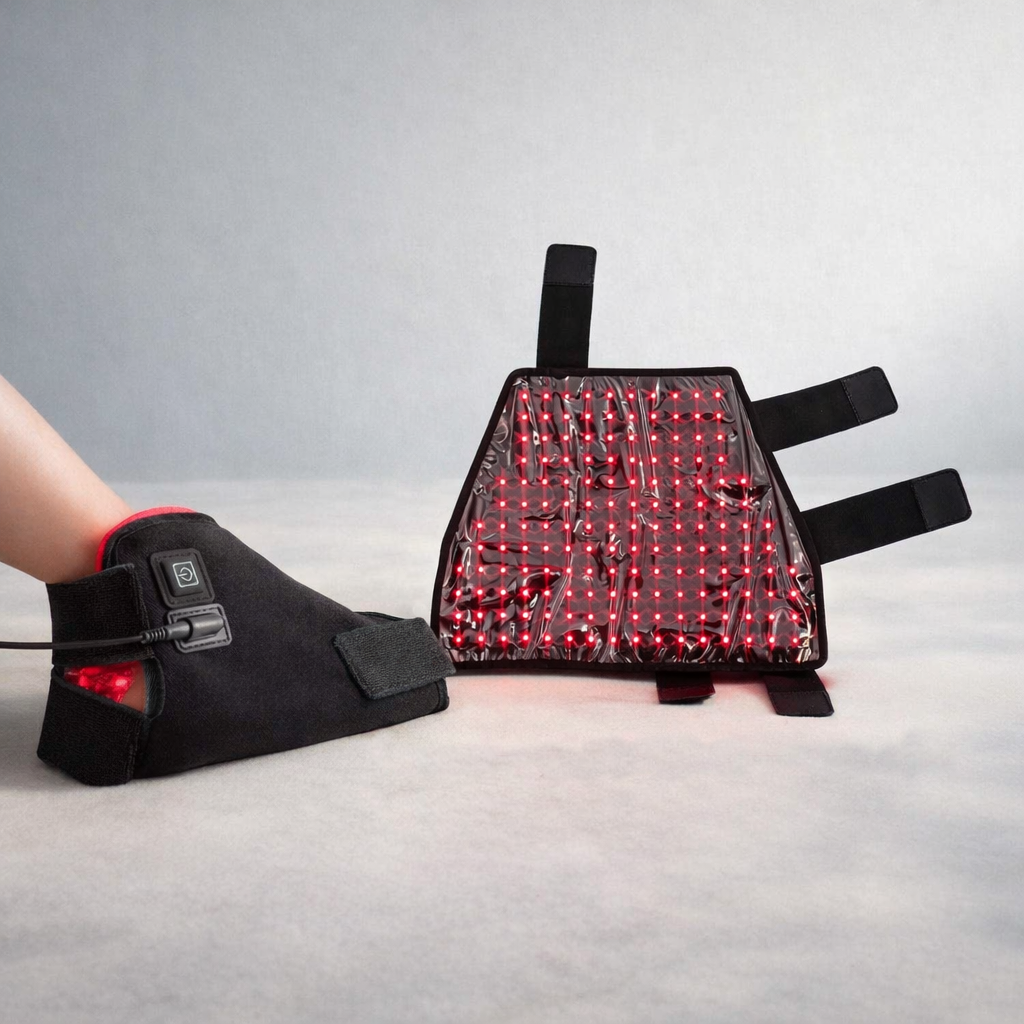
A red light therapy session for the feet is uneventful in the best way. Wrap the device around the foot. Secure the straps. Plug it into a USB power bank or wall adapter. Press the power button. Relax. The light glows red. The pad feels gently warm. The session ends after twenty minutes with an auto-shutoff.
Most users do one foot at a time. Some users sit with both feet wrapped simultaneously if they own two pads. The setup takes less than a minute. The session itself happens in the background of whatever else you're doing, like reading, watching a show, or simply resting.
There's no protocol pressure. You don't have to track sessions like medication doses. You don't have to schedule it around food. The point is that the routine fits into a real life, not that you build your life around the routine.

Choosing a Device
What to look for in a red light therapy foot device.
Six specifications matter when choosing a foot-focused red light device. Skip any product that doesn't disclose them.
01 — Wavelengths
660nm and 850nm specified
660nm red and 850nm near-infrared are the two most-studied pairs in photobiomodulation research. A device that delivers both in a single session is doing the most-researched pattern. Skip any device that doesn't publish its wavelengths.
04 — Fit
Adjustable foot wrap
The device should wrap the foot comfortably. Adjustable straps matter because feet come in different sizes and the wrap needs to hold the LEDs flush against the skin for the dose to land.
02 — LED Count
150 to 250 LEDs
More LEDs spread across the foot mean better coverage. Devices in the 150 to 250 LED range cover the foot well. Below 100 LEDs you're under-treating the surface area.
05 — Power Source
USB-C and power bank ready
USB-C with the ability to use a power bank means you can use the device anywhere. Devices that require a wall outlet limit where you can use them and rule out travel use.
03 — Session Length
20-minute auto-shutoff
Twenty minutes is the standard daily session in photobiomodulation research. A device with a built-in twenty-minute auto-shutoff handles the timing for you and prevents over-exposure.
06 — Build Quality
Wipeable and durable
A wipeable surface and durable construction matter because the device sits against the skin and gets used regularly. Daily use over years is the test, not a one-time impression.
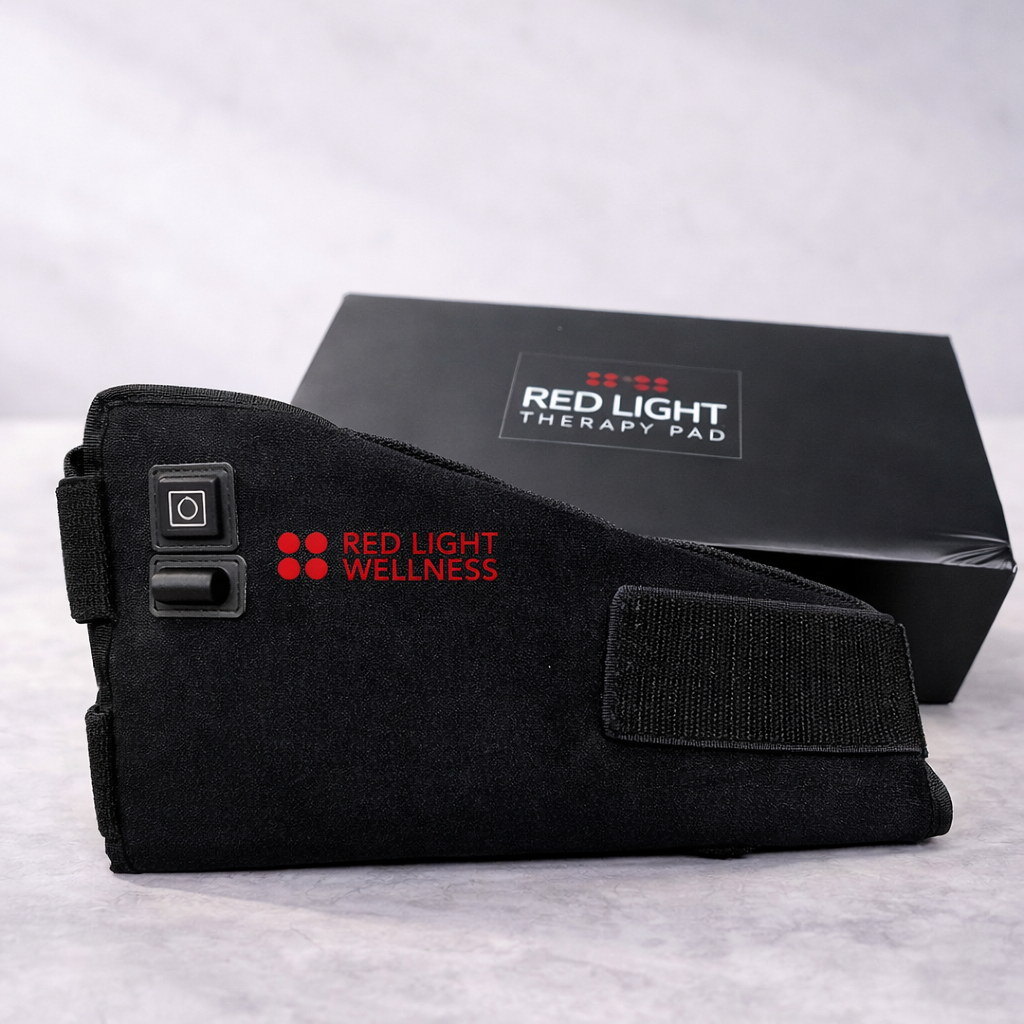
The Red Light Wellness Foot Pad.
The Foot Pad
The Red Light Wellness Foot Pad delivers 660nm red light and 850nm near-infrared light through 198 LEDs in a flexible, foot-shaped wrap. The device runs a twenty-minute session with an auto-shutoff. It connects to a USB-C power bank or wall adapter, fits into a travel bag, and uses adjustable straps for a comfortable fit.
The wrap is designed for adults who want a portable wellness routine for their feet. It pairs with other wellness habits like movement, hydration, and rest. The wipeable surface and durable construction make it suitable for daily use over time.
Red Light Wellness
The Foot Pad
A soothing daily routine for hard-working feet.
Wavelengths
660nm + 850nm
LED count
198 LEDs
Duration
20 minute session
Powered
USB-C
Frequently asked questions
What new users ask most.
Sessions, daily fit, travel, and what makes a foot pad different from a panel.
-
Twenty minutes per foot. The Red Light Wellness Foot Pad auto-shuts off when the session ends, so you don't need to time it yourself.
-
Once per day on each foot fits most people's wellness routine. Some users do morning and evening sessions during high-activity periods like marathon training or long travel days.
-
A gentle warmth, similar to sunlight on the skin. Not hot, not uncomfortable. Most users describe it as soothing.
-
Yes. The pad is lightweight, folds flexibly into a travel bag, and runs off a USB-C power bank. It fits into a carry-on without effort.
-
660nm red light and 850nm near-infrared light, delivered together in a single session. These are the two most-studied wavelengths in photobiomodulation research.
-
No. The Red Light Wellness Foot Pad is a wellness device, not a medical device. It is not intended to diagnose, treat, cure, or prevent any disease. If you have a foot condition that needs medical attention, your healthcare provider is the right person to consult.
-
A panel sits across the room and shines light at you. A foot pad wraps directly around the foot with the LEDs flush against the skin, delivering both wavelengths at close range. The pad is also portable, while a panel is stationary.

The Red Light Wellness Foot Pad fits into a morning, evening, or post-activity wellness practice. Twenty minutes, two wavelengths, soothing warmth that pairs with the rest of your wellness day.
Begin today