

Practice type · Rehab & recovery
Red Light Therapy for Physical Therapy Clinics
Red Light Wellness® builds commercial red light therapy beds that are Class II medical devices registered with the FDA. For more than 40 years, our family-owned company has designed, engineered, and manufactured commercial light therapy equipment in St. Louis, helping physical therapy clinics expand treatment offerings with a patient-pay service that fits seamlessly into existing schedules.
American-made. Continuously engineered.
Build
Commercial-grade
Made in
FDA-registered facility
Wavelengths
Red: 625–670 nm
Near-Infrared: 830–910 nm
Session
10–15 min
Why PT clinics add PBM
A recovery adjunct that fits the plan of care.
Physical therapists already stack modalities, manual therapy, therapeutic exercise, electrical stimulation, heat and cold. Whole-body photobiomodulation (PBM) adds another tool that patients can use in the same visit, without adding hands-on staff time.
Recovery & rehab adjunct
Photobiomodulation is studied as a support for muscle recovery and post-exertion soreness, which pairs naturally with a rehab program built around progressive loading. It complements your existing modalities rather than replacing them.
Tissue & circulation support
Red (625–670 nm) and near-infrared (830–910 nm) wavelengths are used to support local circulation and skin and tissue health, a general-wellness complement to the mechanical work you do on the table.
Cash-pay add-on
A whole-body bed opens a self-pay wellness line that sits outside insurance billing. Patients discharged from care often want to keep coming back for recovery, the bed gives them a reason and your clinic recurring, non-reimbursement revenue.
Photobiomodulation supports recovery, circulation, and skin and tissue health. Individual results may vary. Not intended to diagnose, treat, or cure any disease. Consult a healthcare professional before use.
Which Miracle model fits
Match output to your patient volume.
Every bed in the Wellness Collection pairs the same red and near-infrared wavelengths across a full-body treatment head to toe. The models step up in irradiance and electrical draw, so the right one depends on how many patients move through your rehab floor in a day.
Entry professional
The Miracle 5040
A practical starting point for solo or growing clinics, runs on a standard 30-amp circuit.
504 mW/cm² · 2,553 LEDs · 30 AMP
Professional
The Miracle 6200
More output on the same 30-amp service for a clinic with steady daily traffic.
600 mW/cm² · 2,000 LEDs · 30 AMP
Doctor Pro Edition
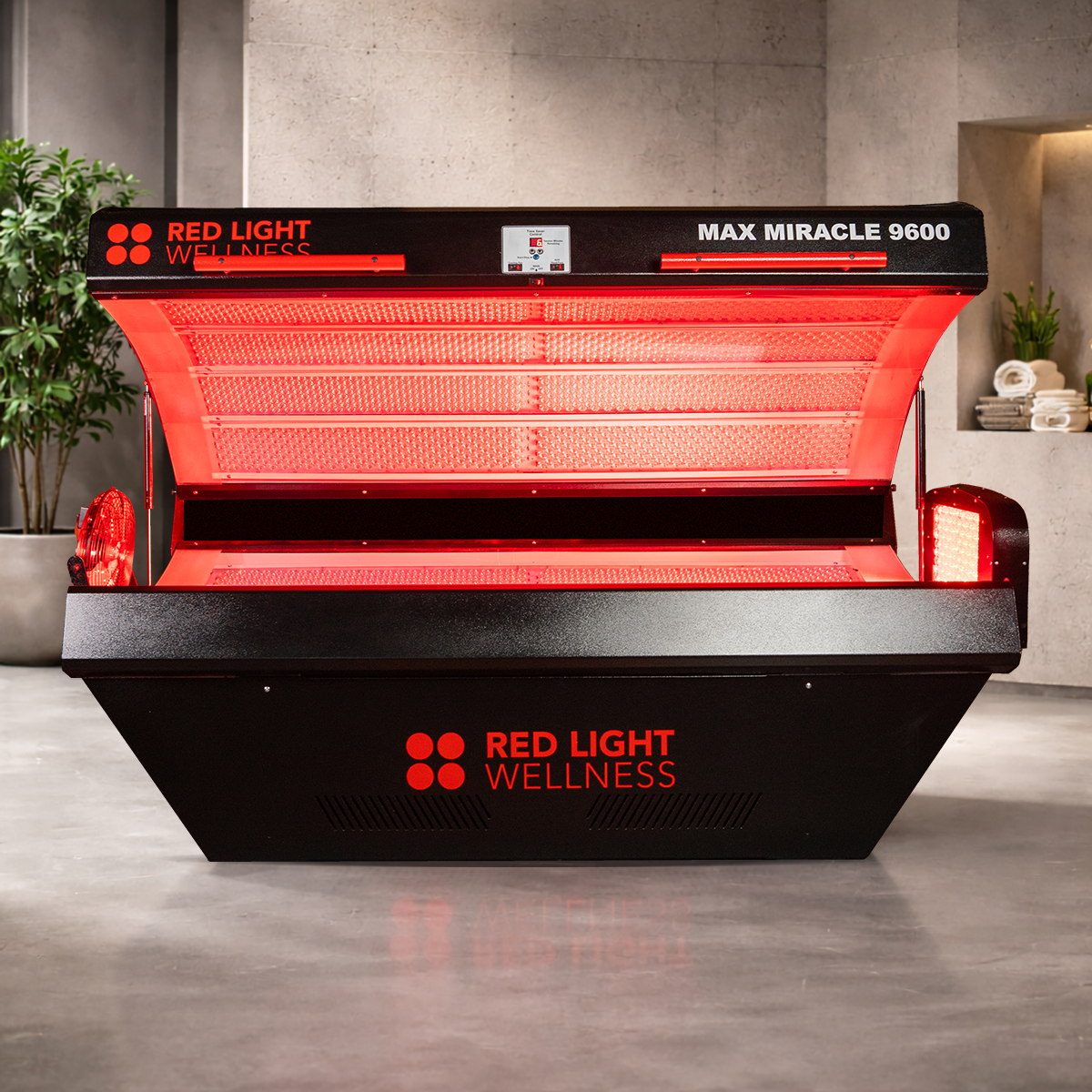
Max Miracle 9600
Higher output for a busy practice. Ask our sales team about available Doctor Pro options.
960 mW/cm² irradiance · 3,200 LEDs · 50 AMP
Room & throughput fit
It fits a treatment room and a busy schedule.
A Miracle bed needs a footprint close to a standard treatment room, roughly a 9′ × 8′ space and a dedicated 220V circuit (30, 40, or 50 amp, depending on model). Your red light therapy bed should be positioned along the 9-foot wall.
Throughput is where PBM earns its space. A full-body session runs 8–15 minutes, and the elevated bench design makes entry and exit easy for patients recovering from injury or surgery. Because the bed works on its own once a patient is positioned, one staff member can supervise recovery sessions while therapists stay focused on hands-on care.
Why it moves patients efficiently
Fast, hands-free, and even
8–15 min Full-body session length
2× Patients treated in the same window
Comfort-width surface fits all body sizes
Patented head/foot therapy for even, whole-body dosing
Photobiomodulation supports recovery, circulation, and skin and tissue health. Individual results may vary. Not intended to diagnose, treat, or cure any disease. Consult a healthcare professional before use.
ROI considerations
What the numbers depend on.
A commercial bed is a capital decision, and the payback comes from a cash-pay line that runs on top of your reimbursed care. The variables that matter most for a PT clinic are session price, how many recovery sessions you run per day, and how many of your discharged patients convert to memberships or packages.
Because sessions are short and hands-free, utilization rises without adding therapist hours. Most practices model per-session pricing, package pricing, and memberships together, then finance the equipment with a quick application and a soft credit check that won’t affect their score. Section 179 may also let you deduct qualifying equipment, talk to your accountant.
Cash-pay revenue outside insurance billing
Short sessions raise utilization without added staff hours
Financing with a soft credit inquiry, apply in minutes
Turn-key: training, marketing materials, and a vibration plate included
Rehab operational workflow
Where the bed fits in a visit.
1
Pre-session use
A short session before manual therapy or the exercise floor can serve as a warm-up step while a treatment room turns over, patients arrive to the table already settled in.
2
Post-session recovery
After therapeutic exercise, a whole-body session gives patients a recovery step to close the visit. It runs on its own, so a front-desk or aide can supervise while therapists move to the next patient.
3
Discharge & membership
When formal care ends, the bed is the reason patients keep coming back. A recovery membership or package converts one-time cases into a steady cash-pay relationship.
Photobiomodulation supports recovery, circulation, and skin and tissue health. Individual results may vary. Not intended to diagnose, treat, or cure any disease. Consult a healthcare professional before use.
Physical therapy FAQ
Questions PT owners ask.
-
Most practices run whole-body photobiomodulation as a self-pay wellness service rather than a reimbursed procedure. That’s part of the appeal, it’s a cash-pay line that sits outside insurance billing and complements your reimbursed plan of care. Confirm coding and coverage questions with your own billing and compliance advisors.
-
Photobiomodulation is used as a recovery adjunct alongside manual therapy, therapeutic exercise, and your other modalities. It works as a pre-session warm-up step, a post-session recovery step, or a standalone wellness visit after discharge. Individual results may vary, and it is not intended to diagnose, treat, or cure any disease.
-
Match output to your patient volume. The Miracle 5040 and 6200 run on a standard 30-amp circuit and suit growing clinics; the Big Miracle 7200 adds output and shorter effective sessions for high-volume rehab and sports-therapy floors. Our comparison guide lays out every spec side by side.
-
Plan on roughly a 9′ × 8′ room and a dedicated 220V circuit, 30, 40, or 50 amp depending on the model. We review your space and service during planning so the room is ready before delivery. See installation and room planning.
-
Every bed is a Class II medical device registered with the FDA produced in an FDA-registered facility. Precise regulatory status, stated as registration, is one of the clearest ways to separate professional equipment from consumer imports.
-
Pricing depends on the model and current programs, and most clinics finance with a quick application and a soft credit inquiry that won’t affect their score. Request current pricing and we’ll send a personalized quote.
Next steps for your clinic
Add a recovery line your patients keep coming back for.
Request current pricing or book a five-minute discovery call. We’ll help you pick the right Miracle model, size the room, and map the payback for your physical therapy practice.