

The distinction
Red light versus infrared
By Red Light Wellness
Red light therapy usually means two kinds of light working together: visible red light and near-infrared light. They sit next to each other on the spectrum and are used the same way once they reach the body, but they are not interchangeable. This page explains how they differ and why a device may use one or both. For the mechanism the two share, see how photobiomodulation works. For what device numbers mean, see wavelengths and irradiance.
The same family of light, different reach
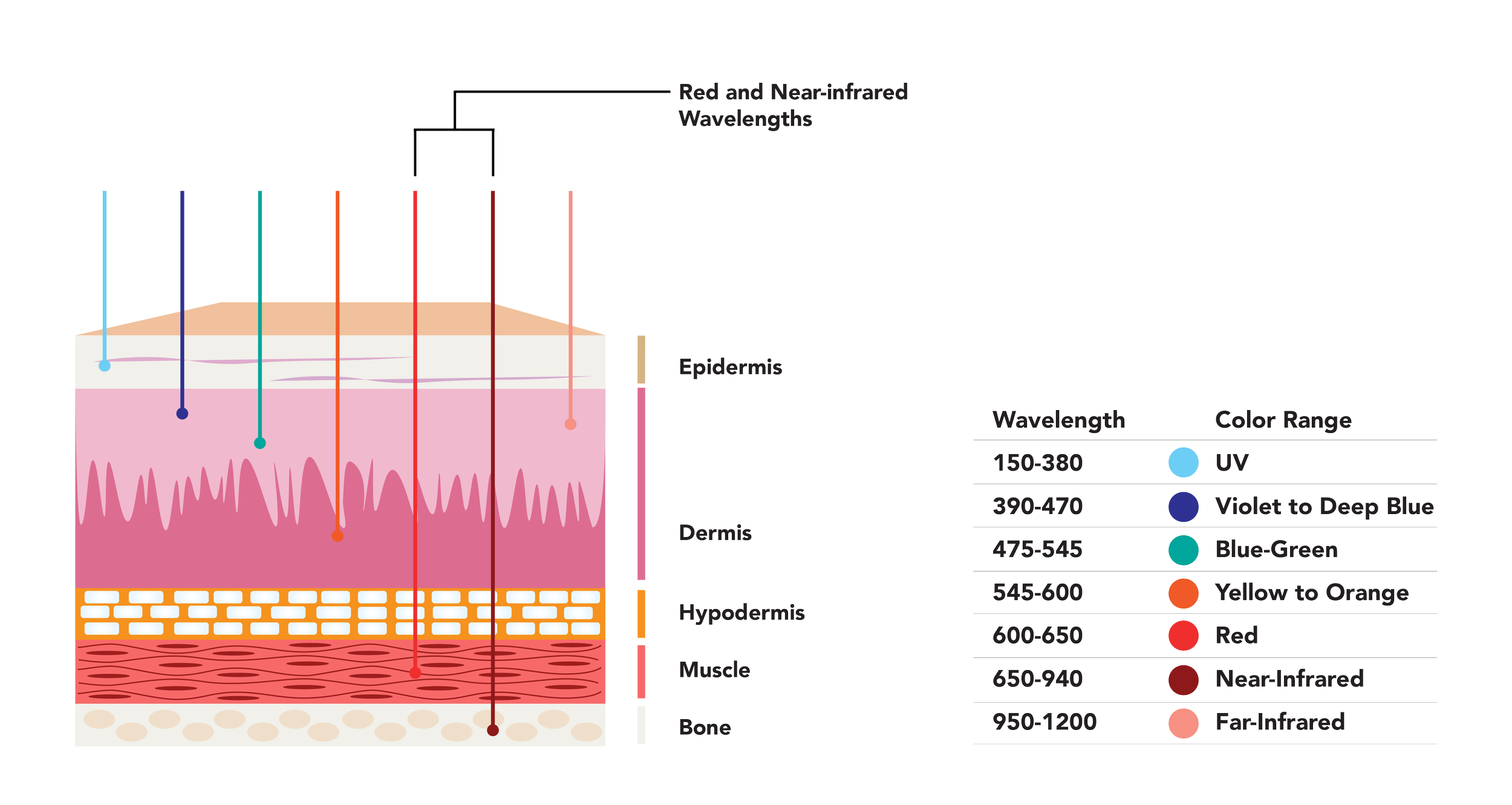
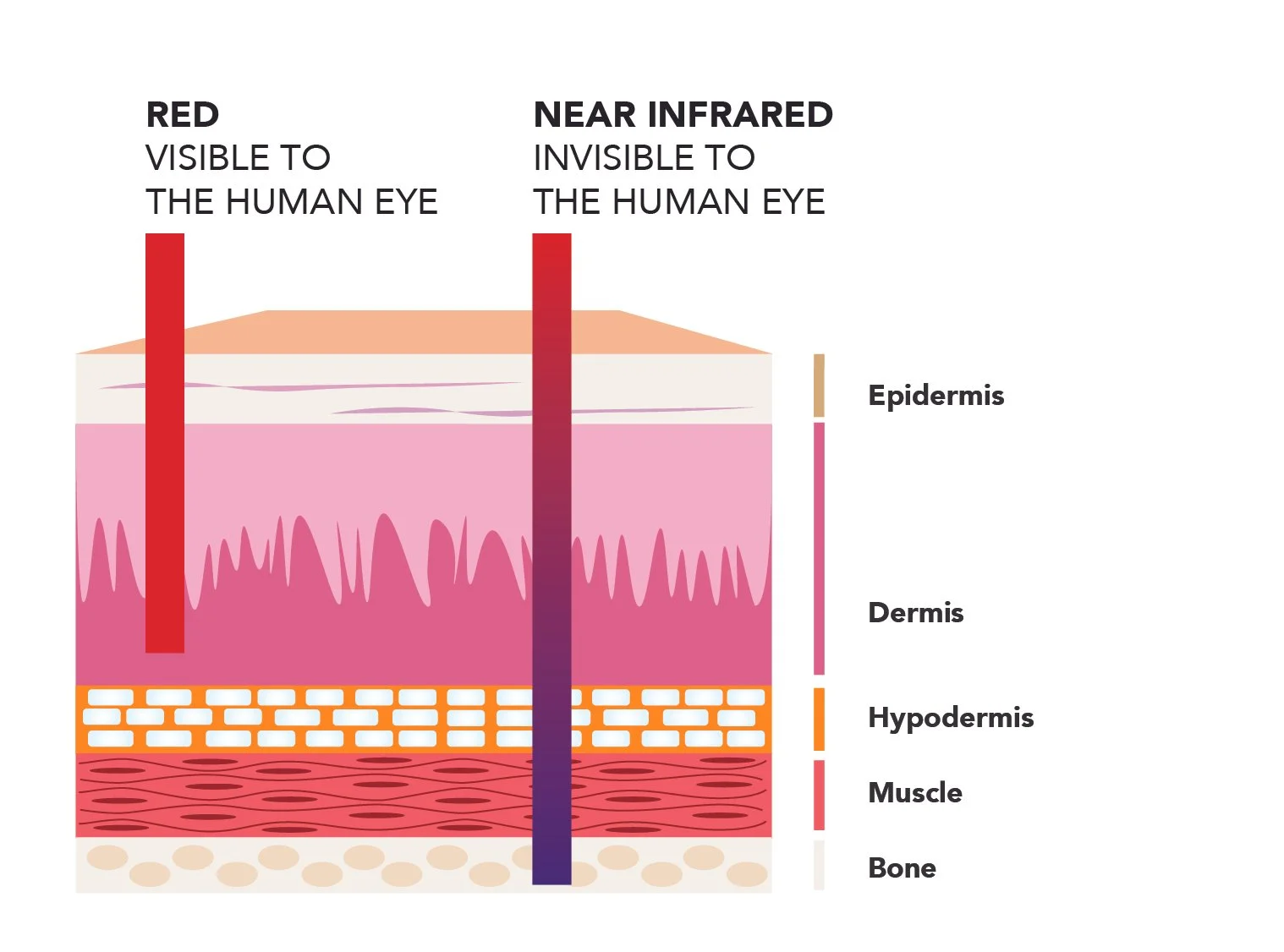
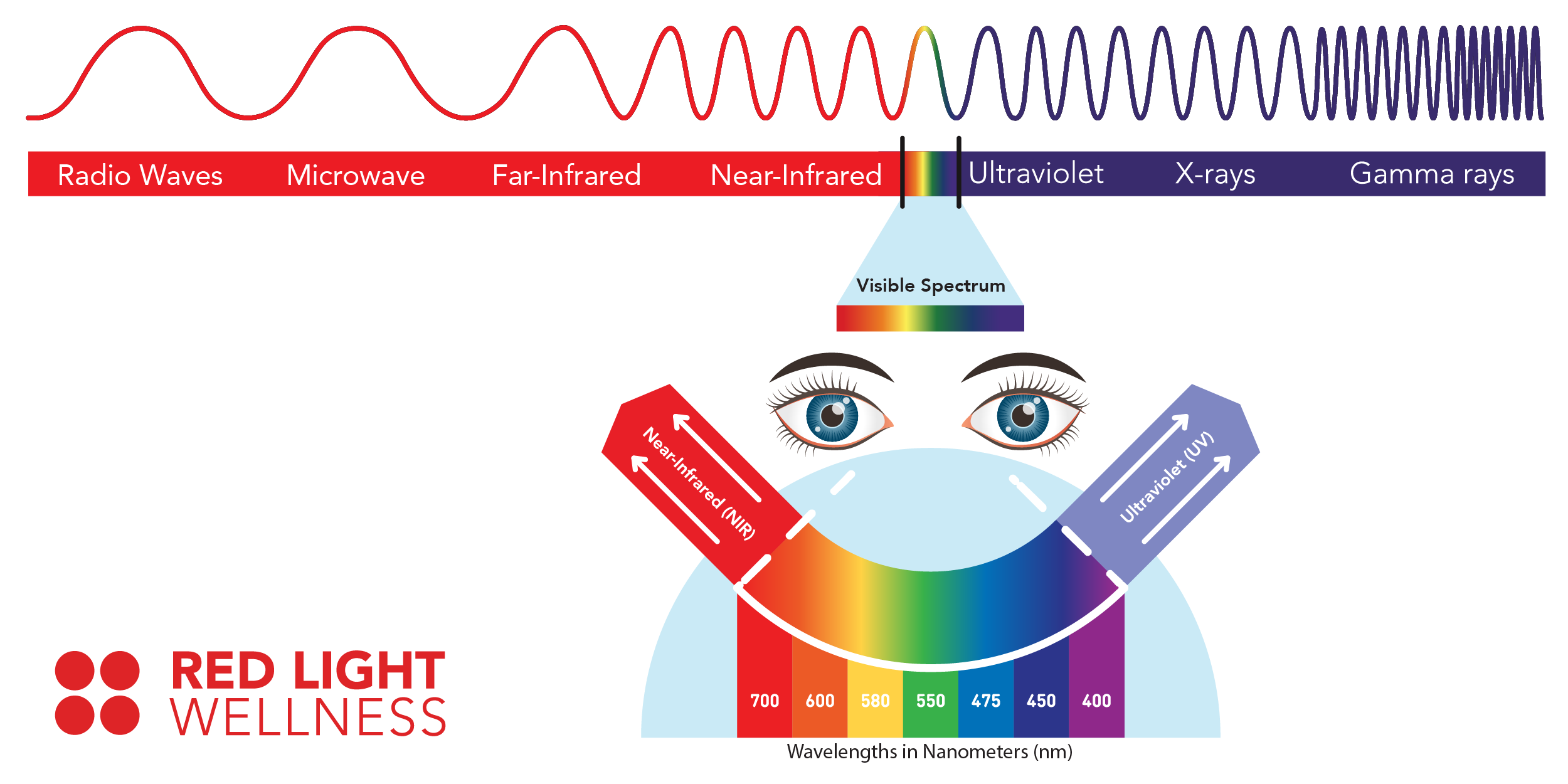
Visible red light and near-infrared light sit next to each other on the electromagnetic spectrum. You can see red light. You cannot see near-infrared, though you may feel a mild warmth from it. The practical difference between them comes down to one thing: how far into the body the light travels before it is absorbed. Shorter wavelengths are absorbed closer to the surface, and longer wavelengths pass through more tissue before their energy is taken up. Both are used in photobiomodulation and are absorbed the same way once they arrive. They simply reach different depths on the way.
Visible red, near the surface
Visible red light is the light you can see glowing red. Because it is a shorter wavelength, most of its energy is absorbed near the surface, within the skin and the tissue just beneath it. A device that uses only red light is working mainly at the surface.
Near-infrared, farther into tissue
Near-infrared light sits just beyond what the eye can see. Its longer wavelength travels farther before it is absorbed, so it tends to reach deeper tissue than visible red does. How deep is not a single fixed number. It varies with skin tone, body composition, and the exact wavelength, and the light weakens as it travels. The reliable comparison is directional: near-infrared reaches meaningfully deeper than visible red. That difference is the main reason the two are often paired, so a single session can cover both the surface and deeper tissue.
What people use red light therapy for
People use red light therapy to support muscle recovery, to support local circulation, and to support skin and tissue health. It shows up in homes as part of a regular routine and in practices such as recovery centers, chiropractic and physical therapy offices, and medspas.
Here is the honest version: red light therapy is a supportive tool with real biological plausibility behind it, not a guaranteed fix for any condition. It works best as one part of a broader care or recovery routine, not as a replacement for medical treatment.
"Infrared" is a broad word
Infrared covers a wide stretch of the spectrum, from near-infrared through far-infrared, and the word is used loosely. Red light therapy uses near-infrared specifically. A far-infrared sauna, by contrast, warms the body to make you sweat. It does not deliver the near-infrared wavelengths that photobiomodulation uses, and it works by heat rather than by light the cells absorb. So a device described only as "infrared" tells you very little on its own. Which part of the infrared range it uses is what matters, and that is read from the wavelength. Wavelengths and irradiance explains how to read those numbers.
Individual results may vary. Not intended to diagnose, treat, cure, or prevent any disease. Consult a healthcare professional before use.
Why a device may use red, near-infrared, or both
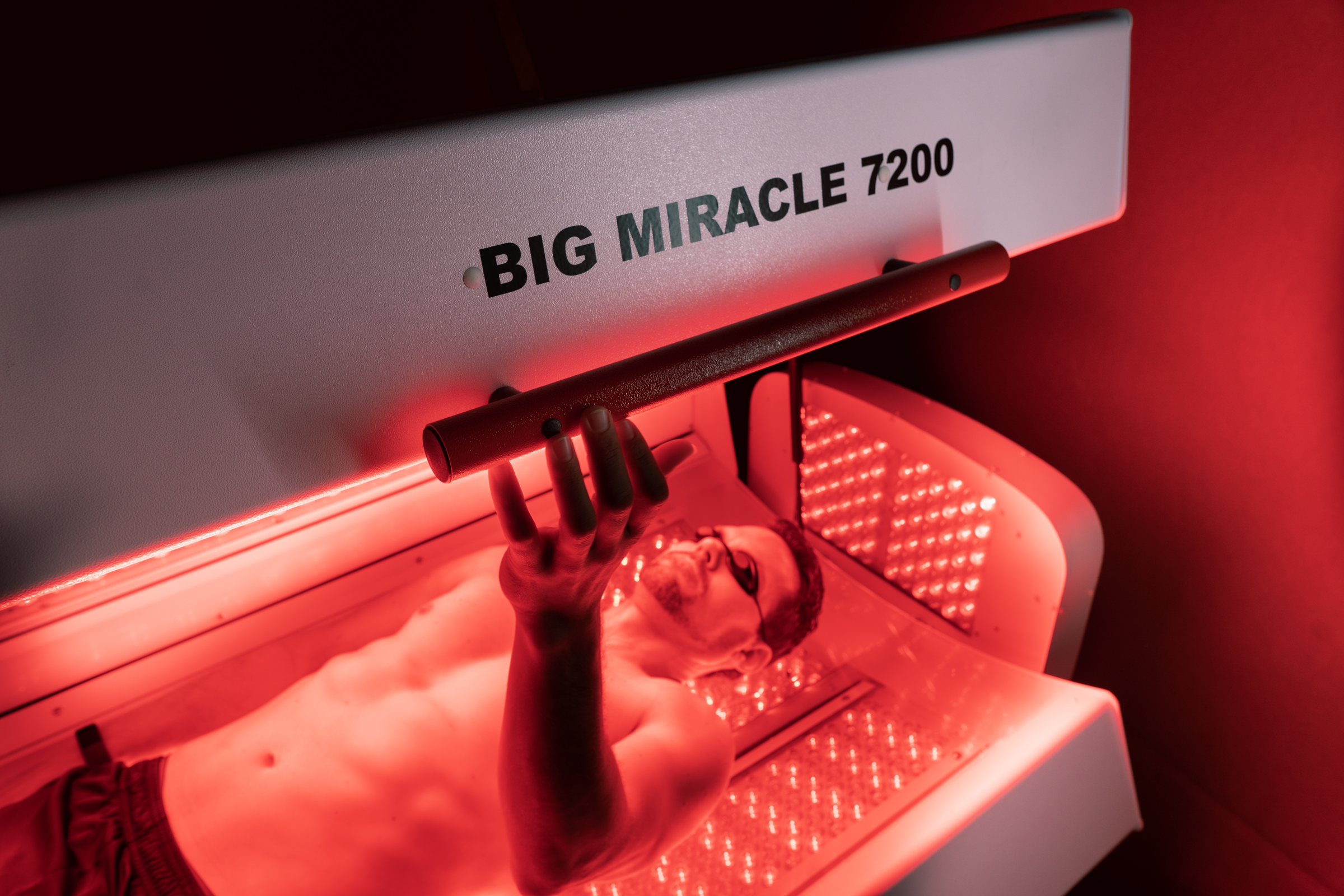
Because red and near-infrared reach different depths, a device is usually built around what it is meant to do. A red-only device works at the surface. A device that adds near-infrared can reach deeper tissue as well, and many whole-body systems use both so a single session covers surface and depth together. Neither band is better than the other. They do different things, and which one matters depends on what you are trying to reach.
Common questions
-
No. Visible red light is absorbed near the surface, and near-infrared is invisible and tends to reach deeper tissue. They sit next to each other on the spectrum, but they do different jobs.
-
Near-infrared. Its longer wavelength travels farther through tissue before it is absorbed. How deep is not a fixed number and varies from person to person, but near-infrared reliably reaches deeper than visible red.
-
No. A far-infrared sauna warms the body to make you sweat. It does not deliver the near-infrared wavelengths that photobiomodulation uses, and it works by heat rather than by light the cells absorb.


Where to go next
→ What is red light therapy the plain definition
→ How photobiomodulation works the cellular mechanism
→ Wavelengths and irradiancewhat the device numbers mean
→ Red light therapy safety eye protection and precautions
→ Session and dosing guide how much light, and how often
Individual results may vary. Not intended to diagnose, treat, cure, or prevent any disease. Consult a healthcare professional before use.