

MEASUREMENT, EXPLAINED
Wavelengths and irradiance
By Red Light Wellness
Two properties describe the light a red light therapy device delivers: its wavelength, which is the kind of light, and its irradiance, which is how much of it arrives. This page explains those terms and the measurement vocabulary around them, so that a device-output number means something when you read it. It does not recommend a dose or a device. How much light, and how often, is a question of dosing, covered in the session and dosing guide.
Wavelength, measured in nanometers
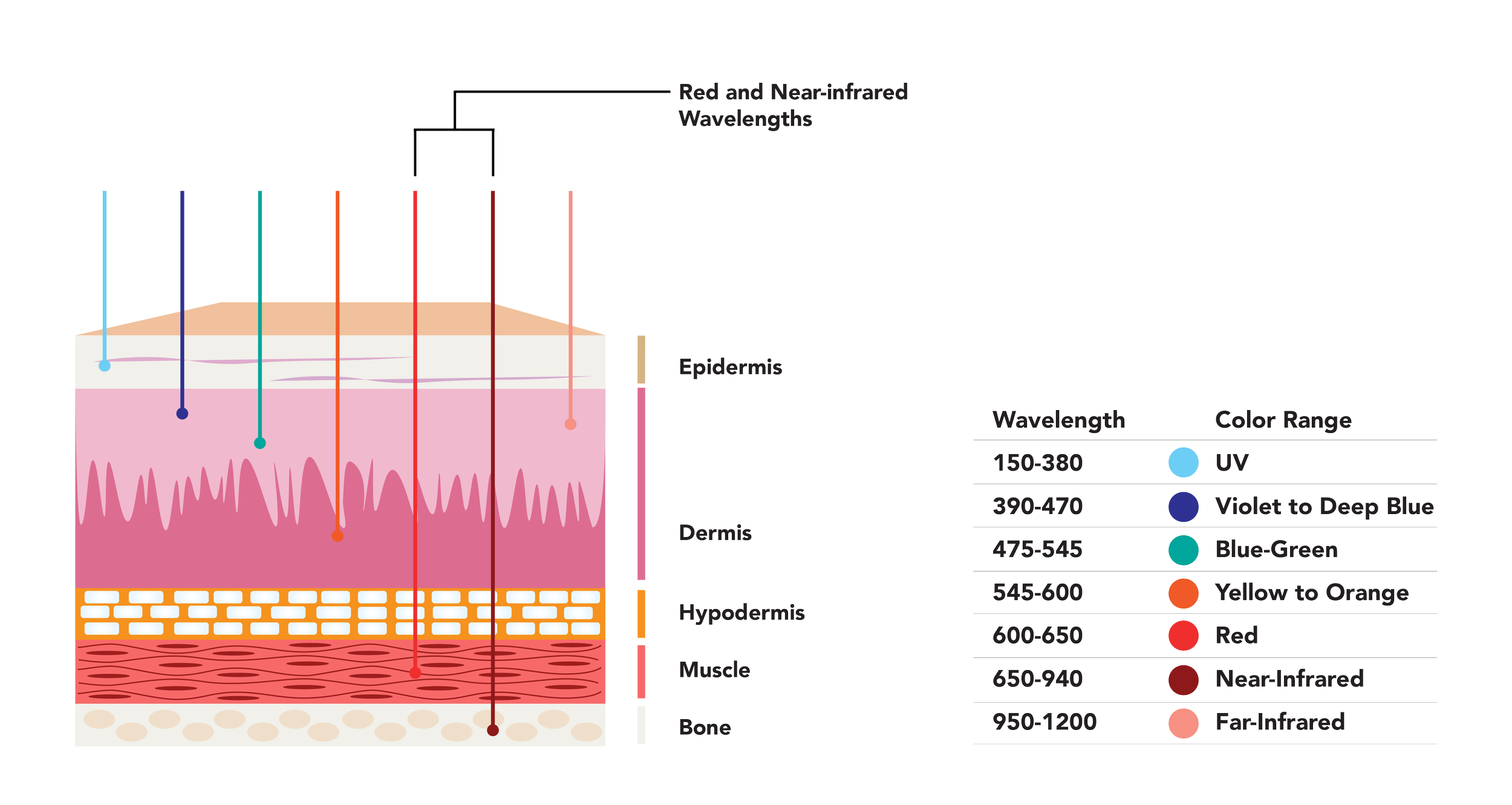
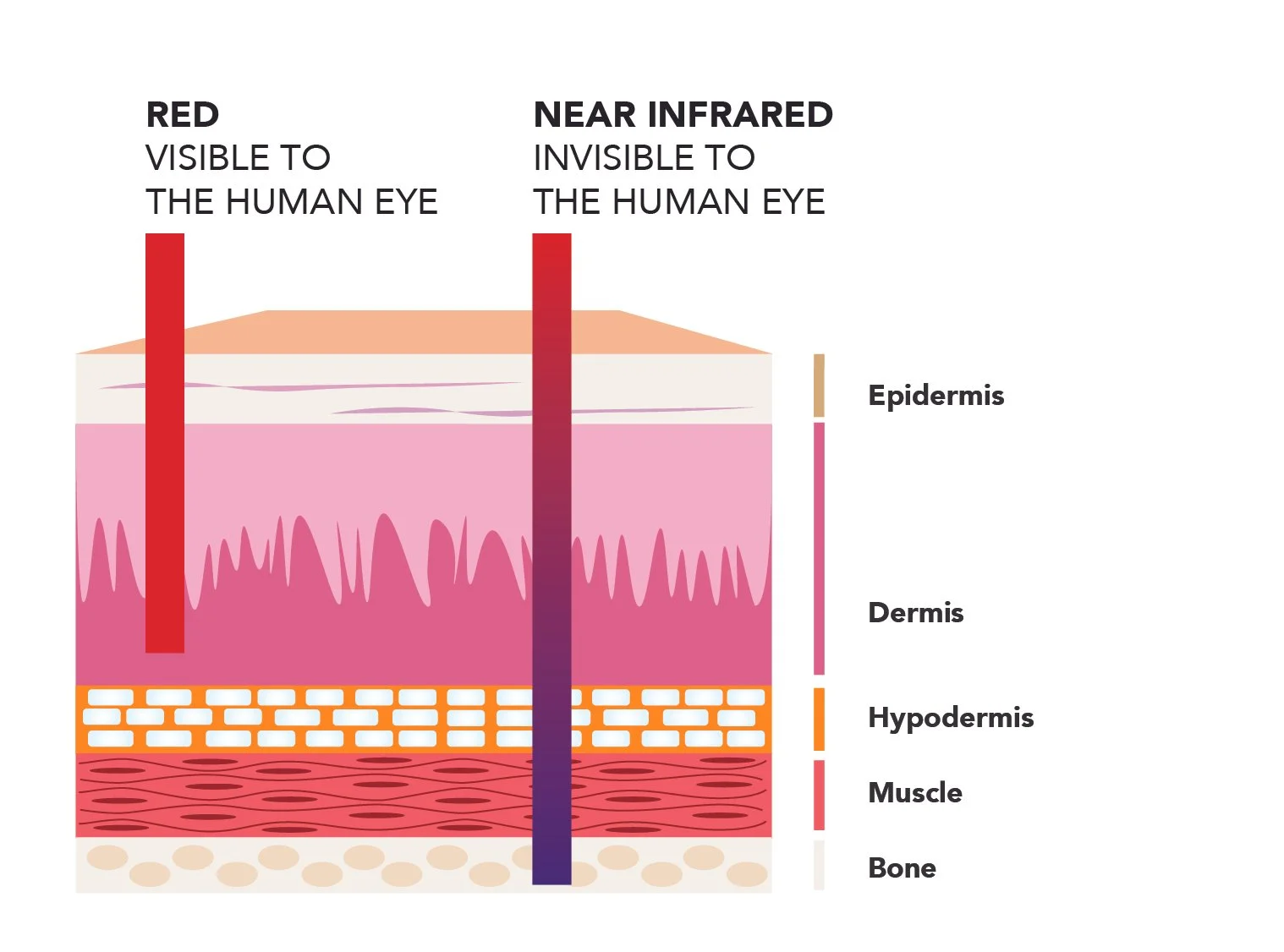
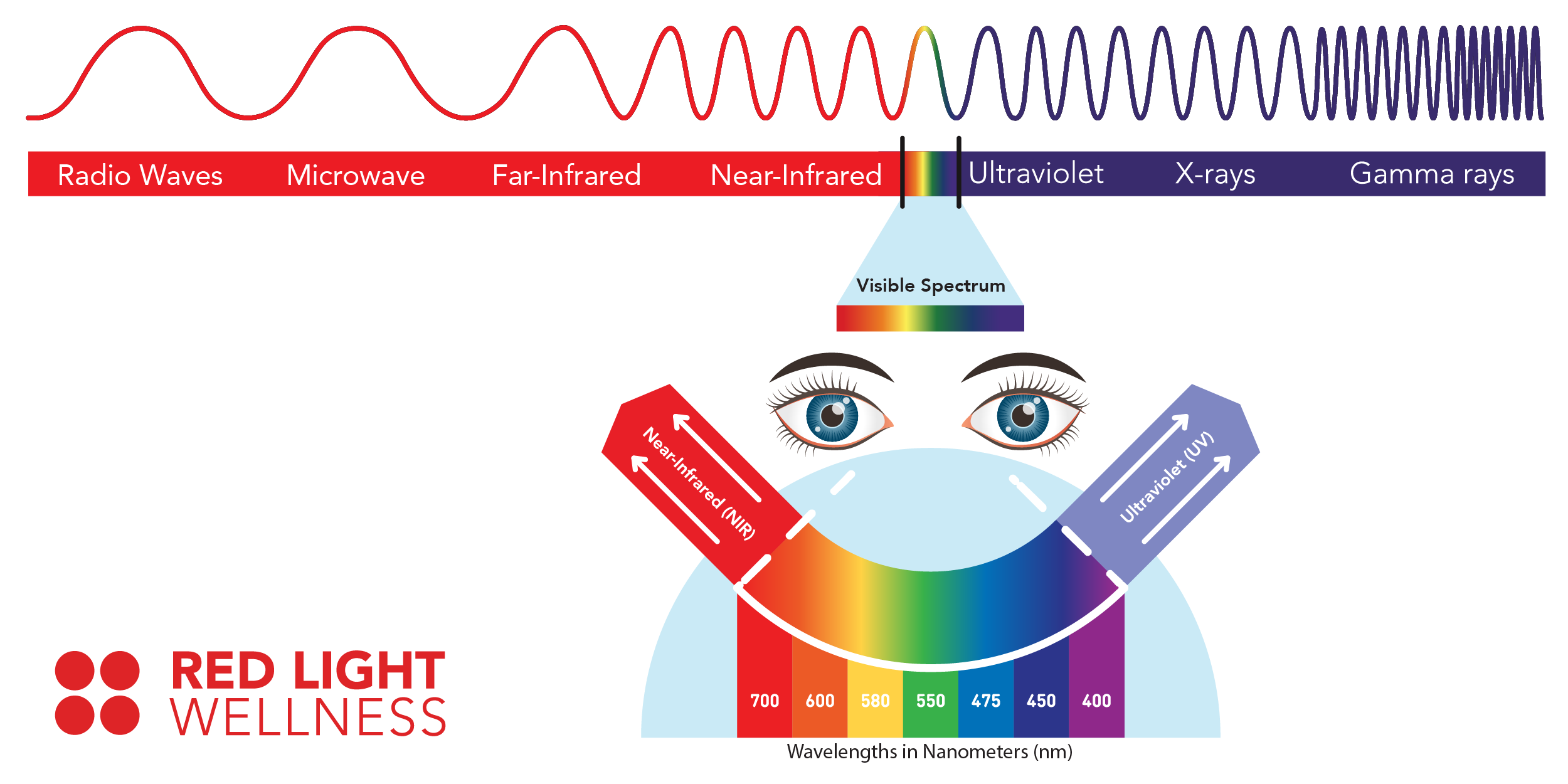
Light is described by its wavelength, measured in nanometers, usually written nm. Wavelength is what makes light a particular color, and it decides how the light behaves once it reaches the body. Red light is visible and sits toward the shorter end of the range used in red light therapy. Near-infrared light is invisible to the eye, sits at a longer wavelength, and travels further into tissue than red does. How the two kinds of light compare, and why a device may use both, is covered in red light versus infrared. Individual products state their own wavelengths on their product pages, where those values are verified. This page is about the concept, not any one device's numbers.
Why a number needs its measurement conditions
An irradiance figure means little on its own, because light follows the inverse-square law. Move the sensor twice as far from the source and the reading drops to about a quarter. A number taken with the meter pressed against the lens is not the number a body receives several inches away. A meaningful output figure therefore states the distance at which it was measured. When you read any device number, the useful question is where and how it was measured, not only how large it is.
Fluence, the energy actually delivered
Wavelength and irradiance describe the light itself. Fluence describes how much energy is delivered over a session. Fluence, also called energy density, is measured in joules per square centimeter, or J/cm2, and it is simply irradiance multiplied by time. Irradiance in mW/cm2, multiplied by exposure time, gives fluence in J/cm2. That relationship is why output and time are linked: for the same fluence, higher irradiance takes less time and lower irradiance takes more. This page defines the relationship. What fluence to aim for, how long a session should run, and how often to repeat it are dosing questions, covered in the session and dosing guide.
Irradiance, or power density
Irradiance is power density: how much light energy reaches each unit of area, usually written in milliwatts per square centimeter, or mW/cm2. It answers the question "how much light is arriving," which is a different question from "what wavelength is it." A device can emit the right wavelength and still deliver very little light, so wavelength and irradiance are read separately, not treated as one number.
Individual results may vary. Not intended to diagnose, treat, cure, or prevent any disease. Consult a healthcare professional before use.
Reading the numbers together
Understanding a device's output means checking two independent things and one relationship. Wavelength tells you the kind of light, and it is meaningful when stated in nanometers rather than described only in words. Irradiance tells you how much light arrives, and it is meaningful only alongside the distance at which it was measured. Fluence ties them to time. There is no single correct irradiance or wavelength number that fits every purpose. A number is useful when you can see how it was defined and measured.
Common questions
-
Milliwatts per square centimeter is a unit of irradiance, or power density. It describes how much light energy reaches each square centimeter of a surface. Because light spreads out with distance, an irradiance figure is only meaningful together with the distance at which it was measured.
-
Wavelength is the kind of light, measured in nanometers, and it decides how the light behaves in tissue. Irradiance is how much light arrives, measured in milliwatts per square centimeter. They are separate properties, and a complete picture of a device's output needs both.
-
Joules per square centimeter is a unit of fluence, or energy density: the total light energy delivered to an area. It equals irradiance multiplied by exposure time, which is how output and time combine into a delivered dose.


Where to go next
→ What is red light therapy the plain definition
→ How photobiomodulation works the cellular mechanism
→ Red light versus infrared how the two kinds of light differ
→ Red light therapy safety eye protection and precautions
→ Session and dosing guide how much light, and how often
Individual results may vary. Not intended to diagnose, treat, cure, or prevent any disease. Consult a healthcare professional before use.