

THE FOUNDATIONAL EXPLAINER
What is red light therapy?
By Red Light Wellness
Red light therapy is the use of specific wavelengths of red and near-infrared light to support the body at the cellular level. In the research literature it is called photobiomodulation, often shortened to PBM. It is not heat, it is not a tanning lamp, and it is not a drug. It is measured light, delivered with light-emitting diodes rather than ultraviolet light.
Light your cells can absorb and use
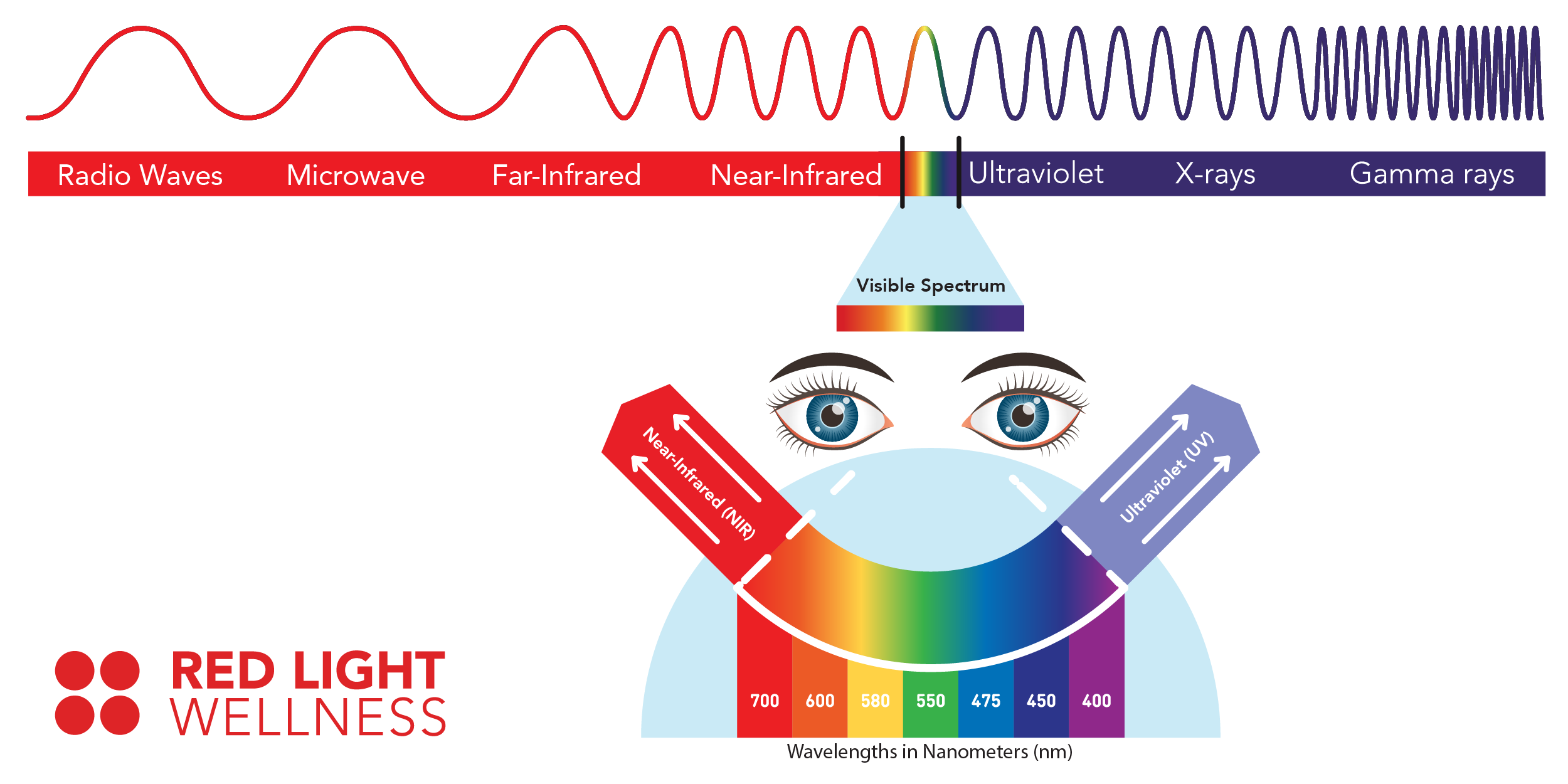
Most of the everyday light around you stops at the skin or turns to heat. Red light therapy uses two narrow bands of light that behave differently: they pass into the body and reach the parts of your cells that produce energy. This use of light is commonly described as photobiomodulation, or PBM.
The key idea is simple. Red light therapy does not add anything to the body; it delivers a signal that nudges an ordinary cellular process to run a little more efficiently for a while afterward. How that interaction is studied at the cellular level is covered in how photobiomodulation works.
Red for the surface, near-infrared for depth
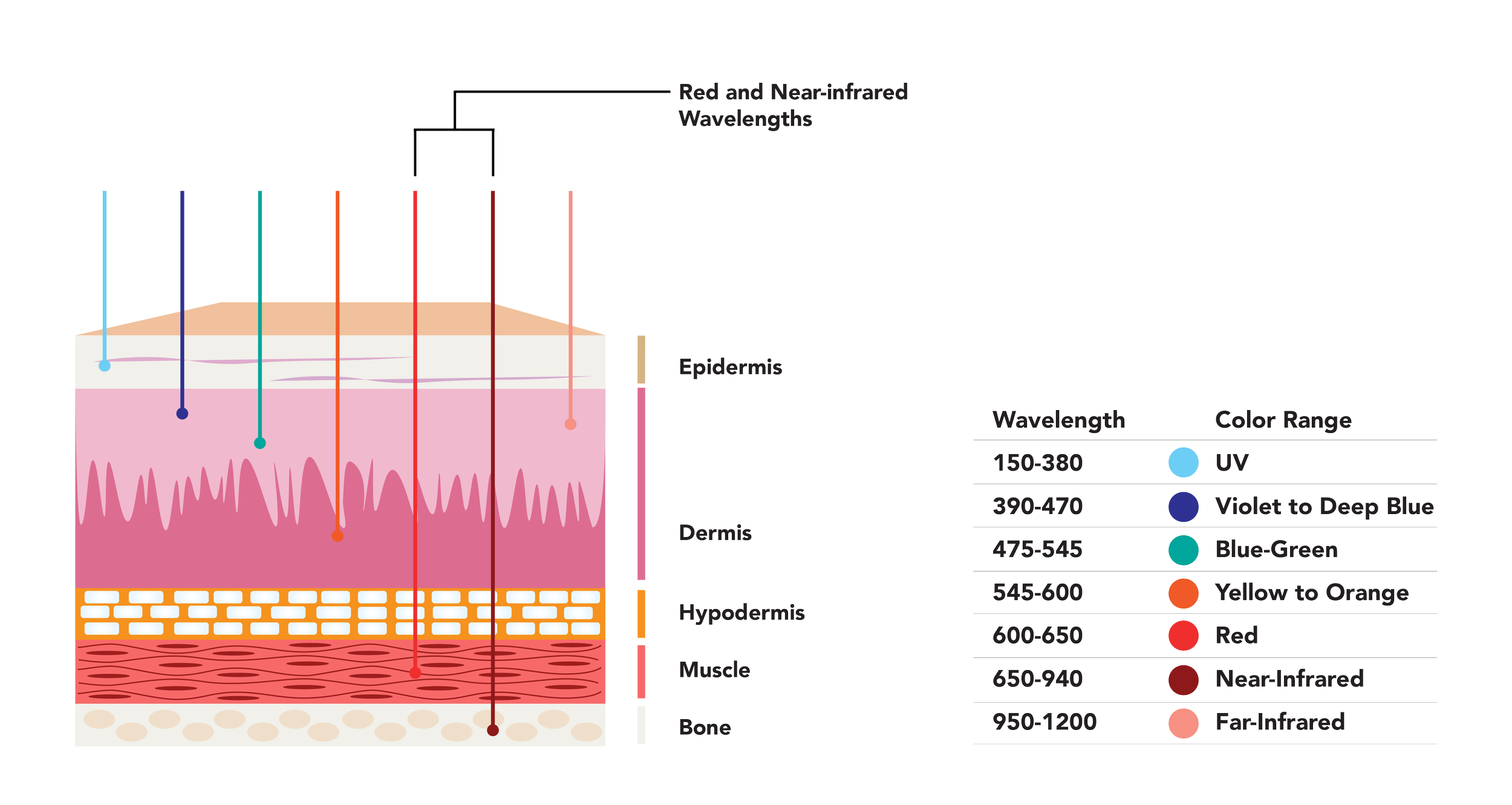
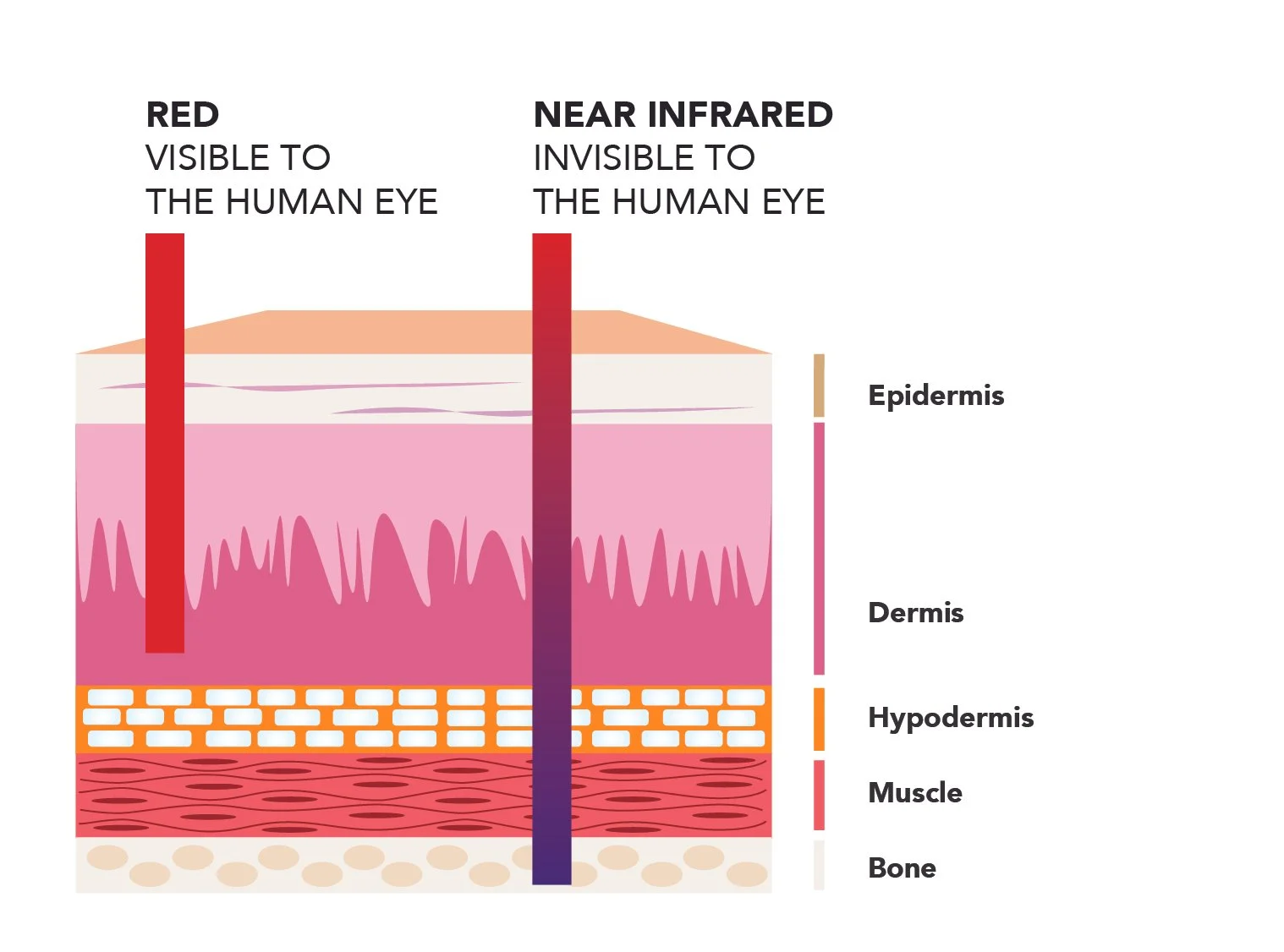
Red light therapy relies on two windows of light, and they are usually used together. Visible red light works close to the surface, at the skin and the tissue just beneath it. Near-infrared light is invisible to the eye and travels further, reaching tissue that red light alone does not. Using both is what turns a session into a whole-body experience rather than a surface treatment. The exact wavelength bands, and how light output is measured, are covered in wavelengths and irradiance.
From handhelds to whole-body
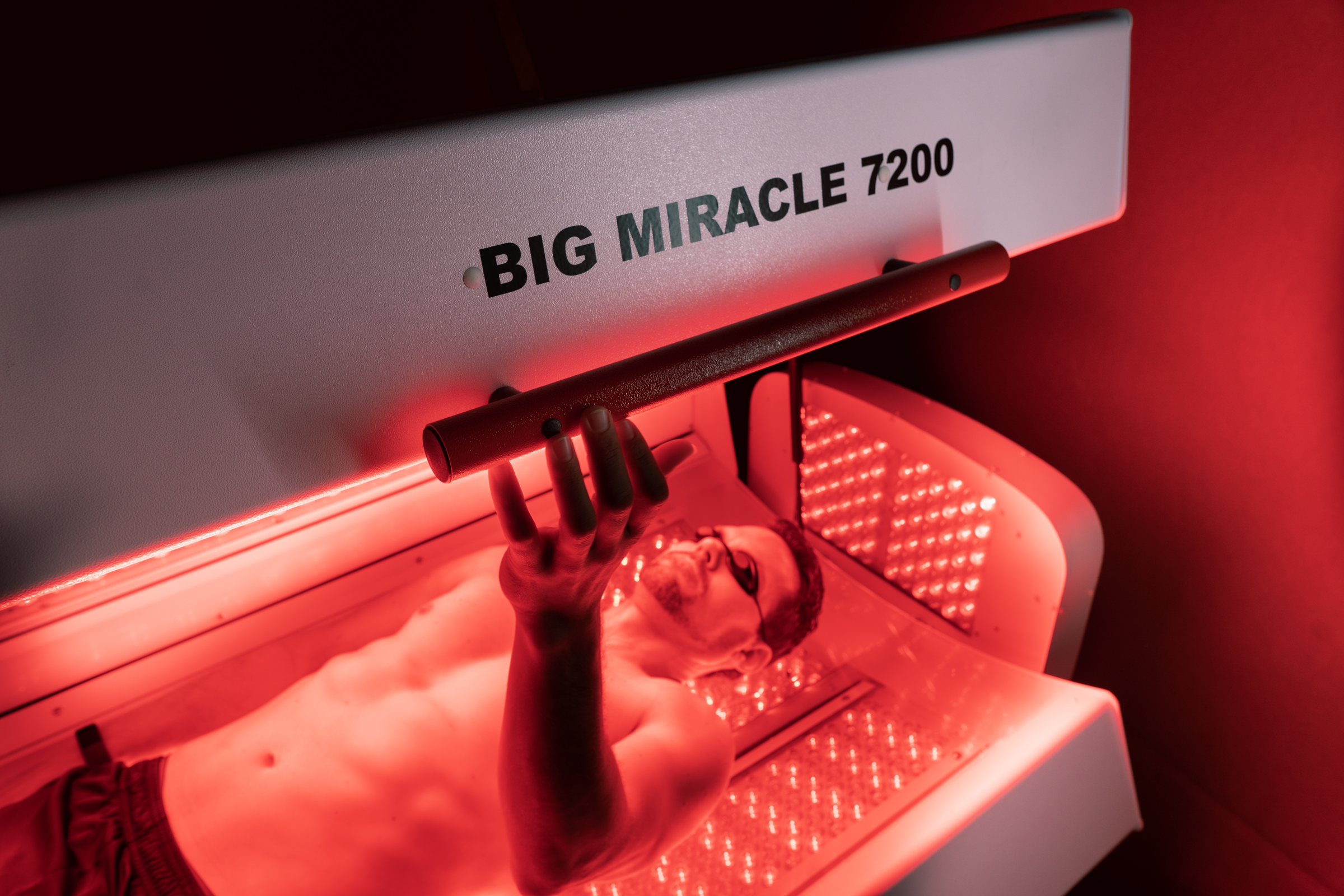
Red light reaches the body in more than one format. Small handheld devices and panels treat one area at a time. A whole-body bed surrounds the body with light at once, so a single short session covers you from head to toe. Which format fits depends on how you plan to use it: at home, in a practice, or as a personal device you keep on hand.
What people use red light therapy for
People use red light therapy to support muscle recovery, to support local circulation, and to support skin and tissue health. It shows up in homes as part of a regular routine and in practices such as recovery centers, chiropractic and physical therapy offices, and medspas.
Here is the honest version: red light therapy is a supportive tool with real biological plausibility behind it, not a guaranteed fix for any condition. It works best as one part of a broader care or recovery routine, not as a replacement for medical treatment.
Individual results may vary. Not intended to diagnose, treat, cure, or prevent any disease. Consult a healthcare professional before use.
What a session is like
From your side there is little to it, which is part of the appeal. You are under the light for a short session, usually a few minutes. It feels warm and comfortable, though the effect is not about heat. There are no needles and no downtime afterward. Because the light is bright, most people simply close their eyes or use eye protection.
Sessions are usually repeated over a series rather than done once. How long and how often to use it is covered in the session and dosing guide, and eye protection and who should take extra care is covered in red light therapy safety.


Where to go next
→ How photobiomodulation works the mechanism in detail
→ Wavelengths and irradiance the two bands and how output is measured
→ Red light versus infrared how the two kinds of light differ
→ Red light therapy safety eye protection and precautions
→ Session and dosing guide how long and how often